Introduction
When you are searching for easy chicken recipes healthy dinner, you usually want several things at once: a meal that tastes genuinely delicious, uses everyday ingredients, does not create a mountain of dishes, and can be prepared without complicated culinary techniques.In order to meet exactly that need, this Lemon Garlic Chicken & Vegetable Skillet was developed.
In the DaliyDelish kitchen, the goal was to create a chicken dinner that feels satisfying without relying on heavy sauces or complicated preparation. After testing the recipe with different pan temperatures, vegetable combinations, seasoning levels, and cooking times, this version delivered the best balance of flavor, texture, convenience, and consistency.
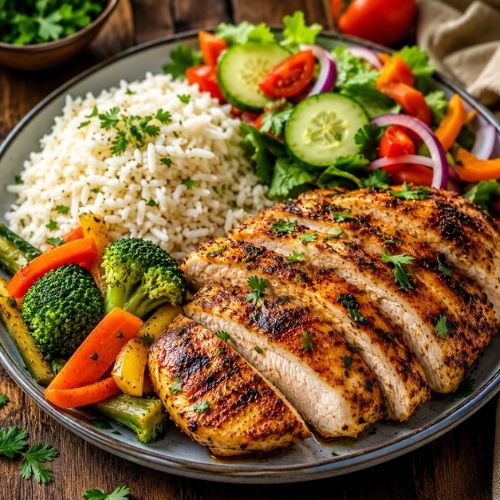
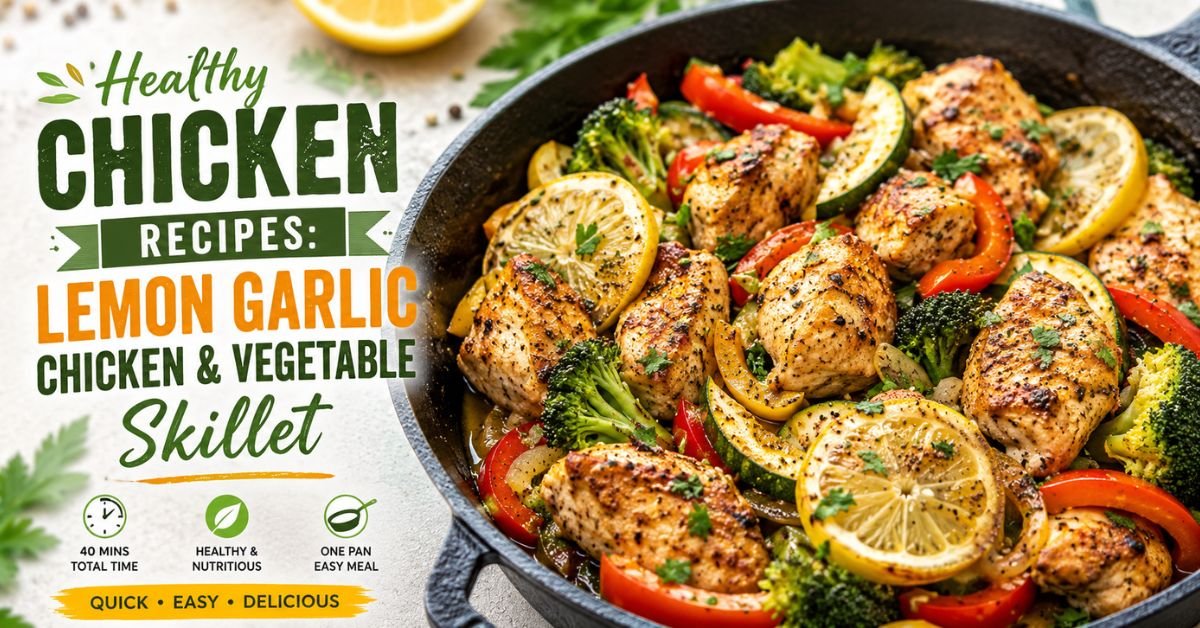
The finished skillet is visually appealing, with golden-brown chicken nestled among colorful vegetables and coated in a glossy lemon-garlic pan sauce. As the chicken hits the hot skillet, you should hear a lively sizzle rather than a quiet simmer. That sound is one of the first clues that your pan is hot enough to encourage browning.
The aroma develops in layers. First comes the savory fragrance of garlic and seasoned chicken. Then the vegetables contribute their natural sweetness, while fresh lemon juice cuts through the richness with bright acidity. A small amount of broth helps turn the flavorful browned bits on the bottom of the skillet into a light sauce.
Texture is equally important. Properly cooked chicken should be tender and juicy, while vegetables should remain pleasantly crisp-tender rather than soft and watery. The sauce should cling lightly to the chicken instead of pooling like a thick gravy.
This recipe is particularly useful for busy weeknights because most of the work happens in one skillet. It is also flexible enough for meal preparation, ingredient substitutions, and different dietary preferences.
Recipe Quick-Facts Summary Card
| Recipe Detail | Information |
| Recipe Name | Lemon Garlic Chicken & Vegetable Skillet |
| Prep Time | 15 minutes |
| Cook Time | 20–25 minutes |
| Total Time | About 40 minutes |
| Skill Level | Easy to Intermediate |
| Servings | 4 |
| Estimated Calories | About 390 calories per serving |
| Estimated Cost | Approximately $2.50–$4.00 per serving, depending on location and ingredients |
| Primary Diet Type | High-protein, vegetable-forward |
| Cuisine Style | American-inspired |
| Main Cooking Method | Stovetop skillet |
| Best For | Weeknight dinner, meal prep, family meals |
Nutrition and cost figures are estimates and can vary according to ingredient brands, portion sizes, and preparation methods.
Why This Recipe Works
- Balanced flavor without a heavy sauce: Lemon provides acidity, garlic contributes savory intensity, and olive oil carries the aromatic flavors across the chicken and vegetables. The result is flavorful without requiring a cream-based sauce.
- A reliable browning technique: Cutting the chicken into evenly sized pieces helps it cook at a similar rate. Drying the surface before seasoning also improves contact between the chicken and the hot pan, encouraging better browning.
- Vegetables remain appealing: The vegetables are not simply thrown into the pan at the same time. Firmer vegetables receive more cooking time, while quicker-cooking ingredients are added later. This preserves color and texture.
- Efficient one-pan cooking: Cooking in one skillet means fewer dishes and allows the browned chicken bits left behind in the pan to become part of the sauce. That is both practical and flavorful.
- Easy to customize: The basic method works with broccoli, zucchini, bell peppers, green beans, mushrooms, spinach, or other suitable vegetables. You can also adjust the seasoning according to your household’s preferences.
Kitchen Tools & Equipment Guide
A large skillet is the most important piece of equipment. A 10- to 12-inch skillet gives the chicken enough surface area to brown instead of overcrowding and steaming.
A cast-iron skillet holds heat exceptionally well and can produce excellent browning. A heavy stainless-steel skillet is another strong choice because it also encourages fond formation and provides excellent temperature control.
An instant-read thermometer is highly recommended. It removes guesswork from chicken preparation. Chicken should reach a safe internal temperature of 165°F (74°C).
You will also need:
- A sharp chef’s knife
- Cutting board
- Measuring spoons
- Measuring cups
- Tongs or a sturdy spatula
- Small bowl for mixing the sauce
- Microplane or fine grater for garlic, if preferred
- Paper towels for drying the chicken
The right equipment matters because a crowded or lightweight pan can lose heat rapidly when cold ingredients are added.
Ingredient Selection, Quality & Substitutions
Chicken
- 1½ lb boneless, skinless chicken breasts (680 g), cut into bite-size pieces
- 1 teaspoon fine salt (6 g)
- ½ teaspoon black pepper (1 g)
- 1 teaspoon paprika (2 g)
- ½ teaspoon dried Italian seasoning (1 g)
Chicken breast is lean, readily available, and cooks quickly. Choose pieces with a consistent thickness and avoid chicken that has an unusually strong odor or slimy surface.
Skinless, boneless chicken thighs can be substituted. They generally contain more fat and are more forgiving if slightly overcooked, but the cooking time may differ.
Olive Oil
- 1½ tablespoons olive oil (22 mL)
Olive oil provides the fat needed for sautéing and helps transfer heat efficiently to the chicken and vegetables.
Substitution: Avocado oil or another suitable neutral cooking oil can be used.
Vegetables
- The amount of red bell pepper needed is about 150 grams, sliced
- Sliced medium zucchini – about 200 grams
- 1½ cups broccoli florets — about 135 g
- ½ medium yellow onion, sliced — about 75 g
- 2 cups baby spinach — about 60 g
These vegetables create a useful mixture of color, texture, and cooking times. Bell peppers become sweet and tender, broccoli retains some bite, zucchini adds moisture, and spinach wilts quickly into the finished skillet.
You can substitute green beans, mushrooms, asparagus, or additional bell pepper according to availability.
Lemon-Garlic Sauce
- 3 cloves garlic, finely minced — about 9 g
- ½ cup low-sodium chicken broth — 120 mL
- 30 mL of fresh lemon juice – 2 tablespoons
- 1 teaspoon lemon zest — about 2 g
- A teaspoon of Dijon mustard weighs about 5 grams
- 1 teaspoon honey — about 7 g
- ½ teaspoon dried oregano — about 1 g
- Black pepper – 1 teaspoon equals 0.5 grams
Fresh lemon juice is preferable to bottled lemon juice when available because its aroma is brighter and more expressive. Lemon zest adds concentrated citrus oils without adding substantial liquid.
The small amount of honey does not make the sauce sweet. Instead, it helps soften the sharp edges of lemon and mustard while contributing to a more rounded flavor.
Optional Finishing Ingredients
- 1 tablespoon chopped fresh parsley — about 4 g
- 1–2 lemon wedges
- Optional red pepper flakes for heat
Tested Dietary Substitutions
For a dairy-free meal, no dairy substitution is necessary because the base recipe contains no dairy.
For a lower-sodium version, use unsalted or very-low-sodium broth and reduce the added salt. Taste the finished sauce before adding more seasoning.
For a lower-carbohydrate version, omit the honey or replace it with a small amount of a suitable zero-calorie sweetener if desired. Serve with additional non-starchy vegetables instead of rice or bread.
For a gluten-free version, the ingredients are naturally adaptable, but always check packaged broth, Dijon mustard, and seasoning labels for gluten-containing ingredients or cross-contact if strict avoidance is required.
Culinary Masterclass: Step-by-Step Instructions
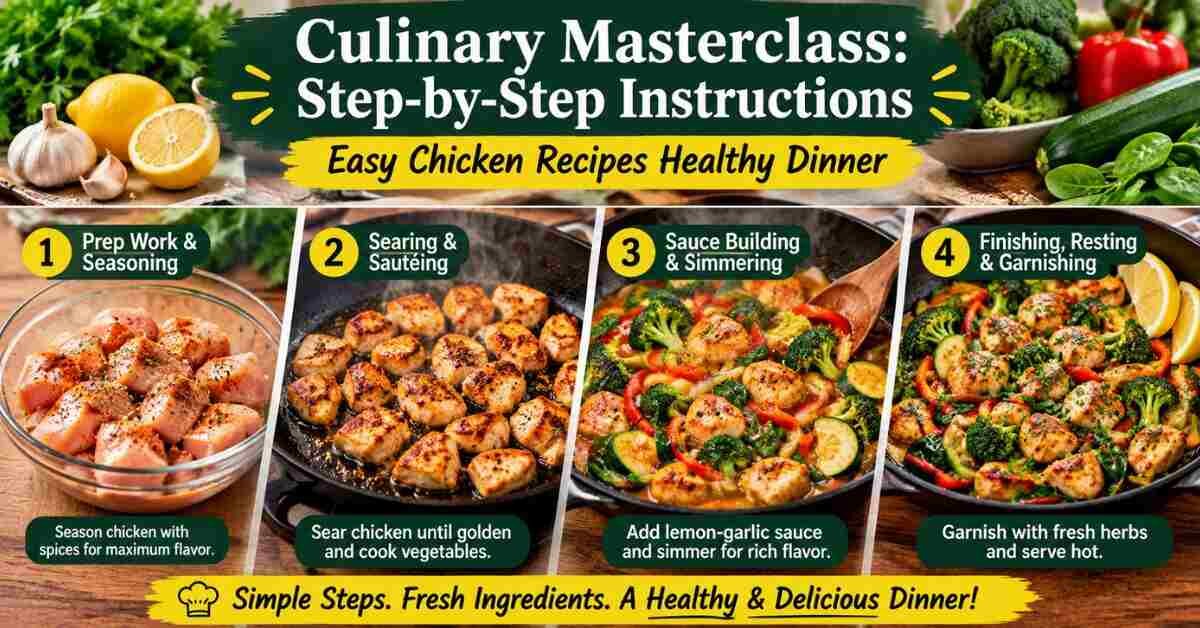
Step 1: Prep Work & Seasoning
Begin by preparing all ingredients before turning on the stove. This recipe moves quickly once the skillet becomes hot.
Pat the chicken dry thoroughly with paper towels. This small step is surprisingly important. Excess surface moisture must evaporate before the chicken can brown effectively, so wet chicken tends to steam instead of sear.
Cut the chicken into pieces approximately 1 to 1½ inches (2.5–4 cm) across. Try to keep the pieces similar in size.
Place the chicken in a bowl and season with salt, black pepper, paprika, and Italian seasoning. Toss until every piece is evenly coated.
Prepare the vegetables separately. Slice the onion and bell pepper, cut the zucchini, and divide the broccoli into relatively small florets.
In another small bowl, whisk together chicken broth, lemon juice, lemon zest, Dijon mustard, honey, oregano, and black pepper.
Having the sauce ready before cooking is part of professional kitchen organization. Once the pan is hot, you should not need to stop and measure ingredients.
Step 2: Searing & Sautéing
Place a large skillet over medium-high heat and allow it to heat for approximately 1–2 minutes.
Add the olive oil. When the oil is shimmering but not smoking heavily, add the chicken in a single layer.
Do not immediately move the chicken around.
Allow the first side to cook for approximately 2–3 minutes. You are looking for a noticeable golden-brown surface. When chicken begins to release naturally from the pan, it is often easier to turn without tearing the developing crust.
Turn the pieces and cook the second side for another 2 minutes.
The chicken does not necessarily need to be fully cooked at this stage because it will finish later in the sauce. However, avoid leaving the center raw for an extended period.
Transfer the browned chicken to a clean plate.
Reduce the heat to medium. Add the onion and broccoli to the same skillet. Stir and cook for approximately 3 minutes.
Add the bell pepper and zucchini. Continue cooking for another 3–4 minutes.
You want the vegetables to become brighter and slightly tender while retaining some structure. If they begin releasing excessive water, increase the heat slightly and avoid overcrowding.
Add the minced garlic during the final 30–45 seconds of vegetable sautéing. Stir constantly.
Garlic can become bitter if aggressively browned, so the goal is to make it fragrant rather than dark.
Step 3: Sauce Building & Simmering
Return the browned chicken and any accumulated juices to the skillet.
Pour in the prepared lemon-garlic sauce.
Use a wooden spoon or spatula to scrape the browned bits from the bottom of the skillet. These caramelized bits, often called fond, contain concentrated savory flavors created during browning.
Bring the mixture to a gentle simmer.
Reduce the heat to medium-low and cook for approximately 5–7 minutes, stirring occasionally.
The sauce should gradually reduce and become slightly glossy. It should coat the chicken lightly rather than become thick like a cream sauce.
Add the spinach during the final 1–2 minutes. Fold it through the skillet until just wilted.
Now check the chicken with an instant-read thermometer by inserting the probe into the thickest piece. The chicken must reach 165°F (74°C) for food safety.
If the chicken has not reached the target temperature, continue cooking briefly and check again.
Avoid relying only on color to judge doneness. A thermometer provides a much more reliable measurement.
Step 4: Finishing, Resting, and Garnishing
Once the chicken reaches 165°F (74°C), remove the skillet from the heat.
Taste the sauce carefully.
This is the professional finishing stage. Ask three questions:
- Does it need more acidity?
- Does it need more seasoning?
- Does it need a little more richness?
If the flavor tastes heavy, add a small squeeze of fresh lemon. If it tastes flat, a modest pinch of salt may help. If it tastes too sharp, allow it to sit briefly and taste again before adding anything else.
Let the skillet rest for approximately 3–5 minutes.
During this short resting period, the juices redistribute and the sauce settles around the chicken.
Finish with chopped fresh parsley and optional red pepper flakes.
Serve immediately while the vegetables are vibrant and the sauce is warm.
The Science of Flavor & Chef’s Insider Techniques
That is why drying the chicken and avoiding overcrowding matter so much.
The most important flavor-development technique in this recipe is the Maillard reaction. When the chicken surface becomes sufficiently hot and relatively dry, amino acids and reducing sugars participate in complex browning reactions. This creates hundreds of flavor compounds responsible for the roasted, savory character associated with properly seared food.
Control the Pan Temperature
A hot pan is useful, but maximum heat is not automatically better.
If the pan is too cool, chicken releases moisture and steams. If it is excessively hot, the exterior may burn before the interior cooks safely.
Medium-high heat is a useful starting point, followed by adjustments as the ingredients enter the skillet.
Protect Garlic From Burning
Garlic contains delicate aromatic compounds that can become harsh when heavily browned. Adding it toward the end of vegetable sautéing gives it enough time to release its fragrance without turning bitter.
Use Acidity Strategically
Lemon juice provides acidity, which helps balance the richness of olive oil and the savory intensity of browned chicken.
The key is moderation. Too much lemon can overpower the dish, while too little can make a sauce taste dull.
Build Flavor in Layers
Instead of putting everything into the skillet simultaneously, the recipe builds flavor in stages:
Seasoned chicken → browning → vegetables → garlic → deglazing → lemon sauce → fresh herbs.
Each stage contributes something different.
Don’t Skip the Fond
Those browned pieces on the bottom of the skillet are not burnt debris when properly developed. They are concentrated flavor. Deglazing with broth loosens them and incorporates them into the sauce.
Rest Before Serving
A short rest after cooking gives the chicken time to stabilize before serving. It also allows the sauce to settle and cling more effectively to the ingredients.
8. Common Cooking Mistakes & Troubleshooting Guide
Mistake 1: Overcrowding the Skillet
Problem: The chicken turns pale and releases a large amount of liquid.
Why it happens: Too much chicken lowers the pan temperature and prevents effective browning.
Fix: Cook in batches if necessary. Leave enough space around the chicken pieces for hot air and pan heat to circulate.
Mistake 2: Cutting Chicken Pieces Unevenly
Problem: Some pieces are dry while others are not fully cooked.
Why it happens: Small pieces finish much faster than large pieces.
Fix: Cut chicken into similarly sized pieces. A thermometer can be used to measure the thickness of the thickest piece.
Mistake 3: Burning the Garlic
Problem: The sauce tastes bitter or harsh.
Why it happens: Garlic was added too early or cooked over excessive heat.
Fix: Add garlic during the final portion of vegetable sautéing. If the garlic is already badly burned, remove the affected mixture and restart the sauce rather than attempting to mask a strong bitter flavor.
Mistake 4: Overcooking the Vegetables
Problem: The vegetables become mushy and watery.
Why it happens: They were cooked too long or cut too small.
Fix: Add vegetables according to cooking time. Broccoli and onion can enter first, while zucchini and bell peppers follow later. Spinach should be added near the end.
If the Sauce Is Too Thin
Allow it to simmer uncovered for a few additional minutes. Evaporation will concentrate the liquid.
If the Sauce Is Too Sharp
Add a small amount of broth and taste again. A tiny amount of honey can also soften excessive acidity, but add it gradually.
If the Chicken Is Dry
Dry chicken is usually the result of overcooking rather than insufficient sauce. Use a thermometer and remove the chicken once it safely reaches 165°F (74°C).
Preparation of meals, storing the food, and reheating the food
Food safety should always come before convenience.
Use separate cutting boards or thoroughly wash and sanitize the work surface between raw chicken and ready-to-eat ingredients. Raw poultry should be handled with soap and water.
Do not rinse raw chicken as a routine preparation step. Rinsing can spread contaminated droplets around the sink and surrounding surfaces.
The chicken should reach an internal temperature of 165°F (74°C).
Refrigerator Storage
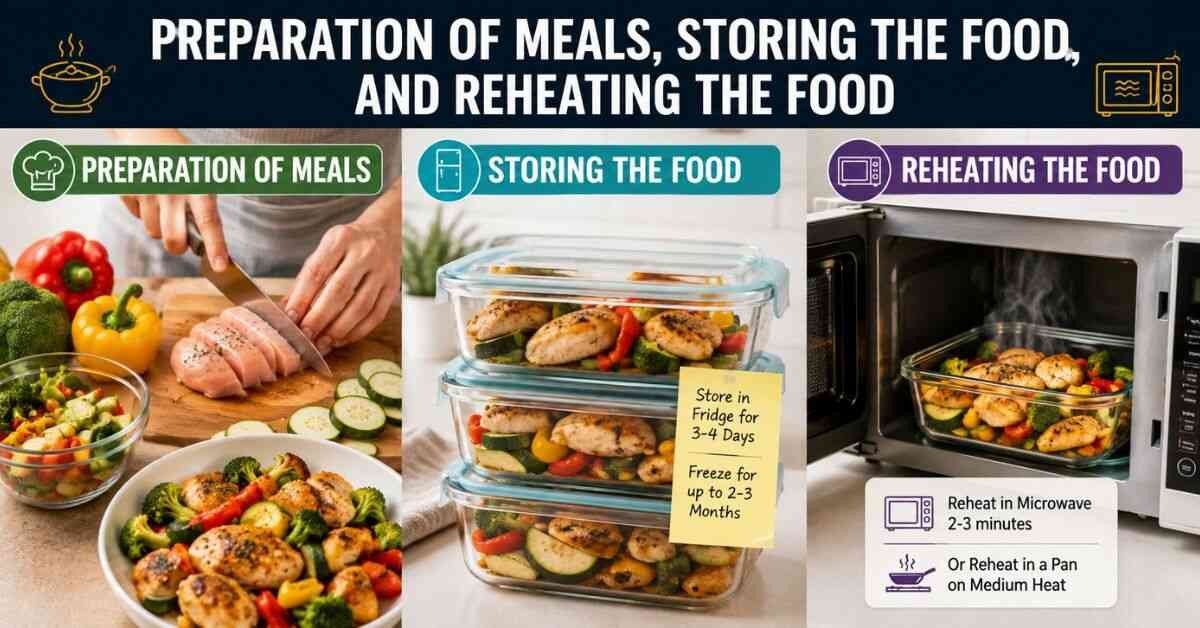
Transfer leftovers to shallow, covered containers and refrigerate promptly. Cooked leftovers should generally be consumed within 3–4 days when properly refrigerated at 40°F (4°C) or below.
Do not leave cooked chicken sitting at room temperature for extended periods. Refrigerate perishable food within 2 hours, or within 1 hour when ambient temperatures are above 90°F (32°C).
Freezer Storage
For longer storage, freeze the cooked chicken and vegetables in airtight freezer-safe containers.
For best quality, use within approximately 2–3 months. Food kept continuously frozen at 0°F (-18°C) remains safe indefinitely, but quality can deteriorate over time.
Meal-Prep Strategy
Divide the cooled chicken and vegetables into individual containers.
If serving with rice, quinoa, or another starch, keep portions balanced rather than filling the container entirely with the grain.
For best texture, slightly undercook vegetables during meal preparation so they do not become overly soft after reheating.
Reheating
Reheat leftovers until they are steaming hot throughout. Microwave in short intervals, stirring where practical, or reheat gently in a skillet with a tablespoon or two of broth.
Avoid prolonged high-heat reheating because chicken breast can become dry quickly.
Nutrition & Dietary Considerations
The following is an estimated nutrition profile per serving, assuming the recipe makes four servings and the listed ingredients are used.
| Nutrient | Estimated Amount |
| Calories | ~390 kcal |
| Protein | ~48 g |
| Carbohydrates | ~18 g |
| Fat | ~15 g |
| Fiber | ~4–5 g |
| Sodium | ~600–750 mg |
Actual nutrition can vary substantially depending on chicken size, broth brand, salt quantity, oil absorption, and serving size. For medically necessary dietary calculations, use the nutrition label of the exact ingredients you purchase and a reliable nutrition calculator.
The recipe provides a substantial amount of protein from chicken and includes several vegetables. However, a healthy meal is best considered within the context of the overall eating pattern rather than judged from one recipe alone.
Reducing salt and using unsalted or low-sodium broth will help you lower your sodium intake.
For a lower-carbohydrate meal, omit the honey and serve the skillet with additional non-starchy vegetables.
For a higher-energy meal, serve it with whole-grain rice, quinoa, potatoes, or another preferred carbohydrate source.
Pairings & Serving Suggestions
This skillet is versatile enough to serve as a complete meal on its own, but the right side dish can make it even more satisfying.
Whole-Grain Pairings
Serve the lemon garlic chicken over:
- Brown rice
- Quinoa
- Farro
- Barley
- Whole-grain couscous
These options absorb the flavorful pan juices while adding texture.
Vegetable Pairings
For a vegetable-heavy dinner, add a simple side salad containing:
- Romaine lettuce
- Cucumber
- Tomato
- Fresh herbs
- Lemon vinaigrette
Keep the dressing bright and light so it does not compete with the lemon-garlic sauce.
Bread
A small portion of crusty whole-grain bread works beautifully for soaking up the pan sauce.
Potato Pairings
Roasted baby potatoes or a modest portion of mashed potatoes can turn this lighter skillet into a more substantial family dinner.
Beverage Pairings
For a non-alcoholic option, sparkling water with lemon or lime works particularly well. Unsweetened iced tea is another refreshing choice.
The guiding principle is contrast: bright lemon chicken pairs best with sides that provide either mild creaminess, hearty texture, or fresh crunch.
Final Verdict & Reader Invitation
If you want easy chicken recipes healthy dinner ideas that deliver genuine flavor without complicated techniques, this Lemon Garlic Chicken & Vegetable Skillet deserves a place in your weekly rotation.
The combination of golden chicken, colorful vegetables, fresh lemon, aromatic garlic, and a light pan sauce creates a dinner that is practical enough for busy weeknights but flavorful enough to serve to guests.
Cook, Share & Enjoy: Your Next Favorite Chicken Dinner
Try the recipe, make it your own with your favorite vegetables, and share your results with the DaliyDelish community. Rate the recipe with stars and leave your questions, substitutions, or cooking tips in the comments your feedback can help other home cooks make an even better dinner.
A good healthy chicken dinner should combine a lean protein source with vegetables and a flavorful cooking method that does not require excessive amounts of added fat. This Lemon Garlic Chicken & Vegetable Skillet is one practical option because it uses one pan, cooks in about 40 minutes, and can be customized with different vegetables.
The most important factors are evenly sized pieces, appropriate pan temperature, and avoiding overcooking. Pat the chicken dry before seasoning, sear it without constantly moving it, and use an instant-read thermometer. Remove the chicken from the heat once it reaches the safe internal temperature of 165°F (74°C).
Yes. Cooked chicken and vegetables can be portioned into airtight containers and refrigerated for approximately 3–4 days. Reheat gently with a small splash of broth to help prevent the chicken from drying out.
Absolutely. Boneless, skinless chicken thighs are a suitable substitution and tend to remain juicy because they contain more fat. Cut them into similar-sized pieces and verify that the thickest pieces reach 165°F (74°C) before serving.

Tosique Haider -Passionate writer sharing informative, engaging, and easy-to-read articles across different topics. Focused on delivering valuable content that helps readers learn, explore, and stay inspired every day.