Introduction:
A truly memorable sweet recipe should do more than satisfy a craving. It should create that moment when you take the first bite and notice several things at once: a delicate sweetness, a creamy or tender texture, a pleasant aroma, and enough flavor contrast to make you want another spoonful. That is exactly what I wanted to achieve with this DaliyDelish dessert.
After testing this recipe in the DaliyDelish kitchen, the goal was to create an approachable dessert that feels special enough for guests but remains practical for an ordinary family meal. Many homemade desserts fail because they are either overly sweet, dry, complicated, or dependent on hard-to-find ingredients. This version focuses on dependable ingredients, straightforward technique, and carefully balanced sweetness.
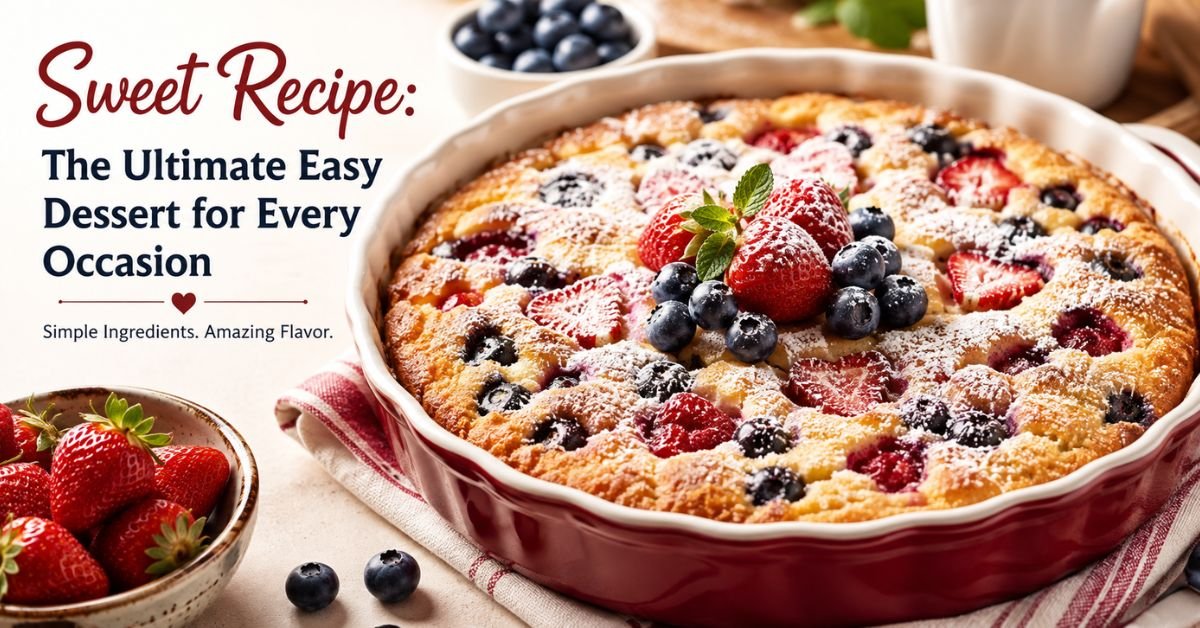
The finished dessert has a soft, creamy center with a lightly golden surface, depending on the baking dish and finishing method you use. Vanilla provides a warm background aroma, while the combination of sugar and dairy creates a rounded sweetness rather than a one-dimensional sugary taste. A small amount of salt is especially important: it does not make the dessert salty, but it helps sharpen the other flavors.
During testing, one of the most important observations was that temperature control matters as much as ingredients. A dessert can go from perfectly tender to dry surprisingly quickly. I therefore recommend watching the visual and textural cues rather than relying only on the clock.
This recipe is also flexible. You can serve it simply with fresh berries, add toasted nuts for crunch, or adapt it for several dietary preferences. Whether you are searching for an easy sweet recipe, a homemade dessert for the weekend, or something simple to serve after dinner, this recipe provides a reliable foundation.
Recipe Quick-Facts Summary Card
| Detail | Information |
| Recipe Type | Sweet Dessert |
| Prep Time | 15 minutes |
| Cook Time | 30–35 minutes |
| Total Time | 45–50 minutes |
| Skill Level | Easy to Intermediate |
| Servings | 8 |
| Estimated Calories | Approximately 285 calories per serving |
| Estimated Cost | About $1.00–$1.75 per serving, depending on ingredients and location |
| Primary Diet Type | Vegetarian |
| Cuisine Style | American-inspired homemade dessert |
| Best Served | Slightly warm or chilled |
| Main Keyword | sweet recipe |
Nutrition and cost figures are estimates. Actual values vary according to brands, ingredient quantities, serving size, and substitutions.
Why This Recipe Works

- Balanced sweetness: The sugar level is intentionally moderate rather than excessive. Vanilla and a small amount of salt help make the sweetness taste fuller and more sophisticated.
- Reliable texture: The ingredient proportions are designed to produce a tender, moist dessert rather than one that becomes dry or rubbery. Gentle mixing is particularly important because overworking the batter can negatively affect texture.
- Simple ingredients: You do not need specialty pastry ingredients. Basic pantry and refrigerator staples are enough to create a dessert that tastes considerably more elaborate than the preparation suggests.
- Flexible serving options: The finished dessert works beautifully with berries, sliced fruit, lightly whipped cream, yogurt, chopped nuts, or a dusting of powdered sugar.
- Efficient preparation: Most of the work happens during the short preparation stage. Once the dessert is in the oven, you can concentrate on the rest of your meal rather than standing over a saucepan.
The most important lesson from testing is that good dessert technique is often about restraint. Mix only until ingredients are combined, avoid excessive oven temperature, and remove the dessert when its texture indicates that it is ready.
Kitchen Tools & Equipment Guide
You do not need professional pastry equipment to make this sweet recipe successfully.
Essential Equipment
- 8-inch or 9-inch baking dish: A ceramic, glass, or metal baking dish can work. The material influences browning and cooking speed.
- Large mixing bowl: Provides enough space to combine ingredients without splashing.
- Whisk: Useful for incorporating eggs and sugar smoothly.
- Rubber spatula: Ideal for scraping the bowl and folding ingredients without overmixing.
- Baking calls for accurate measurement of cups and spoons.
- Kitchen scale: Recommended for the most consistent metric measurements.
- Instant-read thermometer: Optional, but useful for checking temperature when troubleshooting custard-style desserts.
- Cooling rack: Helps prevent excessive condensation underneath the baking dish.
The right equipment improves consistency. A dark metal pan generally browns faster than a light-colored ceramic dish, so always use visual cues as well as the stated baking time.
Ingredient Selection, Quality & Substitutions
Ingredients
| Ingredient | US Customary | Metric |
| All-purpose flour | 1½ cups | 188 g |
| Granulated sugar | ¾ cup | 150 g |
| Baking powder | 1½ tsp | 6 g |
| Fine salt | ¼ tsp | 1.5 g |
| Unsalted butter, melted | ½ cup | 113 g |
| Large eggs | 2 | about 100 g without shells |
| Whole milk | ¾ cup | 180 ml |
| Pure vanilla extract | 2 tsp | 10 ml |
| Fresh lemon juice | 1 tbsp | 15 ml |
| Lemon zest | 1 tsp | about 2 g |
| Fresh berries | 1 cup | about 150 g |
| Powdered sugar, optional | 1 tbsp | 8 g |
All-Purpose Flour
All-purpose flour gives this dessert enough structure to hold together while maintaining a tender bite. Spoon flour into a measuring cup and level it rather than scooping directly from a compacted flour container.
Too much flour can make a sweet dessert heavy and dry, while too little can leave the center weak.
Granulated Sugar
Sugar provides sweetness, but it also contributes to browning, moisture retention, and texture. Avoid dramatically increasing the sugar simply because you prefer sweeter desserts; excessive sugar can alter the finished structure.
For a slightly less sweet version, you can reduce the sugar modestly, although significant reductions may change texture.
Unsalted Butter
Melted butter contributes richness and a smooth mouthfeel. Unsalted butter is preferable because it allows you to control the salt independently.
If using salted butter, reduce or omit the additional salt.
Eggs
Eggs provide structure and help emulsify the fat and liquid ingredients. Bring them close to room temperature before mixing if possible. Room-temperature eggs generally incorporate more smoothly.
Whole Milk
Whole milk gives the dessert a richer texture. For a lighter version, 2% milk can work, although the final mouthfeel may be slightly less creamy.
Vanilla
Use a good-quality vanilla extract because vanilla is one of the dominant background flavors in a simple dessert. Vanilla paste can also be used according to the manufacturer’s conversion instructions.
Lemon Juice and Zest
The lemon is not intended to make the dessert taste strongly citrusy. Instead, the acidity helps counterbalance sweetness and gives the finished dessert a brighter flavor.
Fresh Berries
Strawberries, raspberries, blueberries, or blackberries can all work. Firm but ripe fruit is best. Very watery berries can release excess liquid during baking.
Tested Substitutions
Dairy-free: Replace butter with a dairy-free baking butter and whole milk with an unsweetened plant-based milk suitable for baking.
Lower-sodium: Use unsalted butter and reduce or omit added salt. Keep in mind that ingredient labels vary.
Gluten-free: A tested 1:1 gluten-free baking flour blend may work, but results vary among blends. Choose one formulated for baking and preferably containing a suitable binder.
Lower-sugar: A modest sugar reduction is possible, but replacing sugar completely can substantially change texture and browning.
Nut-free: The base recipe is naturally nut-free. If adding toppings, check labels carefully for cross-contact information when serving someone with a serious allergy.
Culinary Masterclass: Step-by-Step Instructions
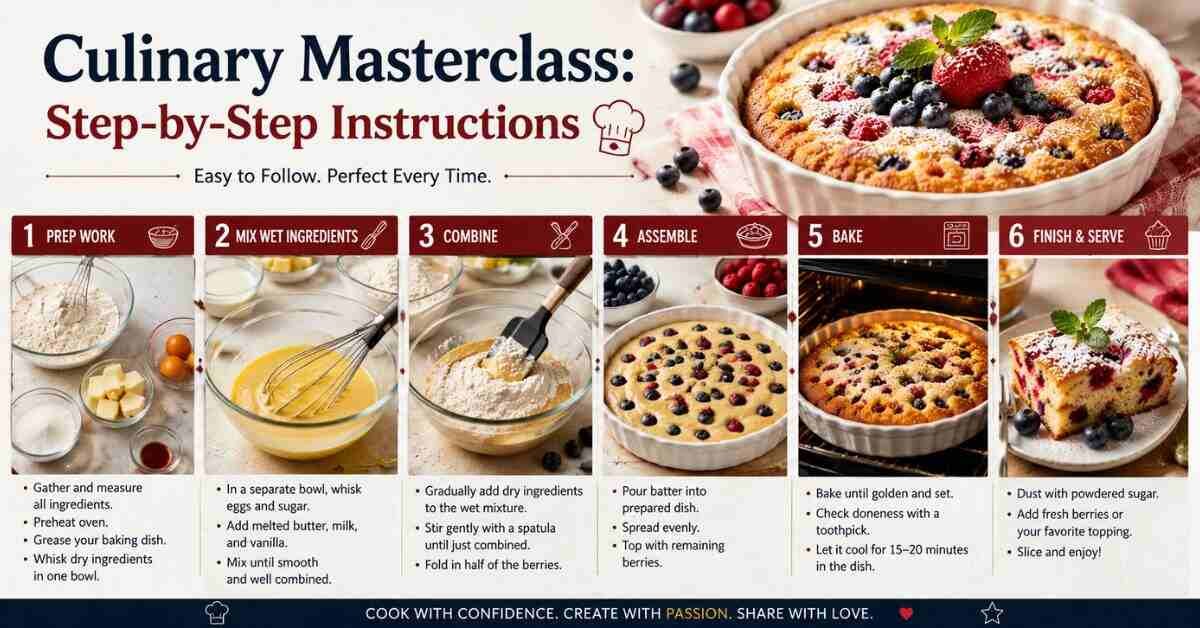
Step 1: Prep Work & Seasoning
Pre-heat the oven to 350°F (175°C).
Grease an 8-inch or 9-inch baking dish lightly with butter or baking spray. If you want especially easy serving and cleanup, line the bottom with parchment paper, leaving enough overhang to help lift the dessert after cooling.
Measure the flour, baking powder, and salt into a medium bowl. Whisk them together for approximately 20–30 seconds. This distributes the baking powder and salt evenly so that you do not get concentrated pockets in the finished dessert.
In a separate large bowl, whisk the eggs and sugar until the mixture becomes smoother and slightly lighter. You do not need to whip the eggs into a dramatic foam. The objective is even incorporation.
Slowly add the melted butter while whisking.
Important: Allow melted butter to cool until warm rather than piping hot before adding it to eggs. Excessively hot butter can partially cook the eggs and create unpleasant lumps.
Add the milk, vanilla, lemon juice, and lemon zest. Whisk until smooth.
Add the dry ingredients gradually. Switch from a whisk to a spatula once the flour begins disappearing.
Mix only until you can no longer see dry flour.
A few tiny lumps are preferable to aggressively mixing the batter until completely smooth.
Fold approximately half of the berries into the batter.
Pour the batter into the prepared baking dish and gently smooth the surface.
Scatter the remaining berries over the top.
Step 2: Searing & Sautéing
Unlike a savory skillet recipe, this sweet recipe does not require searing meat or sautéing vegetables. Instead, this stage is about controlled heat and surface browning.
Place the baking dish on the center rack of the preheated oven.
Bake for approximately 30–35 minutes.
Begin checking around the 28-minute mark because ovens vary considerably.
Watch the surface. You are looking for a lightly golden top and a center that appears set but still has a small amount of softness.
Do not repeatedly open the oven during the first portion of baking. Every unnecessary door opening allows heat to escape and can interfere with even cooking.
If the edges are becoming deeply brown while the center remains underdone, loosely cover the top with aluminum foil and continue baking.
The aroma should gradually shift from raw flour and butter to a warm combination of vanilla, browned butter, and lightly caramelized sugar.
That aromatic transition is one of the best sensory indicators that the dessert is approaching completion.
Step 3: Sauce Building & Simmering
This recipe does not require a traditional savory sauce. Instead, you can create a quick berry finishing sauce while the dessert bakes.
Place approximately ½ cup of berries in a small saucepan with 1 tablespoon of water and 1–2 teaspoons of sugar if desired.
Cook over medium-low heat for several minutes, stirring gently.
As the fruit warms, its juices will release and create a naturally colorful sauce. Do not boil aggressively. Gentle heat preserves the fresh character of the berries.
For additional brightness, add a few drops of lemon juice after removing the pan from the heat.
The finished sauce should be spoonable rather than watery.
If it looks too thin, continue cooking briefly. It can be thickened by adding water one teaspoon at a time.
This optional component gives the dessert a restaurant-style presentation without requiring complicated pastry work.
Step 4: Finishing, Resting, and Garnishing
Remove the dessert from the oven when the center is set and a toothpick inserted into the thickest area comes out with a few moist crumbs rather than wet batter.
Do not expect the toothpick to come out completely dry. Overbaking until the toothpick is perfectly clean can produce a dry dessert.
For food safety, egg-containing desserts should be thoroughly cooked. If using a thermometer for a custard-like center, the exact safe temperature depends on the formulation; do not rely on temperature alone for this cake-style preparation. Follow the visual and structural cues above.
Allow the dessert to cool in the dish for approximately 15–20 minutes.
This resting period is important. The internal structure continues settling after removal from the oven, and cutting immediately can make the portions appear less stable.
Dust lightly with powdered sugar immediately before serving.
Add fresh berries and, if desired, a spoonful of the warm berry sauce.
For a more elegant presentation, place one slice slightly off-center on each plate and add a small cluster of fresh berries alongside it.
The ideal bite should contain tender cake, bright fruit, gentle vanilla sweetness, and just enough acidity to keep the finish refreshing rather than heavy.
The Science of Flavor & Chef’s Insider Techniques
A successful sweet recipe is essentially a small lesson in food science.
Maillard Reaction and Browning
The golden surface develops through several browning reactions, including the Maillard reaction, while sugars also contribute to caramelization. These reactions create hundreds of aroma and flavor compounds that make baked desserts taste more complex.
However, browning is not always an indication that the center is cooked. A dessert can develop a beautifully golden exterior before its interior has fully set.
Sugar Does More Than Sweeten
Sugar affects tenderness, moisture retention, browning, and structure. This is why simply cutting a large amount of sugar from a baking recipe can produce unexpected results.
Fat Creates Mouthfeel
Butter coats flour particles and contributes richness. The result is a softer, more luxurious texture and a lingering buttery aroma.
Acid Creates Balance
Lemon juice provides acidity that contrasts with sweetness. Think of it as turning up the volume on the other flavors rather than making the dessert taste sour.
Temperature Control
A stable oven temperature encourages even baking. It is possible to brown the exterior before the center is cooked if the heat is excessive.
A useful chef’s habit is to learn what a properly baked dessert looks and feels like, rather than relying entirely on a timer.
Resting Matters
When the dessert leaves the oven, its internal structure is still changing. Cooling allows starches, proteins, fats, and moisture to settle into a more stable texture.
This is why patience improves the final slice. sweet recipe
Common Cooking Mistakes & Troubleshooting Guide
Mistake 1: Overmixing the Batter
Problem: The dessert becomes dense or chewy.
Why it happens: Excessive mixing develops gluten in wheat flour.
You can fix this by mixing only until the dry ingredients are gone. Once combined, stop.
Mistake 2: Using Hot Melted Butter
Problem: The batter becomes lumpy or the eggs partially cook.
Fix: Melt the butter first and allow it to cool until warm before incorporating it.
Mistake 3: Overbaking
Problem: The edges become dry and the center loses its tenderness.
Fix: Begin checking before the minimum cooking time is complete. Look for a set center and moist crumbs rather than a completely dry toothpick.
Mistake 4: Cutting Immediately
Problem: Slices appear fragile or collapse.
Fix: Rest the dessert for at least 15 minutes before serving.
If the Dessert Is Too Dry
It was likely baked too long, measured with excessive flour, or baked in a pan that heats faster than expected.
Serve with fresh berries and a spoonful of yogurt or berry sauce to add moisture.
If the Center Is Too Wet
Return it to the oven in short increments of 5 minutes. Check again after each interval.
If the top is already dark, loosely cover it with foil.
If the Dessert Is Not Sweet Enough
Rather than increasing sugar dramatically in the batter, serve it with powdered sugar, berries, or a lightly sweetened sauce. This allows you to adjust sweetness at the table without changing the structure of the baked dessert.
Preparation, storage, and reheating of food
Because this dessert contains eggs and dairy, proper food handling is important.
Before Cooking
Wash hands, utensils, and work surfaces before preparing the batter. Keep ingredients that require refrigeration appropriately chilled until needed.
Avoid using the same utensils for raw eggs and ready-to-eat toppings without washing them thoroughly.
After Baking
Allow the dessert to cool appropriately, but do not leave an egg- and dairy-containing dessert at room temperature for extended periods.
For longer storage, refrigerate it promptly in a covered container.
Refrigerator Storage
Make sure leftovers are stored tightly covered or in an airtight container.
For best quality, consume within approximately 3–4 days when continuously refrigerated at 40°F (4°C) or below.
Refrigeration may firm up the texture. sweet recipe
Freezer Storage
For longer storage, individual portions can be wrapped well and frozen.
Use freezer-safe packaging and label the container with the date.
For best quality, use within approximately 1–2 months.
Thaw portions in the refrigerator rather than leaving them at room temperature for extended periods.
Reheating
For a soft, freshly baked texture, warm an individual serving gently in the microwave for approximately 10–20 seconds, depending on portion size and appliance power.
You can also warm portions in a low oven.
Avoid overheating because prolonged high heat can dry the dessert.
Fresh berries and sauce are best added after reheating, not before.
Nutrition & Dietary Considerations
The estimated nutrition per serving is approximately:
| Nutrient | Estimated Amount |
| Calories | 285 kcal |
| Protein | 4–5 g |
| Carbohydrates | 38–42 g |
| Fat | 12–14 g |
| Fiber | 1–2 g |
| Sodium | Approximately 150–190 mg |
These figures are estimates based on the listed ingredients and eight servings. Actual nutritional values can vary significantly according to the brands used, exact portion size, and substitutions.
This is a traditional dessert and should be enjoyed as part of an overall balanced eating pattern.
For a lighter serving, reduce the portion size and emphasize fresh berries as a topping. Berries provide fiber and naturally occurring micronutrients, but adding fruit does not transform a dessert into a nutritionally complete meal.
For dietary adaptations, use tested substitutions rather than assuming that every ingredient swap will behave identically. In particular, gluten-free flour blends and sugar alternatives can alter moisture, structure, and browning.
People managing allergies or medically necessary dietary restrictions should check every packaged ingredient label carefully.
Pairings & Serving Suggestions
This sweet recipe is versatile enough to serve in several ways.
With Fresh Fruit
Fresh strawberries, raspberries, blueberries, peaches, or sliced pears provide acidity and freshness that contrast beautifully with the buttery dessert.
With Yogurt
A spoonful of plain or lightly sweetened Greek-style yogurt adds a cool, creamy contrast. The slight tang also balances sweetness.
With Whipped Cream
For a classic dessert presentation, add a small amount of lightly sweetened whipped cream immediately before serving.
With Nuts
Toasted almonds, pecans, or walnuts provide a satisfying crunchy texture. Toast them separately before serving so they remain crisp.
If serving guests with nut allergies, keep nuts completely separate and clearly identified.
Beverage Pairings
For adults and children alike, cold milk is a classic pairing.
Coffee works particularly well because its bitterness contrasts with the dessert’s sweetness. Black tea, chai, or mild herbal tea can also complement the vanilla and berry flavors. sweet recipe
For a Dinner Party
Cut the dessert into neat squares and plate individually.
Add a spoonful of berry sauce, a few fresh berries, and a light dusting of powdered sugar.
The result looks elegant without requiring complicated decoration.
For Family Dessert Night
Serve the warm dessert directly from the baking dish with bowls of berries, yogurt, and whipped cream on the table. Everyone can customize their own portion.
Final Verdict & Reader Invitation
This sweet recipe is designed for the home cook who wants a dessert that feels homemade, comforting, and genuinely delicious without requiring complicated pastry techniques. Its tender texture, vanilla aroma, bright berries, and balanced sweetness make it suitable for family dinners, weekend baking, celebrations, or a simple after-dinner treat.
The biggest chef’s lesson is simple: measure carefully, mix gently, control the oven temperature, and do not overbake.
If you make this DaliyDelish recipe, serve it your favorite way and let us know how it turned out. Rate the recipe with your star rating and leave your questions, substitutions, or cooking tips in the DaliyDelish.com comments.
This recipe is beginner-friendly because it relies on basic ingredients and straightforward mixing and baking techniques. The most important steps are accurate measuring, avoiding overmixing, and checking the dessert before the maximum baking time.
Yes. You can bake the dessert ahead and refrigerate it once appropriately cooled. For the best texture, store toppings such as berries, whipped cream, and sauce separately and add them shortly before serving.
Look for a lightly golden surface, set edges, and a center that is no longer visibly liquid.Raw batter should not come out of a toothpick inserted into the center. Avoid baking until completely dry.
You can modestly reduce the sugar, although large reductions may affect texture. Another excellent approach is to maintain the recipe’s structure and serve it with unsweetened or lightly sweetened yogurt and fresh berries. The fruit’s natural acidity creates a balanced finish.

Tosique Haider -Passionate writer sharing informative, engaging, and easy-to-read articles across different topics. Focused on delivering valuable content that helps readers learn, explore, and stay inspired every day.