Introduction:
When the weekend calls for a meal that feels special without turning the kitchen into a restaurant-sized production, these Sunday meal ideas deliver exactly what a relaxed family dinner should be: comforting, generous, aromatic, and practical.
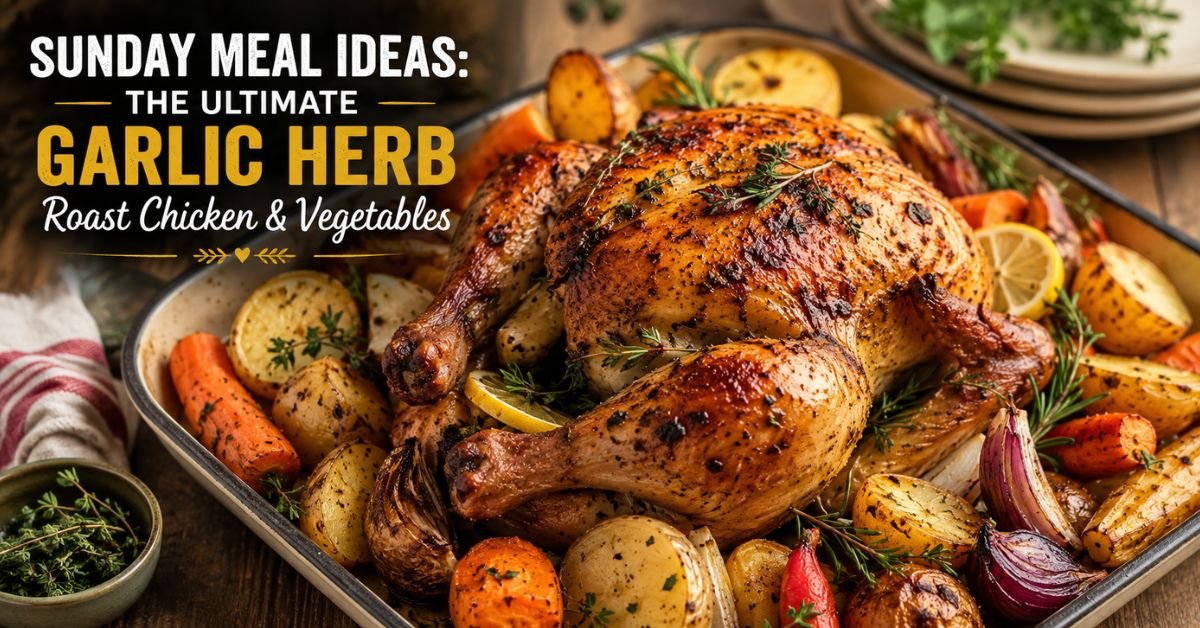
Garlic Herb Roast Chicken & Vegetables was developed with one simple goal in mind: make a Sunday dinner that looks impressive but is very easy to prepare.remains realistic for a home cook to prepare. The result is a beautifully roasted chicken surrounded by tender potatoes, carrots, onions, and garlic, all finished with the savory juices from the roasting pan.
There is a noticeable aroma right away. As the chicken roasts, garlic, rosemary, thyme, black pepper, and butter mingle with the natural juices of the chicken. The skin gradually becomes deeply golden and crisp while the vegetables caramelize around the edges.
Cut into the chicken after it has rested, and the contrast is exactly what you want: crisp skin outside, juicy meat inside, and tender vegetables underneath. The potatoes absorb some of the flavorful pan juices, while the carrots and onions develop subtle sweetness from roasting.
During testing, the biggest difference came from three details: drying the chicken thoroughly before seasoning, giving the vegetables enough space around the bird, and using an instant-read thermometer instead of relying only on cooking time.
That combination makes this recipe particularly useful for Sunday dinner. You can prepare most of the ingredients before the oven is fully heated, roast everything in one pan, and spend the cooking time preparing a salad, setting the table, or simply enjoying the slower pace of the weekend.
If you’re searching for easy Sunday meal ideas, family dinner recipes, or a satisfying Sunday roast, this recipe is designed to give you a dependable centerpiece with plenty of built-in flavor.
Recipe Quick-Facts Summary Card
| Detail | Recipe Information |
| Recipe | Garlic Herb Roast Chicken & Vegetables |
| Prep Time | 25 minutes |
| Cook Time | 1 hour 20 minutes–1 hour 35 minutes |
| Total Time | About 2 hours |
| Skill Level | Intermediate |
| Servings | 6 |
| Estimated Calories | About 560 calories per serving |
| Estimated Cost | About $3.50–$5.00 per serving, depending on local prices |
| Primary Diet Type | Naturally gluten-free |
| Main Protein | Whole chicken |
| Cooking Method | Oven roasting |
| Best For | Sunday dinner, family meals, weekend entertaining Sunday meal ideas |
Important: Nutrition and cost figures are estimates. They can vary according to chicken size, ingredient brands, portion sizes, and how much rendered fat and pan juice are consumed.
Why This Recipe Works (EEAT Value Points)
- Balanced flavor from simple ingredients: Garlic, rosemary, thyme, black pepper, butter, lemon, and chicken create a classic savory flavor profile without requiring a long list of specialty ingredients. The lemon adds acidity that keeps the richness of the roasted chicken from becoming heavy.
- A dependable roasting technique: Drying the chicken before seasoning encourages better browning. Starting with a properly preheated oven also helps the skin begin roasting immediately rather than slowly steaming.
- One-pan efficiency: Chicken and vegetables cook together, allowing the vegetables to absorb some of the savory drippings. This reduces the number of pans and makes cleanup considerably easier.
- Budget-conscious family cooking: A whole chicken can provide several servings at a lower cost than purchasing individual premium cuts. Leftover meat can also be used in sandwiches, salads, wraps, soups, or next-day lunches.
- A genuine Sunday-dinner experience: The recipe has the visual appeal of a traditional roast while keeping the active preparation relatively short. Once the pan enters the oven, the cook has time to prepare simple sides or enjoy the meal with family.Sunday meal ideas
Kitchen Tools & Equipment Guide

A large roasting pan or heavy oven-safe baking dish is essential because overcrowding the chicken and vegetables can trap steam and prevent proper browning.
An instant-read thermometer is the most valuable tool in this recipe. Cooking time provides an estimate, but the thermometer gives you a direct measurement of doneness. Poultry should reach a safe internal temperature of 165°F (74°C).
You will also want:
- A sharp chef’s knife
- Cutting board
- Small mixing bowl
- Measuring spoons
- Kitchen tongs
- Apply herb butter with a pastry brush or spoon
- Aluminum foil for resting
- Large spoon for transferring pan juices
For best results, use a roasting vessel large enough to leave some space between the vegetables. Good airflow helps roasting rather than steaming.
Ingredient Selection, Quality & Substitutions
For the Chicken
- 1 whole chicken, about 4–5 lb (1.8–2.3 kg)
- 2 tbsp unsalted butter (28 g), softened
- 1 tbsp olive oil (15 mL)
- 4 garlic cloves (about 16 g), finely minced
- 1 tsp dried rosemary (about 1 g) or 1 tbsp fresh chopped rosemary
- 1 tsp dried thyme (about 1 g) or 1 tbsp fresh thyme leaves
- 1½ tsp kosher salt (about 8 g)
- 1 tsp freshly ground black pepper (about 2 g)
- 1 lemon (about 120 g), halved
For the Roasted Vegetables
- 1½ lb baby potatoes (680 g), halved
- 4 medium carrots (about 320 g), peeled and cut into large pieces
- 1 large yellow onion (about 180 g), cut into wedges
- 6 garlic cloves (about 24 g), lightly crushed
- 1 tbsp olive oil (15 mL)
- ½ tsp kosher salt (about 3 g)
- ½ tsp black pepper (about 1 g)
- 1 tsp dried thyme (about 1 g)
Finishing the pan
- ½ cup low-sodium chicken broth (120 mL)
- 1 tbsp fresh lemon juice (15 mL)
- 1 tbsp chopped fresh parsley (about 4 g)
Why Ingredient Quality Matters
The chicken is naturally the star, so choose one with intact skin and a fresh appearance. If possible, avoid a chicken that is excessively wet from packaging because surface moisture makes browning more difficult.
Unsalted butter is preferred because it gives you greater control over the salt level. Fresh garlic produces a more pronounced aroma than jarred garlic, while fresh herbs provide a brighter finish. Sunday meal ideas
For the vegetables, smaller potatoes are convenient because they require little preparation. Carrots should be cut into similarly sized pieces so they finish cooking at approximately the same time.
Tested Substitutions
Dairy-free: Replace butter with an additional tablespoon of olive oil. The chicken will still brown nicely.
Lower-sodium: Use unsalted chicken broth and reduce the added salt. Flavor can be reinforced with lemon, herbs, garlic, black pepper, and parsley rather than simply adding more salt.
Keto-friendly: Replace potatoes with cauliflower florets, zucchini, mushrooms, or additional low-starch vegetables. Cooking times may change because these vegetables soften faster than potatoes.
Fresh herbs: Fresh rosemary and thyme can replace dried herbs. A useful general rule is that approximately three times as much fresh herb is used as dried herb.
No whole chicken: You can use bone-in, skin-on chicken thighs, but the cooking time will be significantly shorter. Use the thermometer rather than following the whole-chicken timing.
Culinary Masterclass: Step-by-Step Instructions
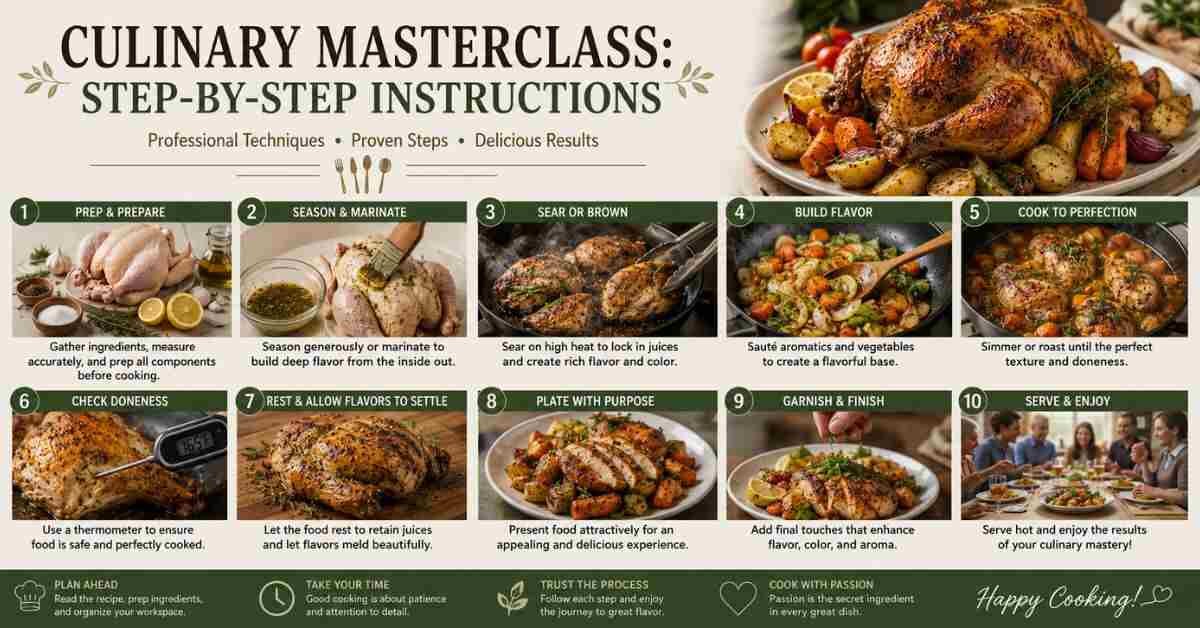
Step 1: Prep Work & Seasoning
Begin by taking the chicken from the refrigerator about 20–30 minutes before cooking. Do not leave raw poultry sitting at room temperature for extended periods.
Preheat the oven to 425°F (220°C).
Pat the chicken extremely dry with paper towels, including the breast and leg areas. This is one of the most important steps for crisp skin. Moisture on the surface must evaporate before the skin can brown efficiently.
In a small bowl, combine the softened butter, 1 tablespoon olive oil, minced garlic, rosemary, thyme, kosher salt, and black pepper.
Gently loosen the skin over the breast with your fingers, taking care not to tear it. Spread some of the herb-butter mixture underneath the skin. Rub the remaining mixture over the outside of the chicken.
Place the lemon halves inside the cavity.
For the vegetables, combine potatoes, carrots, onion, and crushed garlic with olive oil, salt, pepper, and thyme. Toss until evenly coated.
Arrange the vegetables in the roasting pan. Place the chicken breast-side up in the center.
At this stage, the chicken should look evenly coated, while the vegetables should have a thin sheen of oil rather than appearing heavily saturated. Sunday meal ideas
Step 2: Searing & Sautéing
Unlike stovetop cooking, this recipe does not require a separate pan-searing stage. The high-temperature oven provides the browning.
Place the roasting pan in the fully preheated oven.
Roast at 425°F (220°C) for approximately 20 minutes. You should hear gentle sizzling from the rendered chicken fat and see the skin beginning to turn golden.
After the first 20 minutes, reduce the oven temperature to 375°F (190°C).
Continue roasting.
As the chicken cooks, its fat begins rendering from beneath the skin. That rendered fat coats portions of the potatoes and vegetables, creating caramelized edges and a deeper roasted flavor.
Around the halfway point, inspect the vegetables. If the exposed tops are browning rapidly while the chicken still requires significant cooking, carefully turn the vegetables with tongs.
Avoid repeatedly opening the oven. Every unnecessary opening releases heat and can lengthen cooking time.
Step 3: Sauce Building & Simmering
After approximately 60 minutes of total roasting time, begin checking the chicken’s temperature.
Without touching the bone, place a thermometer on the thickest part of the thigh. Check the breast as well.
The chicken is safe when it reaches 165°F (74°C).
If the breast reaches the target temperature before the thigh is sufficiently cooked, loosely tent the breast area with foil to reduce further browning while allowing the darker meat to continue cooking.
Once the chicken is close to done, pour ½ cup (120 mL) low-sodium chicken broth into the bottom of the roasting pan.
Do not pour it directly over the crispy chicken skin.
The broth will loosen browned bits and combine with chicken juices and herbs. Return the pan to the oven for approximately 5–10 minutes.
When the chicken is fully cooked, remove the roasting pan from the oven.
Add 1 tablespoon (15 mL) fresh lemon juice to the pan juices. Taste carefully and adjust seasoning only if necessary.
The result should taste savory and rich with a noticeable but not overpowering brightness from the lemon.
Step 4: Finishing, Resting, and Garnishing
Prepare a cutting board for the chicken by transferring it there.
Tent it loosely with aluminum foil and let it rest for approximately 15–20 minutes.
Do not wrap the chicken tightly. Tight wrapping can trap steam against the skin and soften the crisp exterior.
During resting, the chicken’s internal temperature can continue to rise slightly, while the juices redistribute throughout the meat.
Check the vegetables. If the potatoes are tender when pierced with a fork and have browned edges, they are ready. If they need additional color, return the vegetables to the oven for several minutes while the chicken rests.
Make portions from the breast, thigh, drumsticks, and wings of the chicken.
Spoon some of the flavorful pan juices over the vegetables, then scatter fresh parsley across the dish.
For presentation, arrange the roasted vegetables on a large serving platter and place the carved chicken over or alongside them.
The final visual should feature deep golden chicken skin, browned potato edges, glossy roasted vegetables, and bright green parsley.
The Science of Flavor & Chef’s Insider Techniques
The most important chemical reaction in this recipe is the Maillard reaction, the browning process responsible for many of the savory aromas and flavors associated with roasted food.
The Maillard reaction works best when the surface is relatively dry and the cooking environment is hot enough. That explains why drying the chicken before roasting matters so much.
There is also an important difference between browning and steaming. If vegetables are packed tightly together, their moisture has fewer opportunities to escape. Instead of developing caramelized edges, they may become soft and pale. Giving the vegetables some breathing room encourages better roasting.
Control the Pan Temperature
Starting at 425°F (220°C) gives the chicken skin a strong initial heat boost. Lowering the oven to 375°F (190°C) afterward helps the larger chicken cook more evenly without excessively darkening the exterior.
Use Acidity Strategically
Fat carries flavor and creates richness, but too much richness can make a dish feel heavy. Lemon juice acts as an acidic counterpoint. It does not remove the richness; it makes the overall flavor taste more balanced.
Don’t Skip the Rest
Resting is not simply a traditional ritual. Cutting immediately into a very hot roast allows more juices to escape onto the cutting board. A short rest gives the meat time to settle before carving.
Season in Layers
Instead of depending entirely on salt at the end, seasoning the chicken, vegetables, herb butter, and pan liquid separately creates a more integrated flavor.
One of my most reliable testing observations is that brightness should be added late. Herbs and lemon are especially effective near the finish because their fresher characteristics can be muted by prolonged high heat.
Common Cooking Mistakes & Troubleshooting Guide
Mistake 1: The Chicken Skin Is Pale
Cause: Excess surface moisture or insufficient oven heat.
Fix: Pat the chicken thoroughly dry before seasoning. Make sure the oven has fully preheated before the pan goes inside.
Mistake 2: The Vegetables Are Soft but Not Brown
Cause: Overcrowding.
Fix: Spread the vegetables into a single, reasonably loose layer. If your roasting pan is too small, use a second pan.
Mistake 3: The Breast Is Done but the Thighs Are Not
Cause: Chicken breasts and legs do not always cook at exactly the same rate.
Fix: Cover the breast loosely with foil and continue roasting until the thickest appropriate portions reach the safe temperature. Always verify with a thermometer.
Mistake 4: The Chicken Tastes Bland
Cause: Under-seasoning or lack of acidity.
Fix: Taste the pan juices after cooking. Add a small amount of lemon juice and, if necessary, a controlled amount of salt. Fresh parsley can also add aromatic freshness. Sunday meal ideas
If the Skin Is Becoming Too Dark
Reduce the oven temperature slightly and loosely tent the browned areas with foil. Avoid covering the entire chicken tightly because trapped steam can soften the skin.
If the Pan Looks Dry
Add a small amount of chicken broth to the bottom of the pan. Do not repeatedly add large amounts of liquid, because excessive moisture can interfere with roasting.
Food Safety, Storage, Meal Prep & Reheating
Food safety begins before cooking. Keep raw chicken refrigerated until preparation time and wash your hands with soap and water after handling it.
Use a dedicated cutting board for raw poultry when possible. Keep raw chicken, its packaging, and its juices away from ready-to-eat ingredients.
Do not rely solely on color to determine doneness. The USDA-recommended safe minimum internal temperature for poultry is 165°F (74°C), measured with a food thermometer.
For storage, transfer leftovers to shallow airtight containers and refrigerate promptly. Refrigerated cooked chicken is generally best used within 3–4 days.
For longer storage, cooked chicken and vegetables can be frozen. For best quality, use airtight freezer-safe packaging and consume within a reasonable freezer-storage period; quality may decline over time even when food remains frozen safely.
Meal-Prep Strategy
If you’re planning Sunday meal prep, carve the chicken after it has rested and divide the meat into meal-sized portions.
Keep roasted vegetables in separate containers when practical. This makes reheating easier and allows you to combine the chicken with salads, wraps, grains, or fresh vegetables during the week.
Best Reheating Method
For the best texture, reheat chicken in a covered oven-safe dish at approximately 325°F (165°C) with a small splash of broth.
The covering helps prevent the meat from drying excessively.
For crispier skin, uncover the chicken during the final few minutes.
Microwaving is convenient, but use moderate power and short intervals to reduce the risk of drying the meat. Reheat leftovers thoroughly before serving.
Nutrition & Dietary Considerations
Estimated nutrition per serving, assuming six servings and including a portion of the roasted vegetables:
- Calories: approximately 560 kcal
- Protein: approximately 43 g
- Carbohydrates: approximately 32 g
- Fat: approximately 29 g
- Fiber: approximately 5 g
- Sodium: approximately 650–800 mg
Laboratory measurements have not been made for these figures. Actual nutrition will change depending on the size of the chicken, whether the skin is eaten, how much butter and pan juice each person consumes, and the specific brands of ingredients used.
The recipe is naturally gluten-free when all packaged ingredients, particularly broth, are verified gluten-free.
For a lower-carbohydrate variation, substitute potatoes with cauliflower, zucchini, mushrooms, or another suitable non-starchy vegetable.
For lower sodium, choose unsalted broth, reduce added salt, and emphasize garlic, herbs, lemon, black pepper, and roasted aromatics for flavor.
If you want to have a lighter serving, choose more vegetables and less chicken skin.
No single recipe determines overall healthfulness. The most useful approach is to consider the meal within the context of the rest of your diet and individual nutritional needs.
Pairings & Serving Suggestions
A roast chicken dinner already includes a protein and vegetables, but the right accompaniments can turn it into an especially memorable Sunday meal.
Fresh Salad
A crisp green salad with lettuce, cucumber, tomato, and a simple lemon vinaigrette provides freshness against the richness of the roast.
Crusty Bread
A small amount of crusty bread is excellent for enjoying the flavorful pan juices. Whole-grain bread can also provide additional texture and fiber.
Green Vegetables
Steamed green beans, roasted broccoli, or sautéed spinach add color and variety without competing with the main dish.
Light Sauce
If you want additional moisture, spoon the lemon-herb pan juices over the carved chicken immediately before serving.
Sunday Beverage Pairings
For a non-alcoholic option, sparkling water with lemon is refreshing. Unsweetened iced tea or a lightly flavored fruit-infused water also works well.
Presentation Tip
Place the chicken and vegetables on a large platter. Finish with fresh parsley and a few lemon wedges.
For a family-style Sunday meal, bring the entire platter to the table rather than plating every serving individually. It creates a relaxed, generous presentation and allows everyone to choose their preferred chicken piece and vegetables. Sunday meal ideas
Final Verdict & Reader Invitation
It’s a great Sunday dinner idea with its rich aroma, golden skin, and crunchy vegetables that combine everything a great Sunday dinner should have: garlic, herbs, and vegetables. juicy chicken, caramelized vegetables, and a bright lemon-herb finish.
The recipe is straightforward enough for a relaxed family dinner yet impressive enough for guests. Most importantly, the techniques are transferable—you can use the same principles of drying, seasoning, temperature control, browning, resting, and balancing acidity in countless other dinner recipes. Sunday meal ideas
Give this recipe a try, then rate it with stars and share your results or questions in the DaliyDelish.com comments. Your experience may help another home cook make their next Sunday dinner even better.
A garlic herb roast chicken with vegetables is an excellent Sunday meal idea because it combines a substantial protein, roasted vegetables, and flavorful pan juices in one dish. It is comforting enough for a traditional weekend dinner while remaining practical for home cooking.
The most important steps are avoiding overcooking, monitoring the internal temperature with an instant-read thermometer, and allowing the chicken to rest before carving. Drying the skin before roasting also improves browning without requiring excessive cooking time.
Chicken should reach a safe minimum internal temperature of 165°F (74°C). Measure the temperature in the thickest appropriate part of the meat with an instant-read thermometer, avoiding direct contact with bone. Sunday meal ideas
Yes. You can wash, peel, cut, and season the vegetables ahead of time and prepare the herb butter in advance. Keep raw poultry refrigerated and separate from ready-to-eat foods. After cooking leftovers, they can be refrigerated and used for several days.

Tosique Haider -Passionate writer sharing informative, engaging, and easy-to-read articles across different topics. Focused on delivering valuable content that helps readers learn, explore, and stay inspired every day.