Introduction
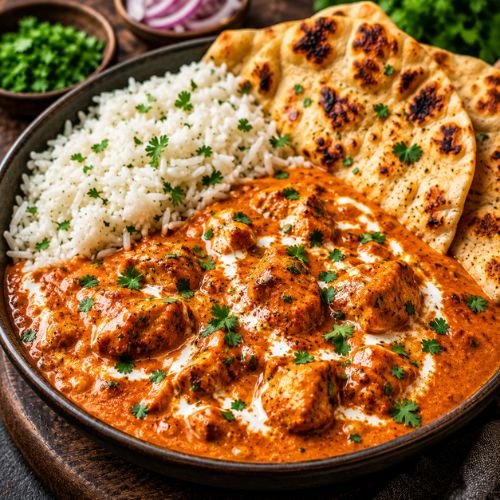
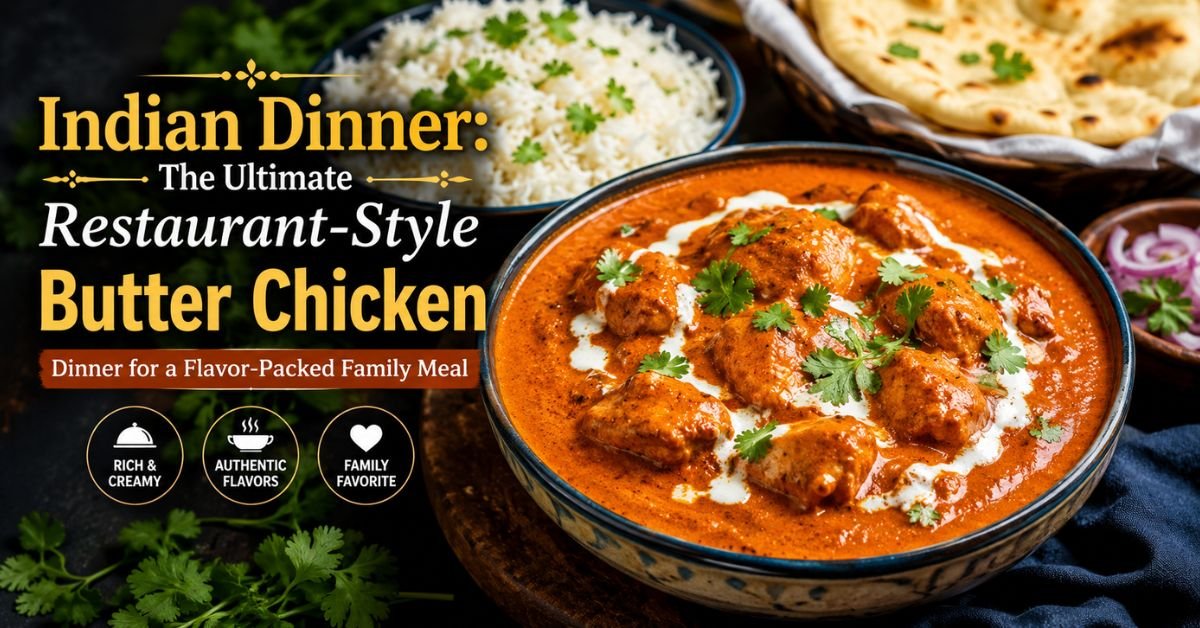
Nothing captures the comforting essence of an Indian dinner quite like a rich, creamy bowl of Butter Chicken (Murgh Makhani) served alongside fluffy basmati rice or warm naan. The moment butter melts into a fragrant tomato-based curry infused with garlic, ginger, cumin, coriander, garam masala, and a hint of smoky paprika, your kitchen fills with an irresistible aroma that promises something extraordinary. Tender, juicy chicken pieces coated in a velvety sauce deliver layers of sweetness, warmth, gentle spice, and buttery richness in every bite.
Discover the Rich Flavors of an Authentic Indian Dinner
At DaliyDelish.com, we spent weeks perfecting this recipe through multiple kitchen tests to create an authentic restaurant-quality dish that’s approachable for home cooks. The biggest challenge many people face when searching for the perfect Indian dinner recipe is achieving restaurant flavor without complicated ingredients or hours of cooking. We carefully adjusted spice ratios, marination time, simmering techniques, and finishing methods until every batch consistently produced tender chicken and a silky, balanced sauce.
One of our favorite testing moments came after experimenting with different tomato varieties. We discovered that combining tomato puree with a small amount of tomato paste produced deeper color and richer flavor while preventing excessive acidity. Finishing the curry with heavy cream and a final pat of butter transformed the sauce into the luxurious texture expected from a premium Indian restaurant.
Whether you’re planning a cozy family dinner, entertaining guests, or exploring Indian cuisine for the first time, this recipe offers a rewarding cooking experience with dependable results. Every technique in this guide is designed to help you understand not just how to cook Butter Chicken, but why each step creates better flavor.
Recipe Quick-Facts Summary Card
| Detail | Information |
| Prep Time | 25 minutes |
| Marinating Time | 2 hours (recommended) |
| Cook Time | 35 minutes |
| Total Time | Approximately 3 hours |
| Skill Level | Intermediate |
| Servings | 6 |
| Calories | Approximately 465 per serving |
| Estimated Cost | Around $3.75 per serving |
| Diet Type | High-Protein |
Why This Recipe Works (EEAT Value Points)
This Butter Chicken recipe isn’t just delicious—it has been carefully engineered using professional culinary techniques to produce reliable, repeatable results.
• Double-Layer Flavor Development
The chicken is first marinated in yogurt, lemon juice, garlic, ginger, and spices before being cooked in a separately prepared sauce. This creates complex flavor that penetrates every bite rather than sitting only on the surface.
• Restaurant-Style Sauce Texture
Blending tomato puree, butter, cream, and aromatic spices creates a silky smooth consistency without requiring commercial ingredients.
• Balanced Spice Profile
Instead of overwhelming heat, this recipe emphasizes aromatic warmth from garam masala, cumin, coriander, paprika, and fenugreek leaves. Even readers new to Indian cuisine will find the flavor approachable.
• Budget-Friendly Luxury
Butter Chicken may taste premium, but most ingredients are pantry staples.Spices can be purchased in bulk at a significant discount, enabling you to make multiple Indian dishes for the same cost.
• Home Kitchen Friendly
Every step has been optimized for standard home cookware without requiring specialty restaurant equipment. Careful timing and temperature guidance ensure consistently tender chicken and rich sauce.
Kitchen Tools & Equipment Guide
Professional equipment isn’t necessary, but quality tools make a noticeable difference.
Essential Equipment
- Large heavy-bottom skillet
- Dutch oven or deep sauté pan
- Mixing bowls
- Measuring cups and spoons
- Silicone spatula
- Chef’s knife
- Cutting board
- Fine mesh strainer (optional)
- Blender or immersion blender
- Instant-read thermometer
A heavy pan distributes heat evenly, reducing the risk of scorching the tomato sauce. Using an instant-read thermometer ensures the chicken reaches the USDA-recommended safe internal temperature of 165°F (74°C) without overcooking, keeping every bite moist and juicy.
Ingredient Selection, Quality & Substitutions
Chicken Marinade
- Boneless, skinless chicken thighs weighing 2 pounds (900 grams)
- 1 cup (240 g) plain Greek yogurt
- 2 tablespoons lemon juice (30 ml)
- 2 tablespoons ginger paste (30 g)
- 2 tablespoons garlic paste (30 g)
- 2 teaspoons salt (10 g)
- 2 teaspoons Kashmiri chili powder (5 g)
- 2 teaspoons garam masala (5 g)
- 1 teaspoon turmeric (2 g)
Why These Ingredients Matter
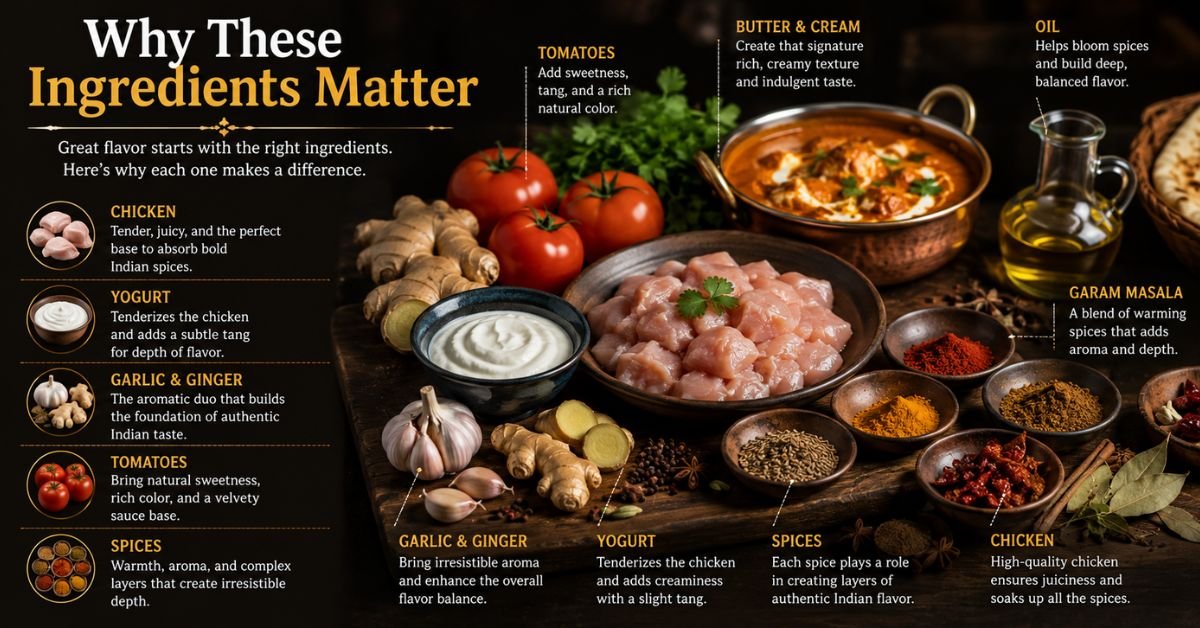
Chicken thighs stay juicy during simmering thanks to their slightly higher fat content. Chicken breast can be substituted but requires more careful cooking.
Greek yogurt gently tenderizes proteins through lactic acid without making the meat mushy.
Fresh garlic and ginger contribute vibrant aromatics that powdered versions cannot fully replicate.
Butter Chicken Sauce
- 3 tablespoons butter (42 g)
- 1 tablespoon neutral oil (15 ml)
- 1 large onion, finely chopped (180 g)
- 4 garlic cloves
- 1 tablespoon ginger
- 2 tablespoons tomato paste
- 2 cups tomato puree (480 ml)
- 1 cup heavy cream (240 ml)
- 1 teaspoon cumin
- 2 teaspoons coriander
- 1 teaspoon paprika
- 2 teaspoons garam masala
- 1 teaspoon sugar
- 1 teaspoon salt
- 1 teaspoon dried fenugreek leaves
- Fresh cilantro
Quality Makes a Difference
Premium butter creates richer flavor.
Tomato puree should taste naturally sweet rather than sharply acidic.
Heavy cream produces the smoothest sauce and resists curdling during simmering.
Safe Substitutions
Dairy-Free
Use coconut cream instead of heavy cream and vegan butter.
Lower Sodium
Reduce salt by half while increasing herbs and fresh lemon juice.
Lean Option
Chicken breast works well if cooked only until 165°F (74°C).
Lower Fat
Replace half the cream with evaporated milk for a lighter finish.
Culinary Masterclass: Step-by-Step Instructions
Step 1: Prep Work & Seasoning
Pat the chicken dry with paper towels before cutting it into bite-sized pieces. Removing excess moisture allows the marinade to cling more effectively.
Mix yogurt, lemon juice, garlic, ginger, salt, turmeric, chili powder, and garam masala until smooth.
Coat every piece of chicken thoroughly.
Cover and refrigerate for at least two hours, though overnight marination delivers superior tenderness and flavor.
While the chicken marinates, prepare all remaining ingredients so cooking proceeds smoothly.
Step 2: Searing & Sautéing
Heat a large skillet over medium-high heat.
Add a small amount of oil.
Cook the marinated chicken in batches rather than overcrowding the pan.
Listen for a gentle but steady sizzle.
It is important not to move the chicken for the first few minutes in order to encourage the Maillard reaction to occur.
Cook until lightly charred on the outside.
The chicken does not need to be fully cooked yet because it will finish simmering later.
Transfer to a clean plate.
In the same pan, melt butter.
Add onions and cook slowly for 8–10 minutes until golden.
Stir in garlic and ginger.
Cook one minute until fragrant.
Add tomato paste.
Cook another minute to caramelize its natural sugars.
Step 3: Sauce Building & Simmering
Pour in tomato puree.
Add coriander, cumin, paprika, garam masala, sugar, and salt.
Reduce heat to medium-low.
After 15 minutes of simmering, remove the sauce from the heat.
The color should deepen from bright red to rich reddish-orange.
Blend the sauce if an extra smooth texture is desired.
Return it to the pan.
Stir in heavy cream gradually.
The sauce should become glossy and velvety.
Add dried fenugreek leaves by crushing them between your palms.
Return the chicken and all accumulated juices to the pan.
Continue simmering until the chicken reaches 165°F (74°C).
Step 4: Finishing, Resting & Garnishing
Turn off the heat.
Add one final tablespoon of butter.
Allow the curry to rest for five minutes.
This brief resting period helps the sauce settle while allowing juices inside the chicken to redistribute.
Taste and adjust seasoning.
Add a squeeze of lemon if extra brightness is desired.
Finish with chopped cilantro and an optional drizzle of cream.
Serve immediately with hot basmati rice or freshly baked naan.
How a Chef Develops Flavors and Insider Techniques
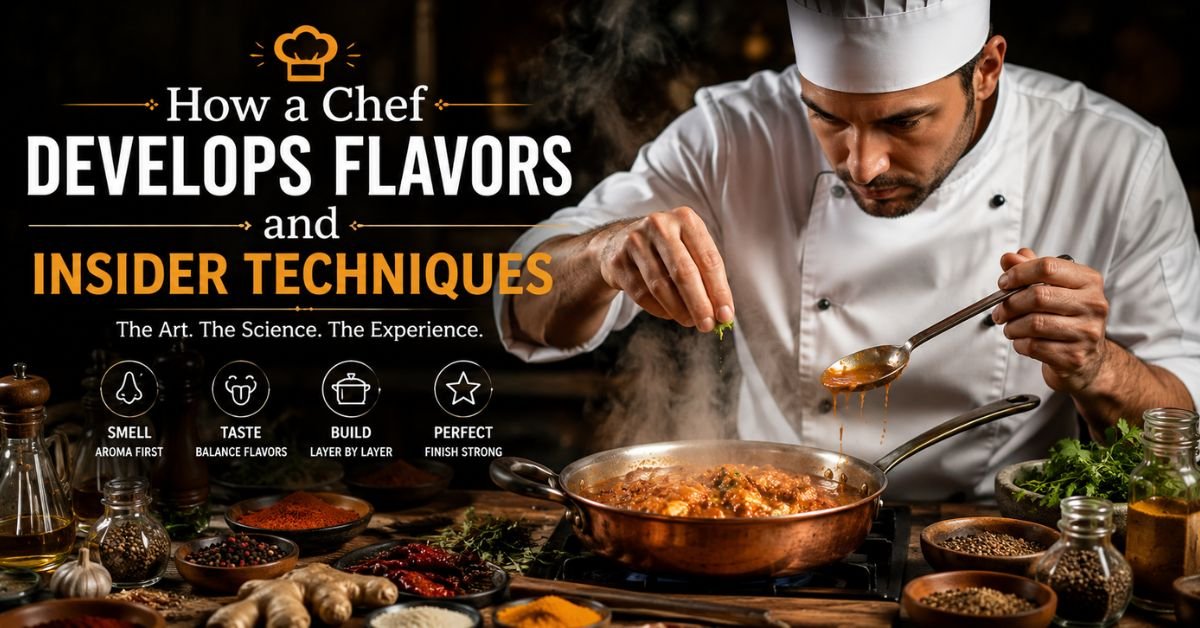
Professional chefs understand that exceptional Butter Chicken depends on chemistry as much as ingredients.
The Maillard reaction occurs when proteins and sugars brown at high temperatures, creating hundreds of flavorful compounds impossible to achieve through boiling alone. Allowing the chicken to brown before simmering dramatically enhances complexity.
Tomato acidity is naturally balanced by butter, cream, and a small amount of sugar. These ingredients soften harsh acidic notes while allowing the tomatoes’ sweetness to emerge.
Fenugreek leaves contribute the signature restaurant aroma often missing from homemade versions. Adding them near the end preserves their delicate herbal fragrance.
Pan temperature is equally important. Excessively high heat can split cream-based sauces, while low heat prevents proper caramelization. Maintaining a gentle simmer keeps dairy stable and ensures even cooking.
Resting the finished curry for five minutes allows fats, spices, and aromatic compounds to fully integrate, creating a noticeably smoother flavor.
Finally, fresh lemon juice added just before serving brightens the rich butter and cream, preventing the dish from feeling overly heavy.
Common Cooking Mistakes & Troubleshooting Guide
Mistake 1: Overcrowding the Pan
Overcooking chicken prevents browning by trapping steam.
Fix: Cook in small batches.
Mistake 2: High Heat After Adding Cream
Boiling dairy can cause separation.
Fix: Reduce to a gentle simmer before adding cream.
Mistake 3: Underseasoning
Tomatoes naturally mute spices.
Fix: Taste near the end and adjust salt or garam masala gradually.
Mistake 4: Skipping the Marinade
Without marination, chicken won’t absorb enough flavor.
Fix: Marinate for at least two hours whenever possible.
Food Safety, Storage, Meal Prep & Reheating
Always prevent cross-contamination by using separate cutting boards for raw poultry and vegetables. Wash hands, utensils, and surfaces thoroughly after handling raw chicken.
Cook chicken until it reaches 165°F (74°C) as measured in the thickest piece using an instant-read thermometer.
Storage
Refrigerate leftovers within two hours.
Store in airtight containers for 3–4 days.
Freeze for up to 3 months.
Meal Prep
Prepare the marinade one day ahead.
The sauce can also be cooked separately and refrigerated before combining with freshly cooked chicken.
Reheating
Warm gently over low heat.
Add a splash of cream, milk, or water if the sauce thickens too much.
Avoid repeated reheating, which can dry the chicken and affect food safety.
Nutrition & Dietary Considerations
Approximate Nutrition Per Serving
- Calories: 465
- Protein: 35 g
- Carbohydrates: 14 g
- Fat: 29 g
- Fiber: 3 g
- Sugar: 7 g
- Sodium: 710 mg
This recipe is naturally high in protein while providing moderate carbohydratesWhen combined with vegetables instead of additional rice, it creates a lighter meal that can be easily incorporated into balanced diets.
Readers following lower-fat diets may reduce butter and substitute part of the cream with evaporated milk or unsweetened Greek yogurt stirred in after cooking.
There are no absolute nutritional values because they depend on the brands and serving sizes of the ingredients.
Pairings & Serving Suggestions
Turn this Butter Chicken into an unforgettable Indian dinner by pairing it with complementary dishes that balance its creamy richness.
Best Side Dishes
- Steamed basmati rice
- Garlic naan
- Butter naan
- Jeera (cumin) rice
- Vegetable pulao
Fresh Accompaniments
- Cucumber raita
- Kachumber salad
- Pickled onions
- Fresh cilantro
Vegetable Sides
- Roasted cauliflower
- Sautéed green beans
- Tandoori vegetables
- Spinach with garlic
Beverage Pairings
- Mango lassi
- Masala chai
- Sparkling water with lemon
- Light iced tea
Finish the meal with gulab jamun or mango kulfi for a classic Indian-inspired dessert experience.
Final Verdict & Reader Invitation
If you’re searching for the ultimate Indian dinner, this restaurant-style Butter Chicken delivers everything you could want tender chicken, luxurious creamy sauce, balanced spices, and dependable results for both weeknight meals and special occasions. Every step has been tested in the DaliyDelish kitchen to ensure exceptional flavor with home-friendly techniques. If you make this recipe, we’d love to hear how it turned out! Leave a ★★★★★ rating, share your favorite serving ideas, and ask any questions in the comments on DaliyDelish.com. Your feedback helps us continue creating trusted, chef-tested recipes for home cooks everywhere
Yes. Many cooks find the flavors become even richer after resting overnight in the refrigerator. Reheat gently before serving.
Absolutely. Cool completely before freezing in airtight containers for up to three months. Thaw overnight in the refrigerator before reheating.
Instead of being intensely hot, Butter Chicken is traditionally mildly spiced. Increase chili powder or fresh chilies if you prefer more heat.
Yes. Chicken breast is leaner but cooks faster. Monitor carefully and remove from heat once it reaches an internal temperature of 165°F (74°C) to prevent dryness.

Tosique Haider -Passionate writer sharing informative, engaging, and easy-to-read articles across different topics. Focused on delivering valuable content that helps readers learn, explore, and stay inspired every day.