

Introduction:
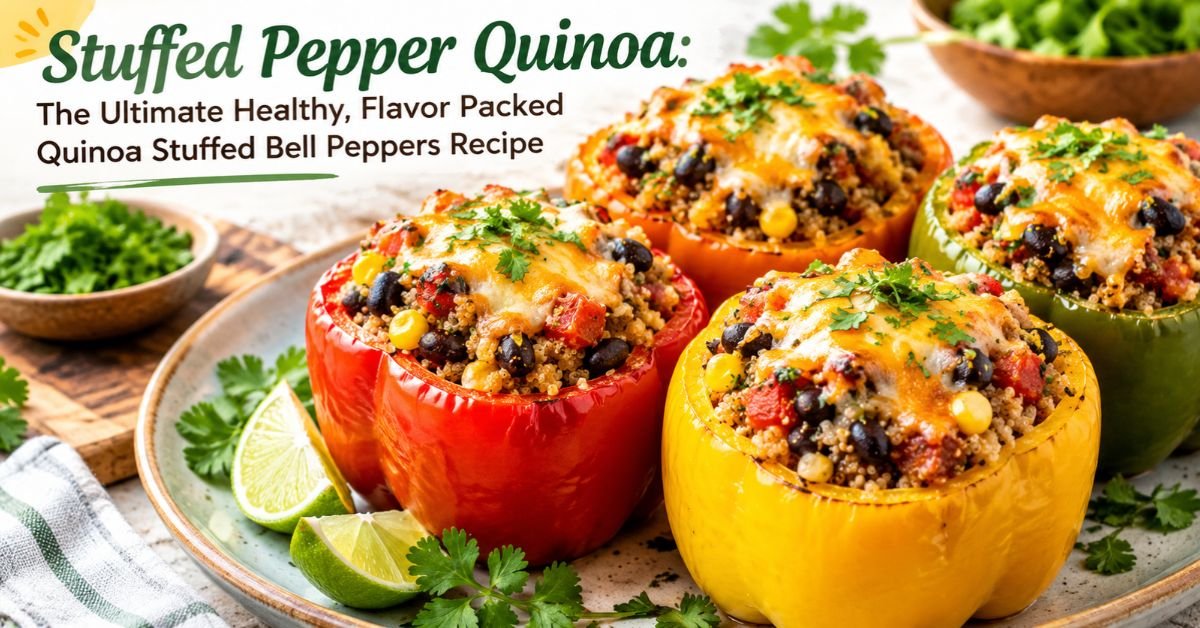
If you are looking for a colorful, nutritious, and satisfying meal that brings wholesome ingredients together in one beautiful dish, these stuffed pepper quinoa are an excellent choice. This recipe transforms fresh bell peppers into naturally sweet, tender edible bowls filled with fluffy quinoa, hearty black beans, juicy tomatoes, sweet corn, aromatic garlic, and perfectly balanced seasonings.
Imagine opening the oven and smelling the combination of roasted peppers, garlic, cumin, and fresh herbs. The pepper edges become slightly caramelized while the filling develops a rich, savory aroma. Inside, every spoonful offers a satisfying combination of textures: fluffy quinoa, creamy black beans, tender vegetables, and a little crunch from the peppers.
The flavor is equally enjoyable. Bell peppers contribute natural sweetness, tomatoes provide gentle acidity, cumin adds earthy warmth, and lime juice brightens the entire filling. Meanwhile, a light layer of melted cheese creates a delicious finishing touch without overwhelming the vegetables.
At DaliyDelish, the goal behind this healthy recipe is simple: make nutritious home cooking practical, affordable, and genuinely enjoyable. Many people want healthy dinner ideas that do not require complicated ingredients, expensive equipment, or hours in the kitchen. Quinoa stuffed peppers answer that need with a balanced vegetarian meal that is easy to customize.
This recipe is particularly useful for busy families, meal prep enthusiasts, and anyone looking to incorporate more vegetables, plant based protein, and whole grains into everyday meals.
Another advantage is its flexibility. You can prepare the quinoa filling in advance, choose your favorite pepper colors, adjust the spice level, or replace the cheese with a dairy free alternative.
Whether you serve these peppers for a weeknight dinner, a healthy lunch, or a weekend family gathering, they deliver comforting flavor with plenty of nutritional value.
Recipe Quick Facts Summary Card
Here is everything you need to know before preparing this delicious recipe.
| Recipe Detail | Information |
| Recipe Name | Stuffed Pepper Quinoa |
| Preparation Time | 20 minutes |
| Cooking Time | 35–40 minutes |
| Total Time | Approximately 60 minutes |
| Skill Level | Easy to Intermediate |
| Servings | 4 |
| Serving Size | 1 large stuffed pepper |
| Estimated Calories | 340–370 kcal |
| Estimated Cost Per Serving | 2.00–3.00 |
| Primary Diet Type | Vegetarian |
| Additional Dietary Options | Gluten Free, Dairy Free Adaptable |
| Main Ingredient | Quinoa |
| Cooking Method | Stovetop and Oven |
| Best For | Healthy Lunch, Dinner, and Meal Prep |
Recipe Overview: These quinoa stuffed bell peppers combine protein rich quinoa, black beans, vegetables, tomatoes, and flavorful seasonings to create a filling vegetarian dinner.
Cost and nutrition estimates are approximate. Actual values depend on ingredient brands, pepper sizes, cheese quantities, and serving portions.
How This Recipe Works (EEAT Value Points)
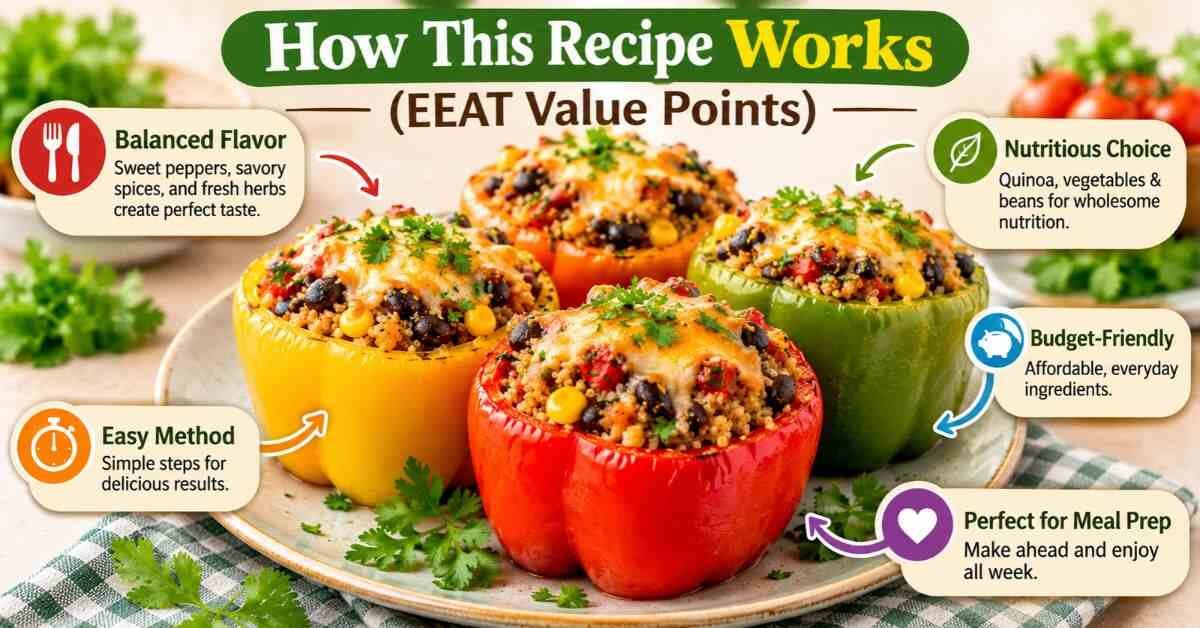
There are several reasons these stuffed peppers deserve a regular place in your healthy dinner rotation.
1. A Naturally Balanced Flavor Profile
The success of this dish comes from combining ingredients with different flavor characteristics. Sweet bell peppers balance the acidity of tomatoes, while black beans contribute a mild, earthy taste. Cumin, paprika, garlic, and oregano introduce warmth and depth.
Lime juice brightens up the filling, preventing the flavors from becoming too overwhelming.
2. Quinoa Creates a Satisfying Filling
White rice can be substituted with quinoa as a healthy alternative. It cooks into light, fluffy grains with a slightly nutty flavor. Additionally, it provides plant based protein and dietary fiber.
When combined with black beans, it creates a more substantial filling that works particularly well in vegetarian meals.
3. A Simple Cooking Technique Produces Excellent Results
You do not need advanced culinary skills to make this recipe. The peppers are partially roasted, the filling is prepared separately, and everything finishes cooking together in the oven.
This approach allows you to control the texture of both components. The peppers become tender without turning completely mushy, while the filling remains moist and flavorful.
4. Budget Friendly Ingredients Make It Practical
Quinoa, canned beans, tomatoes, corn, and seasonal bell peppers are versatile ingredients. You can purchase them in different package sizes, use pantry staples, and adapt the filling according to what is available.
Furthermore, leftover cooked quinoa can be incorporated into salads, grain bowls, or soups.
5. Excellent for Meal Preparation
One of the strongest advantages of this recipe is its make ahead potential. You can prepare the filling earlier, refrigerate it safely, and assemble the peppers when needed.
Consequently, dinner preparation becomes easier on busy evenings. The finished peppers also store well, making them a convenient option for planned lunches.
Kitchen Tools & Equipment Guide
Having the right kitchen equipment helps you achieve consistent cooking results.
Essential equipment includes:
- Sharp chef’s knife: Makes cutting bell peppers, onions, and tomatoes easier and safer.
- Cutting board: Provides a stable surface for vegetable preparation.
- Medium saucepan: Used to cook quinoa evenly without excessive moisture.
- Large skillet: Allows vegetables, beans, and seasonings to combine comfortably.
- Baking dish: Holds the stuffed peppers upright during roasting.
- Aluminum foil: Helps cover the peppers during the initial baking stage if they begin browning too quickly.
- Measuring cups and spoons: Maintain accurate ingredient proportions.
- Fine mesh strainer: Rinses quinoa and drains canned beans.
- Instant read thermometer: Useful for checking reheated leftovers or any optional meat based variation.
A medium, heavy bottomed saucepan is particularly helpful because it distributes heat more evenly and reduces the possibility of quinoa scorching.
Choose a baking dish that holds the peppers snugly without forcing them together. As a result, they are able to cook upright.
Ingredient Selection, Quality & Substitutions
The best stuffed pepper quinoa starts with fresh vegetables, properly prepared grains, and balanced seasonings. Each ingredient contributes something important to the final flavor and texture.
Complete Ingredient List
The following quantities make four generous servings.
| Ingredient | US Customary Measurement | Metric Measurement |
| Large bell peppers | 4 | 4 |
| Uncooked quinoa | ¾ cup | 130 g |
| Vegetable broth | 1½ cups | 355 ml |
| Black beans, drained | 1 cup | 170 g |
| Corn kernels | ½ cup | 80 g |
| Diced tomatoes | 1 cup | 180 g |
| Red onion, finely diced | ½ medium | 75 g |
| Garlic, minced | 3 cloves | 9 g |
| Olive oil | 1 tablespoon | 15 ml |
| Tomato paste | 1 tablespoon | 15 g |
| Ground cumin | 1 teaspoon | 2 g |
| Smoked paprika | 1 teaspoon | 2 g |
| Dried oregano | ½ teaspoon | 1 g |
| Ground black pepper | ¼ teaspoon | 0.5 g |
| Salt | ½ teaspoon, or to taste | Approximately 3 g |
| Shredded cheddar or mozzarella | ½ cup | 55 g |
| Fresh lime juice | 1 tablespoon | 15 ml |
| Fresh cilantro | 2 tablespoons | 8 g |
Optional garnish:
- Fresh parsley or cilantro
- Sliced green onions
- Avocado slices
- Lime wedges
- A spoonful of plain Greek yogurt
Understanding the Main Ingredients
Bell Peppers
This recipe relies heavily on bell peppers. Red, yellow, and orange peppers generally have a sweeter flavor, while green peppers offer a slightly more grassy and bitter taste.
Choose peppers that feel firm and heavy for their size. Avoid those with soft spots, wrinkles, or damaged skin.
For the best presentation, select four peppers with relatively flat bottoms so they remain upright in the baking dish.
Quinoa
Quinoa provides the main grain component. It has a mild nutty flavor and a naturally fluffy texture when cooked correctly.
Before cooking, rinse it thoroughly under cold running water using a fine mesh strainer. This removes residual saponins that can contribute bitterness.
A light, tender texture can be achieved by cooking white quinoa. Red or tri color quinoa can also be used, although the finished filling may have a slightly firmer bite.
Black Beans
Black beans add heartiness, texture, plant based protein, and dietary fiber.
If using canned beans, drain and rinse them to remove excess packing liquid and some of the surface sodium. Alternatively, use properly cooked dried beans.
You can substitute kidney beans or pinto beans.
Tomatoes and Tomato Paste
Diced tomatoes introduce moisture and gentle acidity. Tomato paste provides concentrated tomato flavor, helping the filling taste richer without requiring a heavy sauce.
If the tomatoes are particularly watery, drain a little excess liquid before adding them.
Corn and Onion
Corn contributes sweetness and small bursts of texture. Red onion introduces aromatic depth and becomes milder when sautéed.
It is possible to use fresh, frozen, or canned corn. If using frozen corn, thawing is not essential; simply allow a little extra cooking time.
Garlic and Seasonings
Garlic, cumin, smoked paprika, and oregano create a savory, slightly smoky flavor profile.
Fresh garlic is preferable for its aromatic quality, although granulated garlic can work when necessary.
Olive Oil and Cheese
Olive oil helps soften the vegetables and distribute seasoning throughout the filling.
Cheddar offers a stronger flavor, whereas mozzarella produces a milder, stretchier topping. Choose according to your preference.
Tested Style Ingredient Substitutions and Dietary Adaptations
Make it dairy-free by leaving out the cheese or replacing it with a plant-based version. The filling remains flavorful without dairy.
Gluten Free: Quinoa is naturally gluten free. However, check packaged broth, seasonings, and other processed ingredients for gluten containing additives or cross contact warnings.
Lower Sodium: Use no salt added beans and tomatoes, select low sodium vegetable broth, and adjust added salt gradually.
Higher Protein: Increase the black beans slightly or add cooked lentils, edamame, or a suitable plant based protein.
Lower Carbohydrate: Replace some or all of the quinoa with finely chopped cauliflower rice. This substantially changes the nutritional profile and texture, so adjust the liquid accordingly.
Different Bean Options: Cannellini beans, pinto beans, and kidney beans are all suitable alternatives.
Spice Variations: Add chili flakes, cayenne pepper, or diced jalapeño if you prefer a little heat.
Culinary Masterclass: Step by Step Instructions
The secret to excellent stuffed peppers is managing moisture and cooking each component properly before combining everything.
Follow these detailed steps for a flavorful filling and tender peppers.
Step 1: Prep Work & Seasoning
1. Preheat the oven.
Set your oven to 375°F (190°C). Allow it to preheat fully before placing the baking dish inside.
This temperature provides enough heat to soften the peppers and warm the filling without excessively drying the quinoa.
2. Prepare the bell peppers.
Wash all four peppers under cool running water and dry them with a clean kitchen towel.
Place each pepper on a cutting board. Using a sharp knife, slice off the top approximately half an inch below the stem.
Remove the seeds, white membranes, and remaining inner ribs. Keep the pepper walls intact because they will hold the filling during baking.
If a pepper has an uneven bottom, trim a very small amount from its base without creating a hole.
3. Prepare the quinoa.
Measure ¾ cup of uncooked quinoa and place it in a fine mesh strainer.
Rinse under cold running water for approximately 30–60 seconds, gently moving the grains with your fingers.
A bitter surface compound is removed during this step to improve the flavor.
4. Chop the vegetables.
Finely dice the red onion, mince the garlic, and measure the tomatoes and corn.
Drain and rinse the black beans thoroughly.
Preparing everything before heating the skillet makes the cooking process smoother and prevents garlic or spices from burning while you search for ingredients.
Step 2: Searing & Sautéing
1. Cook the quinoa.
Add the rinsed quinoa and vegetable broth to a medium saucepan.
Bring the mixture to a gentle boil over medium high heat. Once bubbling, reduce the heat to low and cover the saucepan.
Simmer for approximately 15 minutes, or according to the package instructions.
The grains should absorb most of the liquid and develop small visible spirals. The quinoa should stand, covered, for 5 minutes after being removed from the heat.
Fluff gently with a fork.
Avoid stirring aggressively because that can break the delicate grains and create a heavier texture.
2. Warm the olive oil.
An olive oil-infused large skillet should be heated over medium heat.
Once it has become fluid and lightly shimmering, allow it to cool.
3. Sauté the onion.
Add the diced red onion.
Cook for approximately 3–4 minutes, stirring occasionally, until softened and slightly translucent.
The onion should smell sweet and aromatic rather than sharp.
4. Add the garlic.
Stir in the minced garlic and cook for approximately 30 seconds.
If you leave garlic unattended, it will cook quickly. If it becomes dark brown, it may develop an unpleasant bitter flavor.
5. Introduce the corn and beans.
Add the corn and black beans.
Stir gently for 1–2 minutes, allowing everything to warm and combine.
At this stage, the mixture should smell savory and slightly sweet.
Step 3: Sauce Building & Simmering
1. Add the tomato ingredients.
Stir in the diced tomatoes and tomato paste.
Mix until the tomato paste dissolves into the vegetables and coats the beans.
The mixture should become slightly glossy and develop a rich red orange color.
2. Season the filling.
Add the cumin, smoked paprika, dried oregano, black pepper, and salt.
Stir continuously for approximately 30 seconds to distribute the seasonings.
Briefly warming ground spices in the oil helps release their aromatic compounds.
3. Simmer the mixture.
Allow the vegetable mixture to cook gently for 3–5 minutes.
The tomatoes should soften, and some of their excess liquid should evaporate.
Avoid cooking the filling until completely dry. It should remain moist enough to keep the quinoa tender during baking.
4. Combine with quinoa.
Add the cooked quinoa to the skillet.
Fold everything together gently until the grains are evenly distributed among the beans, corn, and tomatoes.
Turn off the heat.
Add the lime juice and taste a small spoonful. Adjust salt, pepper, cumin, or acidity as needed.
If the filling tastes too rich, another small squeeze of lime can brighten it.
If it tastes too acidic, a little additional quinoa or a small amount of corn can help balance the flavor.
5. Prepare the peppers for baking.
Arrange the cleaned peppers upright in a baking dish.
If desired, add ¼ cup (60 ml) of water or vegetable broth to the bottom of the dish. This creates a little steam and helps prevent the pepper bases from drying.
Lightly brush the pepper interiors with olive oil.
6. Partially roast the peppers.
Place the empty peppers in the oven for approximately 10 minutes.
This short initial bake gives the peppers a head start because the filling is already cooked.
For firmer peppers, shorten this step slightly. For softer peppers, allow a few additional minutes.
Step 4: Finishing, Resting, and Garnishing
1. Fill the peppers.
Remove the baking dish carefully from the oven.
Spoon the quinoa mixture into each pepper, distributing it evenly.
Fill each pepper generously without compressing the filling too tightly. Leave a little space at the top for cheese.
2. Add the cheese.
Spread the cheese or mozzarella evenly over the filling.
For a dairy free version, skip this step or use a suitable plant based alternative.
3. Complete the baking process.
Return the dish to the oven.
Bake uncovered for approximately 20–25 minutes, depending on the pepper size and desired tenderness.
The filling should become thoroughly hot, the cheese should melt, and the pepper walls should soften.
If the tops brown too quickly, loosely cover the dish with aluminum foil.
4. Check the texture.
Pepper walls should be sliced with a small knife.
It should slide in with some resistance if you prefer peppers that retain their structure. For softer peppers, the knife should pass through more easily.
The filling should be moist, fluffy, and heated throughout.
Because this is a vegetarian recipe, the 165°F (74°C) poultry temperature does not apply to its main ingredients. If using cooked chicken as an optional variation, ensure the chicken was originally cooked to a safe internal temperature of 165°F (74°C).
5. Rest before serving.
Let the peppers rest for about five minutes after you remove the baking dish.
This short resting period allows the filling to settle and makes serving easier.
6. Garnish and serve.
Finish with freshly chopped cilantro, parsley, green onions, or avocado slices.
Serve warm with lime wedges for an extra burst of freshness.
The final result should be colorful, aromatic, tender, and satisfying.
The Science of Flavor & Chef’s Insider Techniques
Understanding a few basic culinary principles can make the difference between average stuffed peppers and a genuinely delicious meal.
The Maillard Reaction and Vegetable Caramelization
During a suitable heating process, amino acids and reducing sugars react with each other to produce the Maillard reaction.
It contributes to the complex browned flavors found in roasted and seared foods.
Vegetables also develop sweetness through caramelization and other heat driven flavor changes.
When bell peppers roast, their natural sugars become more concentrated, producing a sweeter, deeper flavor.
For this reason, roasting them briefly before filling can improve the overall taste.
Why Quinoa Needs Proper Liquid Control
Quinoa absorbs water as it cooks. However, too much liquid can make the grains soft and heavy.
A useful starting ratio is approximately two parts liquid to one part quinoa by volume, although different varieties and brands may require slight adjustments.
Once cooked, allow quinoa to stand covered for several minutes before fluffing.
This gives residual moisture time to distribute evenly.
Pan Temperature Matters
Garlic and onions are best sautéed over medium heat.
If the skillet becomes too hot, garlic can burn before the onions soften. Conversely, a skillet that is too cool may cause the vegetables to release moisture without developing much flavor.
A gentle sizzle is the desired result.
Balancing Fat With Acidity
Olive oil and cheese contribute richness, while tomatoes and lime juice provide acidity.
This contrast prevents the filling from tasting flat or excessively heavy.
If the finished dish tastes bland despite having enough salt, consider adding a small amount of lime juice rather than automatically adding more seasoning.
The Importance of Moisture Management
One common problem with stuffed peppers is watery filling.
The solution is to simmer the tomato mixture briefly before combining it with quinoa.
This allows excess liquid to evaporate while concentrating the tomato flavor.
Chef’s Insider Tips
- Use peppers with similar sizes so they cook at approximately the same rate.
- Avoid overfilling the peppers because the filling can spill during baking.
- Use freshly squeezed lime juice for a brighter finish.
- Add fresh herbs after baking to preserve their aroma.
- If you enjoy a little crunch, reserve some corn and sprinkle it over the finished peppers.
- Use smoked paprika for deeper flavor without needing additional oil or cheese.
Common Cooking Mistakes & Troubleshooting Guide
Even straightforward recipes can produce disappointing results when moisture, temperature, or ingredient preparation is overlooked.
Here are four common mistakes and their solutions.
Mistake 1: Mushy Quinoa
Why it happens: Too much cooking liquid, excessive simmering, or stirring the quinoa repeatedly can produce a soft, heavy texture.
How to prevent it: Measure the liquid accurately, use a covered saucepan, and follow the package cooking instructions.
After cooking, let the quinoa rest before fluffing it gently with a fork.
Quick correction: If the quinoa is slightly wet, spread it across a shallow plate for a few minutes to release excess steam before adding it to the filling.
Mistake 2: Watery Stuffed Peppers
Why it happens: Tomatoes release moisture during baking, especially when combined with other vegetables.
How to prevent it: Drain overly watery tomatoes and simmer the filling briefly before adding quinoa.
Quick correction: If the filling is already watery, carefully remove some liquid with a spoon and allow the peppers to bake uncovered for a few additional minutes.
Mistake 3: Overcooked or Collapsing Bell Peppers
Why it happens: Excessive pre baking or leaving the peppers in the oven too long can weaken their structure.
How to prevent it: Partially roast the peppers for approximately 10 minutes, then finish baking after filling.
Quick correction: If the peppers become too soft, avoid transferring them individually with a spoon. Use a wide spatula and serve them directly from the baking dish.
Mistake 4: Bland Filling
Why it happens: Quinoa has a naturally mild flavor, so it needs adequate seasoning and contrasting ingredients.
How to prevent it: Season the vegetables during cooking, use flavorful vegetable broth, and add lime juice at the end.
Quick correction: Taste the filling before stuffing the peppers. Add a little cumin, black pepper, salt, fresh cilantro, or lime juice as appropriate.
Remember that seasoning is easier to control before the filling enters the oven.
Food Safety, Storage, Meal Prep & Reheating
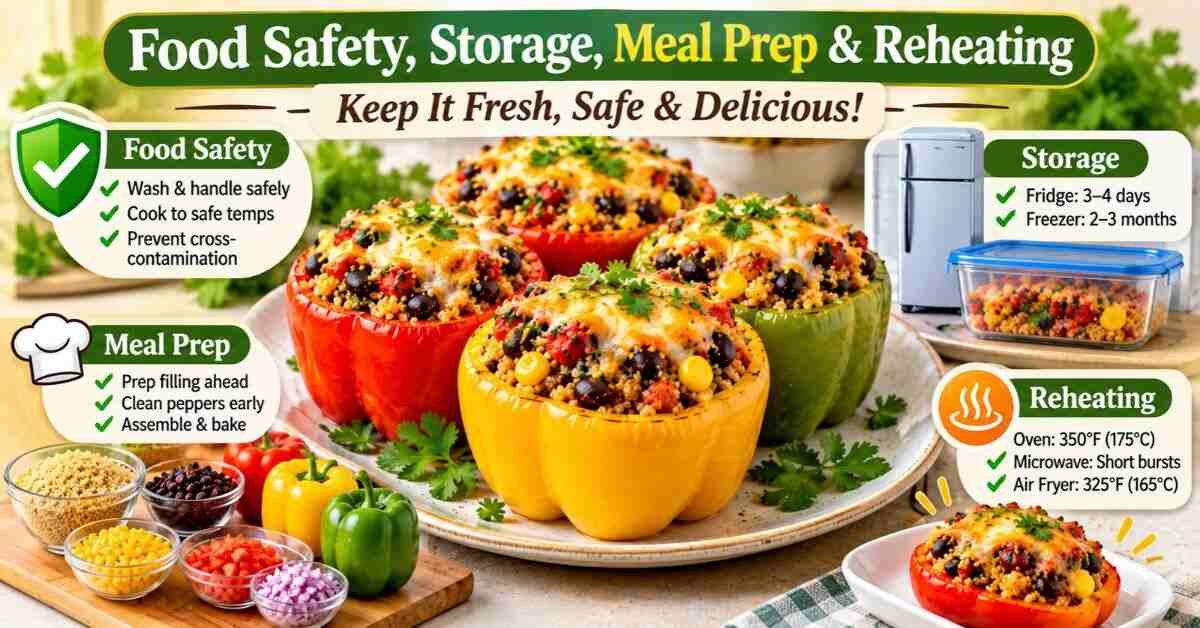
Proper food handling is essential when preparing meals with cooked grains, beans, and vegetables.
Safe Ingredient Handling
Handle raw ingredients and cook with clean hands.
Clean cutting boards, knives, and kitchen surfaces regularly. Keep vegetables separate from raw meat or seafood if you are preparing additional dishes.
Rinse quinoa using clean running water and use properly stored canned or cooked beans.
Do not use cans that are swollen, leaking, badly dented around the seams, or otherwise damaged.
Safe Cooking and Temperature Guidelines
This vegetarian recipe does not contain raw meat, so poultry cooking temperatures are not relevant to the original dish.
However, if you add chicken, cook it to an internal temperature of 165°F (74°C), measured using an instant read thermometer in the thickest part.
For leftovers, reheat the filling or stuffed peppers to 165°F (74°C).
Refrigerator Storage
Allow cooked peppers to cool slightly, then transfer them into shallow, airtight containers.
Refrigerate within two hours of cooking. If the surrounding temperature is above 90°F (32°C), refrigerate within one hour.
Store at 40°F (4°C) or below.
For best quality and food safety, consume refrigerated leftovers within 3–4 days.
Freezer Storage
Stuffed peppers can be frozen for approximately 2–3 months for best quality.
Allow them to cool, wrap individual portions securely, and place them in freezer safe containers.
Label each container with the preparation date.
Thaw frozen portions in the refrigerator rather than leaving them on the kitchen counter.
Reheating Instructions
Oven Method: Preheat to 350°F (175°C). Place the peppers in an oven safe dish, add a small splash of water, and cover loosely with foil. Heat until the center reaches 165°F (74°C).
Put one pepper in a dish that can be microwaved. Cover loosely and heat in short intervals, checking the center until it reaches 165°F (74°C).
Air Fryer Method: Reheat at approximately 325°F (165°C), checking frequently to avoid drying out the pepper walls. Confirm that the center reaches 165°F (74°C).
Avoid repeatedly reheating the same portion. Reheat only the quantity you plan to eat.
Meal Prep Strategy
For convenient weekday cooking, prepare the quinoa filling up to 3 days ahead and refrigerate it promptly.
You can also clean and prepare the peppers in advance, storing them separately in an airtight container.
When ready to cook, assemble the peppers and bake.
If you assemble them completely ahead of time, keep them refrigerated and adjust baking time as needed so the center becomes thoroughly hot.
Nutrition & Dietary Considerations
These quinoa stuffed bell peppers provide a combination of whole grains, vegetables, beans, and moderate amounts of dairy, depending on the cheese used.
The quinoa and black beans contribute plant based protein, while their fiber content supports normal digestive function.
Vitamin C and other micronutrients can be found in bell peppers naturally. Tomatoes also contribute useful plant compounds, including lycopene.
Estimated Nutrition Per Serving
The following estimates assume four servings, including approximately 55 g of shredded cheese.
| Nutrient | Estimated Amount |
| Calories | 340–370 kcal |
| Protein | 15–17 g |
| Total Carbohydrates | 52–56 g |
| Dietary Fiber | 10–12 g |
| Total Fat | 9–11 g |
| Saturated Fat | 3–4 g |
| Sodium | 450–650 mg |
These are approximate nutritional values, not laboratory tested measurements. Actual amounts vary with ingredient brands, portion sizes, broth, cheese, and added salt.
How This Recipe Fits Into Everyday Nutrition
Protein: Quinoa and black beans contribute plant based protein. Adding Greek yogurt as a topping can provide additional protein.
Fiber: Beans, quinoa, tomatoes, and peppers contribute dietary fiber, which supports digestive health.
Carbohydrates: Most carbohydrates come from quinoa, beans, corn, and vegetables. These ingredients also provide fiber and other nutrients.
Fat: Olive oil and cheese contribute most of the fat. You can reduce the amount of cheese or omit it entirely if preferred.
Sodium: Choose low sodium broth and no salt added canned beans to control sodium levels.
Dietary Adaptations
This recipe can fit vegetarian eating patterns and can be adapted for dairy free and gluten free diets.
For a lower carbohydrate version, replace some quinoa with cauliflower rice. However, remember that this changes the protein, carbohydrate, and fiber content.
No single meal guarantees weight loss or prevents disease. Instead, consider this recipe one practical way to include vegetables, whole grains, and plant based protein in a varied eating pattern.
Pairings & Serving Suggestions
Although stuffed pepper quinoa can serve as a complete main dish, the right side dishes can make the meal even more enjoyable.
Fresh Salad Pairings
Cucumber and Tomato Salad: Fresh cucumber, cherry tomatoes, red onion, parsley, and lemon juice provide a refreshing contrast to the warm peppers.
Avocado Salad: Combine sliced avocado, lettuce, cucumber, and lime juice for a creamy, fresh accompaniment.
Mediterranean Salad: Tomatoes, olives, cucumber, and a little feta cheese create a savory side with complementary flavors.
Healthy Side Dishes
- Roasted Broccoli: Its slightly crisp edges and earthy flavor complement the sweet peppers.
- Garlic Green Beans: A simple sautéed vegetable side that keeps the meal light.
- Steamed Vegetables: Carrots, zucchini, and broccoli add additional color and variety.
- Lemon Rice: A small serving can make the meal more substantial, although the peppers already contain quinoa.
Bread Pairings
Whole wheat pita, toasted sourdough, or homemade garlic bread can be served alongside the peppers.
If you want to keep the meal lighter, choose a small portion of whole grain bread.
Sauce and Garnish Ideas
A spoonful of plain Greek yogurt adds creaminess and a slight tang.
Alternatively, serve the peppers with homemade salsa, avocado dressing, or a simple cilantro lime sauce.
Beverage Suggestions
Refreshing options include:
- Fresh lemon water
- Unsweetened iced tea
- Cucumber and mint water
- Sparkling water with lime
- Homemade fruit infused water
For a family dinner, arrange the stuffed peppers on a large serving platter and finish with fresh herbs and lime wedges.
Final Verdict & Reader Invitation
These stuffed pepper quinoa bring together everything a satisfying healthy dinner should offer: colorful vegetables, fluffy grains, hearty beans, aromatic seasonings, and delicious flavor.
They are easy to customize, practical for meal preparation, and suitable for family dinners throughout the week. Whether you choose the classic cheesy topping or a dairy free variation, this recipe offers plenty of opportunities to make healthy cooking enjoyable.
Now it is your turn!
Prepare this recipe in your kitchen, share your experience, and leave a star rating on DaliyDelish.com. Did you use red peppers, yellow peppers, or a combination? Share your favorite variation or cooking questions in the comments. Your feedback can help other home cooks discover their next favorite healthy meal!
Yes. For this recipe, cook the quinoa separately before combining it with the vegetables and beans. This ensures that the grains have enough liquid to cook properly without requiring excessive baking time. Properly cooked quinoa should be fluffy and tender rather than hard or mushy.
No. Boiling is not necessary. In this recipe, the peppers are partially roasted in the oven for approximately 10 minutes before filling. This helps soften their walls while allowing them to retain enough structure to hold the quinoa mixture.
Absolutely. Prepare the quinoa filling in advance and refrigerate it in an airtight container for up to 3 days. You can also prepare the peppers separately. When ready to cook, assemble and bake until the filling is thoroughly heated and the peppers reach your preferred tenderness.
Quinoa stuffed peppers can be a nutritious meal because they combine vegetables, whole grains, beans, and plant based protein. They also provide dietary fiber and several vitamins and minerals. Their overall nutritional value depends on portion size, added cheese, sodium, and other ingredients. They can fit into many balanced eating patterns.

Tosique Haider -Passionate writer sharing informative, engaging, and easy-to-read articles across different topics. Focused on delivering valuable content that helps readers learn, explore, and stay inspired every day.