

Introduction
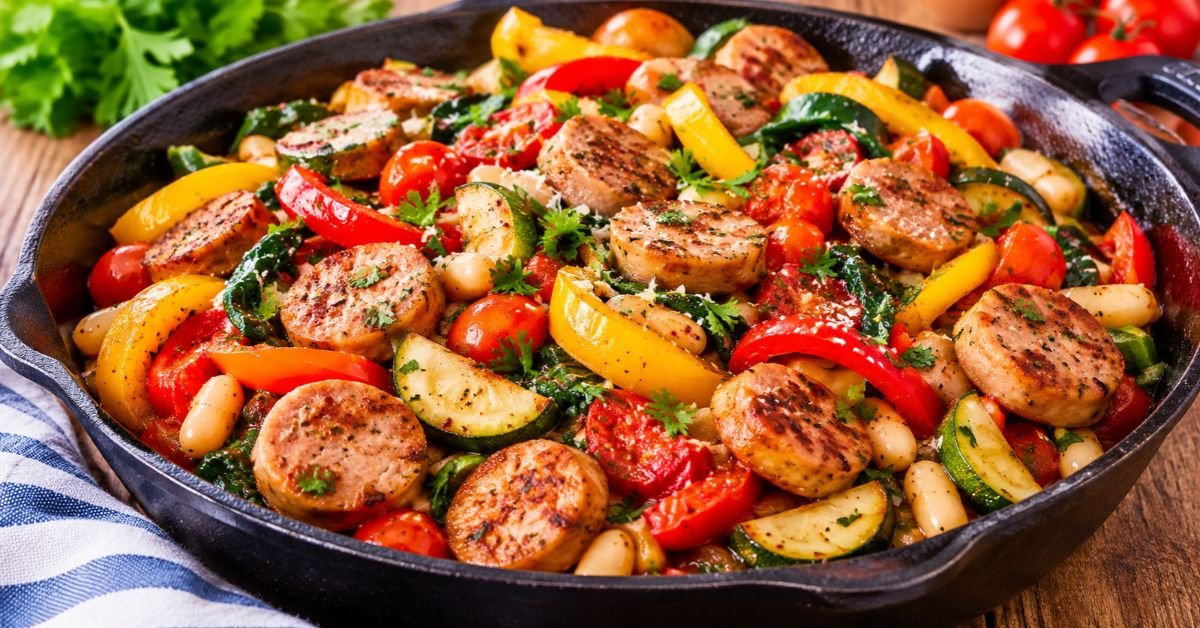
If you are searching for delicious, satisfying, and convenient chicken sausage skillet recipes, this one pan garlic herb chicken sausage skillet deserves a place in your weekly dinner rotation. It combines juicy chicken sausage, colorful bell peppers, tender zucchini, sweet cherry tomatoes, aromatic garlic, and creamy white beans to create a wholesome meal packed with comforting flavors.
The beauty of this recipe is its balance. Chicken sausage develops a beautifully browned exterior when seared in a hot skillet, while the inside remains tender and flavorful. Meanwhile, bell peppers become slightly sweet as they soften, onions release their natural sugars, and cherry tomatoes create a light, savory sauce that coats the other ingredients.
Fresh garlic, Italian seasoning, smoked paprika, and a touch of lemon juice bring everything together. The result is a colorful skillet dinner with savory, slightly smoky, mildly sweet, and refreshing notes in every bite.
At DaliyDelish.com, our goal is to help home cooks prepare practical meals without sacrificing flavor or ingredient quality. This recipe follows a straightforward cooking method designed around the needs of busy families: accessible ingredients, minimal cleanup, flexible substitutions, and easy to follow instructions.
One important detail makes this skillet particularly convenient: fully cooked chicken sausage is used as the primary protein. It requires less cooking time than raw sausage and makes weeknight preparation easier. Browning it first also creates flavorful caramelized bits in the pan, which help build the vegetable sauce.
The recipe is designed to serve four people and works beautifully for lunch, dinner, or make ahead meal preparation.
Whether you are exploring easy chicken sausage skillet recipes for a busy weeknight, looking for a colorful family dinner, or simply trying to use fresh vegetables in a satisfying way, this recipe offers a practical solution.
2. Recipe Quick Facts Summary Card
| Recipe Detail | Information |
| Recipe Name | Garlic Herb Chicken Sausage Skillet |
| Prep Time | 15 minutes |
| Cook Time | 25 minutes |
| Total Time | 40 minutes |
| Skill Level | Beginner friendly |
| Servings | 4 |
| Calories | Approximately 390 per serving |
| Estimated Cost | 2.75–4.00 per serving |
| Primary Diet Type | High protein, vegetable forward |
| Cooking Method | Stovetop, one pan |
| Cuisine Inspiration | American Italian |
| Main Protein | Chicken sausage |
| Equipment | Large skillet |
| Best For | Lunch, dinner, and meal prep |
Recipe Overview: This one pan meal features browned chicken sausage, sautéed vegetables, white beans, garlic, herbs, and a light tomato based sauce. It is filling, colorful, and easy to customize.
Important ingredient note: Choose fully cooked chicken sausage for the timing in this recipe. If using raw chicken sausage, adjust the cooking method and verify that the center reaches 165°F (74°C).
Why This Recipe Works (EEAT Value Points)

There are several reasons this chicken sausage skillet recipe works so well for everyday home cooking.
- Balanced flavor in every bite: Chicken sausage provides savory richness, while bell peppers and onions contribute natural sweetness. Cherry tomatoes add gentle acidity, and lemon juice brightens the finished dish. These ingredients complement one another without requiring a heavy cream sauce.
- Reliable cooking technique: Browning the sausage before adding vegetables creates a flavorful foundation. Cooking vegetables in stages prevents them from becoming overly soft and helps preserve their individual textures. The method is simple enough for beginners to follow confidently.
- Budget friendly ingredients: Chicken sausage, canned white beans, seasonal vegetables, and pantry spices are widely available. You can also use frozen vegetables when fresh produce is expensive, making this recipe adaptable to different grocery budgets.
- Convenient one pan preparation: Everything comes together in one large skillet. This reduces the number of cooking utensils required and makes cleanup easier after dinner. Most of the preparation involves slicing vegetables and measuring seasonings.
- Flexible for different dietary preferences: The recipe can be adapted for dairy free, gluten free, low carb, and lower sodium eating patterns. You can replace beans with additional vegetables, choose an appropriately labeled sausage, or adjust the seasoning to suit your household.
Another advantage is that the recipe does not depend on complicated cooking techniques. Controlling the skillet temperature, avoiding overcrowding, and adding ingredients in the correct order are enough to achieve excellent results.
Kitchen Tools & Equipment Guide
The right equipment helps make cooking easier and produces more consistent results.
1. Large 12 inch skillet: A wide skillet provides sufficient space for browning sausage and sautéing vegetables. Pans made from stainless steel, cast iron, or heavy-bottomed nonstick can all be used.
2. Sharp chef’s knife: Use a sharp knife to slice sausage evenly and prepare peppers, onions, zucchini, and garlic. Uniform pieces cook more consistently.
3. Cutting board: Keep a separate cutting board for raw poultry products if you are using raw sausage. Wash and sanitize it properly before preparing vegetables.
4. Wooden spoon or silicone spatula: These utensils help move ingredients around the skillet without damaging the cooking surface.
5. Measuring spoons and cups: Accurate measurements help maintain consistent seasoning and sauce proportions.
6. Instant read thermometer: This is particularly important when preparing raw chicken sausage. Check the thickest portion and confirm that it reaches 165°F (74°C).
7. Citrus juicer (optional): Fresh lemon juice adds brightness without requiring additional complicated ingredients.
A sufficiently wide skillet is especially important. Overcrowding causes vegetables to release moisture and steam instead of sautéing, making it harder to develop the desired browned flavor.
Ingredient Selection, Quality & Substitutions
The ingredients in this recipe are simple, but selecting good quality products makes a noticeable difference in flavor and texture.
Complete Ingredient List
The following quantities make four generous servings.
Main Ingredients
| Ingredient | US Customary Measurement | Metric Measurement |
| Fully cooked chicken sausage | 12 oz (about 4 links) | 340 g |
| Olive oil | 2 tablespoons | 30 ml |
| Red bell pepper | 1 medium | 150 g |
| Yellow bell pepper | 1 medium | 150 g |
| Yellow onion | 1 medium | 150 g |
| Zucchini | 1 medium | 200 g |
| Cherry tomatoes | 1 cup | 150 g |
| Cannellini beans, drained | 1 cup | 170 g |
| Fresh baby spinach | 2 cups | 60 g |
| Garlic cloves, minced | 3 cloves | 9 g |
| Chicken broth, preferably low sodium | 1/2 cup | 120 ml |
| Fresh lemon juice | 1 tablespoon | 15 ml |
Seasonings and Garnishes
| Ingredient | US Customary Measurement | Metric Measurement |
| Italian seasoning | 1 teaspoon | 2 g |
| Smoked paprika | 1/2 teaspoon | 1 g |
| Black pepper | 1/4 teaspoon | 0.5 g |
| Salt | 1/4 teaspoon, or to taste | 1.5 g |
| Red pepper flakes | 1/4 teaspoon | 0.5 g |
| Fresh parsley, chopped | 2 tablespoons | 8 g |
| Grated Parmesan cheese (optional) | 2 tablespoons | 10 g |
Understanding the Main Ingredients
Chicken sausage
This recipe features chicken sausage. It generally provides a savory flavor and can be a convenient alternative to traditional pork sausage.
Look for sausage with a pleasant seasoning blend and a protein content that suits your nutritional preferences. Some varieties contain added cheese, sugar, or substantial amounts of sodium, so comparing nutrition labels is worthwhile.
Fully cooked sausage is recommended for this particular cooking method.
Bell peppers
Red and yellow bell peppers provide color, sweetness, and a slightly crisp texture. Red peppers are generally sweeter than green peppers, making them particularly suitable for this skillet.
Choose peppers with smooth, firm skin and no soft spots.
Zucchini
Zucchini contributes moisture and a tender texture. Medium sized zucchini works well because it has a good balance of flesh and seeds.
Avoid cutting it too thinly, as very small pieces can become mushy during cooking.
Cherry tomatoes
Cherry tomatoes create a naturally juicy sauce as they soften and release their liquid. Choose ripe tomatoes that feel firm and have bright, unblemished skin.
Cannellini beans
White beans add fiber, plant based protein, and a creamy texture. They also make the meal more substantial.
Drain and rinse canned beans before adding them to the skillet to remove excess packing liquid and some sodium.
Garlic and herbs
Fresh garlic provides a stronger aroma than dried garlic. Italian seasoning introduces familiar herbal flavors, while smoked paprika adds subtle smokiness.
Olive oil and chicken broth
Olive oil helps brown the sausage and vegetables. Chicken broth loosens the flavorful browned bits from the bottom of the skillet and creates a light sauce.
Ingredient Substitutions
- Dairy free: Simply omit Parmesan cheese. The recipe remains flavorful without it.
- Gluten free: Choose chicken sausage and broth explicitly labeled gluten free. Check seasoning blends and other packaged ingredients.
- Low carb: Replace cannellini beans with additional zucchini, mushrooms, or cauliflower. The exact carbohydrate content will decrease.
- Lower sodium: Select reduced sodium chicken sausage and unsalted beans. Reduce added salt and use low sodium broth.
- Vegetable alternatives: Mushrooms, broccoli florets, asparagus, and yellow squash are suitable alternatives.
- Protein alternatives: Turkey sausage can replace chicken sausage, provided its cooking instructions and safe internal temperature are followed.
For the best flavor, avoid changing too many ingredients simultaneously when preparing the recipe for the first time.
Culinary Masterclass: Step by Step Instructions
The cooking process follows four main stages: preparation, browning, sauce development, and finishing.
The key is to avoid adding everything to the skillet at once. Each ingredient needs an appropriate amount of time to develop its flavor and texture.
Step 1: Prep Work & Seasoning
Begin by organizing all ingredients before heating the skillet.
- Remove the fully cooked chicken sausage from its packaging according to the package instructions.
- Slice each sausage link into approximately 1/2 inch rounds. Keep the slices relatively uniform so they brown evenly.
- Wash the bell peppers, remove their seeds and stems, and cut them into bite sized strips.
- Half moons are made by peeling and slicing the onion.
- Wash the zucchini and cut it into half moon pieces approximately 1/2 inch thick.
- Rinse the cherry tomatoes and leave them whole or slice larger ones in half.
- Drain and rinse the cannellini beans.
- Mince the garlic and chop the parsley.
- Measure the Italian seasoning, smoked paprika, black pepper, salt, and red pepper flakes.
Place the prepared ingredients in separate bowls.
This preparation method makes the cooking process easier because the ingredients can be added in the correct order without interrupting the cooking process.
Chef’s tip: Keep the spinach separate until the final stage. Its delicate leaves require very little cooking time.
Step 2: Searing & Sautéing
Place a large skillet over medium heat and allow it to warm for approximately 1–2 minutes.
The cooking surface should be covered with one tablespoon of olive oil.
Arrange the sliced chicken sausage in a single layer. Allow the pieces to brown for approximately 2–3 minutes on the first side without constantly moving them.
Turn the slices and cook for another 2 minutes.
Look for:
- Golden brown edges.
- Light caramelization on the cut surfaces.
- A pleasant savory aroma.
- Firm but tender sausage texture.
Because the recipe uses fully cooked sausage, this stage focuses on browning and heating rather than cooking raw poultry.
Place the browned sausage on a clean plate.
The skillet should now be filled with the remaining tablespoon of olive oil.
Add the sliced onion and bell peppers. Cook for approximately 4–5 minutes, stirring occasionally.
The onions should begin to soften, while the peppers should retain a slight bite.
Next, add the zucchini.
Cook for another 3–4 minutes, allowing some surfaces to develop light golden brown patches.
Avoid stirring continuously. Brief periods of undisturbed contact help vegetables develop better color.
Add the minced garlic, Italian seasoning, smoked paprika, black pepper, salt, and red pepper flakes.
Stir for approximately 30 seconds, just until the garlic becomes fragrant.
Do not allow the garlic to turn dark brown, as burnt garlic can make the entire skillet taste bitter.
Sensory checkpoint: At this point, the skillet should smell fragrant, with the sweetness of onions and peppers blending with the savory aroma of sausage and herbs.
Step 3: Sauce Building & Simmering
Add the cherry tomatoes and cannellini beans to the skillet.
Stir gently so the ingredients become evenly distributed.
Pour in the chicken broth.
Use a wooden spoon to scrape the bottom of the pan and release the browned bits left behind by the sausage and vegetables.
These caramelized particles contain concentrated flavor and help create a more satisfying sauce.
Stir the mixture over medium heat until it simmers gently.
Cook uncovered for approximately 4–5 minutes.
During this time:
- The cherry tomatoes begin to soften.
- Their juices combine with the chicken broth.
- The beans warm through.
- The vegetables absorb the garlic and herb seasoning.
- The sauce becomes slightly more concentrated.
The skillet should now be filled with the browned chicken sausage.
Stir gently and simmer for another 2–3 minutes, allowing the flavors to combine.
If the sauce becomes too thick, add one or two tablespoons of broth.
If it appears too watery, simmer uncovered for another 1–2 minutes.
Avoid boiling aggressively. A gentle simmer helps maintain the shape and texture of the vegetables.
Step 4: Finishing, Resting, and Garnishing
Reduce the heat to low.
Add the fresh baby spinach in two batches, stirring gently until the leaves wilt.
This generally takes 1–2 minutes.
Turn off the heat and add the fresh lemon juice.
Taste the sauce and adjust the seasoning if necessary.
If the dish needs more brightness, add a little extra lemon juice. If it tastes flat, check whether it needs a small amount of salt or freshly ground black pepper.
Allow the skillet to stand for approximately 2 minutes before serving.
This brief resting period gives the sauce a chance to settle and allows the ingredients to finish absorbing the seasoning.
Garnish with chopped fresh parsley and optional grated Parmesan.
For a visually appealing presentation, arrange the sausage slices across the top and distribute the colorful peppers, tomatoes, spinach, and beans evenly.
Final cooking checkpoint:
- Sausage should be hot throughout.
- Vegetables should be tender but not mushy.
- Tomatoes should be softened.
- Beans should be warm and intact.
- Spinach should be wilted rather than overcooked.
- Sauce should lightly coat the ingredients.
If using raw chicken sausage instead of fully cooked sausage, cook it separately or according to its package instructions and verify that the center reaches 165°F (74°C) before combining it with the vegetables.
Serve immediately while warm.
The Science of Flavor & Chef’s Insider Techniques
Great chicken sausage skillet recipes depend on more than simply combining ingredients. Understanding a few culinary principles can help you produce better results consistently.
Understanding the Maillard Reaction
The Maillard reaction is a chemical process involving reducing sugars and amino acids that occurs during sufficiently hot cooking.
It creates the complex browned aromas and flavors associated with seared meats.
When chicken sausage touches a properly heated skillet, its surface can develop golden brown patches that taste more complex than sausage that has only been simmered.
For better browning:
- Preheat the skillet.
- Use moderate heat.
- Avoid overcrowding.
- Pat excessively wet sausage surfaces dry.
- Allow the sausage to brown before turning.
Why Pan Temperature Matters
A pan that is too cool encourages moisture accumulation.
Instead of developing a browned surface, sausage may release liquid and steam.
However, excessive heat can cause garlic to burn and vegetables to brown unevenly.
Medium heat is a practical starting point for this recipe. Adjust it depending on the skillet material and your stove.
Balancing Fat and Acidity
Chicken sausage contains fat that contributes richness and mouthfeel.
However, a skillet containing only rich, savory ingredients can taste heavy.
Cherry tomatoes and fresh lemon juice provide acidity that balances this richness.
This is why lemon juice is added near the end rather than cooked for the entire simmering period. Its fresh, bright character is better preserved with a late addition.
Protecting Vegetable Texture
Different vegetables contain different amounts of water and have different cooking requirements.
Onions and bell peppers can tolerate longer cooking. Zucchini needs less time because it softens quickly. Spinach requires only a brief finish.
Adding vegetables in stages helps preserve their individual textures.
Chef’s Insider Techniques
Brown in batches when necessary: If the skillet is crowded, cook the sausage in two batches.
Use fresh herbs at the end: Parsley provides a fresher aroma when added after cooking.
Do not overcook zucchini: Slightly firm zucchini creates a more pleasant contrast with the soft beans and tomatoes.
Taste before salting: Chicken sausage and broth may already contain considerable sodium.
Keep the sauce light: The goal is a flavorful coating rather than a thick, heavy gravy.
Common Cooking Mistakes & Troubleshooting Guide

Even an easy skillet recipe can produce disappointing results if a few important details are overlooked.
Here are four common mistakes and how to correct them.
Mistake 1: Overcrowding the Skillet
Problem: Too many sausage slices and vegetables release moisture into the pan. Instead of browning, the ingredients steam.
Solution: Use a large skillet and cook the sausage in batches when necessary. Allow space between ingredients so moisture can evaporate.
If the vegetables have already released too much liquid, remove the lid if one was used and simmer uncovered until some moisture evaporates.
Mistake 2: Adding Garlic Too Early
Problem: Garlic burns when exposed to high heat for too long. Burnt garlic develops a bitter flavor that can overpower the other ingredients.
Solution: Add garlic after the onions and peppers have softened. Cook it for approximately 30 seconds before adding the broth and tomatoes.
If garlic has burned badly, removing only the visible pieces may not eliminate the bitterness. In that situation, starting a fresh sauce base is the better option.
Mistake 3: Cooking Vegetables Until Mushy
Problem: Adding all vegetables simultaneously gives delicate vegetables too much cooking time.
Solution: Follow the ingredient sequence. Cook onions and peppers first, zucchini next, and spinach last.
If zucchini becomes slightly too soft, avoid additional simmering. Finish the recipe promptly and serve.
Mistake 4: Making the Sauce Too Watery or Too Salty
Problem: Tomatoes and zucchini naturally release moisture. Meanwhile, chicken sausage and packaged broth can contain significant sodium.
Solution: Simmer the sauce uncovered for a few additional minutes if it is too watery.
If the dish tastes too salty, add more unsalted vegetables or beans, depending on the desired consistency. A small amount of lemon juice can improve flavor balance, although it does not remove sodium.
For future preparations, choose lower sodium sausage and broth and season gradually.
Extra troubleshooting tip: If the sausage tastes dry, it may have been heated for too long or cooked over excessive heat. Use moderate heat and return fully cooked sausage to the pan only when the vegetables and sauce are nearly ready.
9. Food Safety, Storage, Meal Prep & Reheating
Safe handling is essential whenever preparing chicken based products.
Although this recipe uses fully cooked chicken sausage, proper storage and reheating practices still matter.
Safe Cooking Temperatures
It is recommended that raw poultry products, including raw chicken sausage, be cooked to 165°F (74°C) on the inside.
Use an instant read thermometer to check the thickest portion.
Fully cooked sausage should be reheated according to package directions. For cooked leftovers, reheat the complete dish to 165°F (74°C).
Do not rely exclusively on color to determine whether raw chicken sausage is safely cooked.
Preventing Cross Contamination
Follow these precautions:
- Raw poultry should be handled with clean hands.
- Keep raw sausage separate from ready to eat vegetables.
- Whenever you change tasks, use separate cutting boards or wash and sanitize your equipment.
- Never place cooked sausage on a plate that previously held raw sausage unless it has been washed.
- Clean countertops, knives, and utensils after preparing raw poultry.
Refrigerator Storage
Transfer leftover chicken sausage skillet into shallow, airtight containers.
Refrigerate within two hours of cooking, or within one hour when the surrounding temperature exceeds 90°F (32°C).
According to USDA food safety guidance, cooked leftovers generally keep for 3–4 days in the refrigerator at 40°F (4°C) or below.
Freezer Storage
For longer storage, freeze the cooled dish in freezer safe containers.
For best quality, use frozen leftovers within approximately 2–3 months.
The vegetables may soften slightly after thawing, particularly zucchini and spinach, but the meal remains convenient for future dinners when properly stored.
Best Reheating Method
Stovetop method:
- Transfer the desired portion to a skillet.
- Add one or two tablespoons of water or broth.
- Cover and heat over medium low heat.
- Stir occasionally until evenly hot.
- Verify that leftovers reach 165°F (74°C).
Microwave method:
- Microwave-safe containers should be used for each serving.
- Add a small splash of broth.
- Cover loosely with a microwave safe lid.
- Heat in short intervals, stirring between intervals.
- Check that the entire portion reaches 165°F (74°C).
Meal Prep Recommendations
The vegetables and sausage should be prepared in advance.
Store the prepared ingredients separately in refrigerated containers and assemble the skillet when needed.
For the best texture, add spinach and lemon juice immediately before serving rather than preparing them too far in advance.
Do not leave the finished dish at room temperature for extended periods.
10. Nutrition & Dietary Considerations
This garlic herb chicken sausage skillet combines animal protein, vegetables, beans, and olive oil in one balanced meal.
Chicken sausage contributes protein, while cannellini beans provide carbohydrates, fiber, and additional plant based protein.
Bell peppers and tomatoes contribute vitamin C, while spinach provides folate and other micronutrients.
Olive oil supplies predominantly unsaturated fats.
Estimated Nutrition Per Serving
The following estimates assume four servings, fully cooked chicken sausage, cannellini beans, vegetables, olive oil, and no optional Parmesan garnish.
| Nutritional Component | Approximate Amount |
| Calories | 390 kcal |
| Protein | 24 g |
| Total Carbohydrates | 28 g |
| Total Fat | 19 g |
| Dietary Fiber | 7 g |
| Sodium | 850 mg |
| Total Sugars | 8 g |
Please note: These figures are estimates, not laboratory tested nutritional values. Actual nutrition depends on the chicken sausage brand, serving size, broth, beans, and ingredient substitutions. Check individual product labels for more accurate calculations.
How This Recipe Fits Different Eating Patterns
High protein eating: Chicken sausage and white beans contribute protein, making this a satisfying meal.
Gluten free eating: Choose sausage, broth, and seasonings that are certified or labeled gluten free.
Lower carbohydrate eating: Replace white beans with additional non starchy vegetables. The carbohydrate content will decrease, although the recipe will also contain less fiber.
Dairy free eating: Omit the optional Parmesan cheese.
Lower sodium eating: Choose lower sodium sausage, unsalted beans, and low sodium broth.
This recipe can be part of a varied eating pattern, but individual nutritional needs differ. Portion sizes and ingredient labels should guide adjustments.
Pairings & Serving Suggestions
One of the best things about this chicken sausage skillet is its versatility. The combination of protein, vegetables, and beans makes it satisfying on its own, but complementary sides can turn it into a more complete family dinner.
1. Serve with Rice
Steamed brown rice or white rice works particularly well with the tomato and garlic broth.
The rice absorbs the savory juices and creates a filling meal.
2. Pair with Roasted Potatoes
Crispy roasted baby potatoes provide a pleasant contrast to the tender vegetables.
Season them with rosemary, black pepper, and a little olive oil.
3. Add a Fresh Green Salad
A simple salad with lettuce, cucumber, cherry tomatoes, and lemon vinaigrette balances the warm skillet.
Avoid overly rich dressings because the sausage already contributes savory richness.
4. Serve with Crusty Bread
Whole grain bread, sourdough, or toasted baguette slices are excellent for soaking up the light tomato sauce.
For a gluten free option, use suitable gluten free bread.
5. Pair with Pasta
Serve the skillet over whole wheat pasta or regular penne for a heartier dinner.
A little pasta water can help create a cohesive sauce.
6. Beverage Pairings
For refreshing non alcoholic options, consider:
- Chilled lemon water.
- Unsweetened iced tea.
- Sparkling water with fresh mint.
- Homemade cucumber water.
Presentation Tip
Serve the skillet in a warm shallow bowl.
Arrange the sausage slices across the vegetables, add a little chopped parsley, and finish with fresh lemon zest.
The red peppers, yellow peppers, green spinach, and golden sausage create an attractive presentation without requiring complicated plating techniques.
Final Verdict & Reader Invitation
This garlic herb chicken sausage skillet proves that a delicious family dinner does not need complicated ingredients or hours in the kitchen. With juicy browned sausage, colorful vegetables, creamy white beans, and fresh herbs, every serving delivers satisfying flavor and practical everyday convenience.
Whether you are preparing a quick weeknight meal, planning lunches ahead, or exploring new chicken sausage skillet recipes, this one pan dish is an excellent place to start.
Give this recipe a try in your kitchen!
Enjoy This Easy Chicken Sausage Skillet with Your Family
If you make it, leave a 5 star rating if you enjoyed it, share your cooking experience, and tell us which vegetables you used in the comments at DaliyDelish.com.
We would love to hear your questions, suggestions, and favorite variations. Happy cooking!
Bell peppers, onions, zucchini, cherry tomatoes, spinach, mushrooms, broccoli, and asparagus are excellent choices. They provide different textures, colors, and flavors. For this recipe, peppers, onions, zucchini, and tomatoes create a particularly balanced combination. The last thing you want is to overcook delicate vegetables such as spinach.
They can be part of a balanced eating pattern, depending on the ingredients and portion sizes. Chicken sausage supplies protein, while vegetables provide vitamins and minerals. Beans contribute fiber and additional protein. Choose chicken sausage with a suitable sodium and saturated fat content, and include plenty of vegetables to improve the overall nutritional balance.
Yes. You can prepare the vegetables and slice the fully cooked sausage ahead of time. Store prepared ingredients in separate refrigerated containers. You can also cook the complete skillet and refrigerate it for 3–4 days. Reheat leftovers to 165°F (74°C) before serving. Add fresh lemon juice and parsley after reheating for a brighter flavor.
For raw chicken sausage, use a food thermometer and verify that the center reaches 165°F (74°C). Do not depend only on the exterior color or cooking time. If using fully cooked chicken sausage, follow the package reheating directions. When incorporating it into leftovers, heat the complete dish to 165°F (74°C).

Tosique Haider -Passionate writer sharing informative, engaging, and easy-to-read articles across different topics. Focused on delivering valuable content that helps readers learn, explore, and stay inspired every day.
2 thoughts on “Chicken Sausage Skillet Recipes: The Ultimate One Pan Garlic Herb Chicken Sausage Skillet with Fresh Vegetables”