


Introduction:
Finding easy healthy dinners for two should not mean sacrificing flavor, spending hours in the kitchen, or preparing large portions that leave unnecessary leftovers. Whether you are cooking for your partner, sharing dinner with a friend, or simply preparing a satisfying meal for two, the right recipe can make everyday cooking easier, healthier, and more enjoyable.
At DaliyDelish.com, we believe that a good dinner should combine fresh ingredients, practical cooking techniques, balanced nutrition, and exceptional flavor. That is why this one pan lemon garlic chicken and vegetable skillet is an excellent addition to a healthy dinner routine.
Imagine tender pieces of chicken developing a beautiful golden brown exterior while fresh garlic releases its irresistible aroma into the warm olive oil. As colorful bell peppers, zucchini, and broccoli cook alongside the chicken, they absorb the savory seasoning while retaining their natural freshness. Finally, freshly squeezed lemon juice brings everything together with a bright, refreshing finish.
The result is a delicious combination of juicy chicken, lightly crisp vegetables, aromatic herbs, and a naturally flavorful pan sauce. Every bite offers a balance of savory, tangy, and slightly sweet notes without requiring heavy cream, excessive butter, or complicated ingredients.
During recipe development, the cooking method was designed around three practical goals: maintaining moist chicken, preserving the vegetables’ texture, and creating a flavorful dinner using just one skillet.
Another advantage is portion control. Instead of preparing a large family sized meal, this recipe makes two satisfying servings with straightforward measurements. It also uses everyday ingredients that are relatively easy to find in most grocery stores.
If you are searching for easy healthy dinners for two that are convenient enough for busy weeknights yet delicious enough to serve on a relaxed evening, this lemon garlic chicken skillet deserves a place in your meal rotation.
Recipe Quick Facts Summary Card
This recipe combines lean protein, colorful vegetables, heart healthy unsaturated fat, and fresh citrus for a balanced dinner.
| Recipe Detail | Information |
| Recipe Name | Lemon Garlic Chicken & Vegetable Skillet |
| Prep Time | 15 minutes |
| Cook Time | 20 minutes |
| Total Time | 35 minutes |
| Skill Level | Easy to Intermediate |
| Servings | 2 people |
| Calories | Approximately 390 per serving |
| Estimated Cost | 3.50–5.00 per serving |
| Primary Diet Type | High Protein |
| Additional Diet Options | Gluten Free, Low Carb |
| Cooking Method | One Pan Skillet |
| Main Protein | Boneless Chicken Breast |
| Main Vegetables | Broccoli, Zucchini & Bell Pepper |
Recipe Highlight: A fresh, protein rich dinner with tender chicken, colorful vegetables, and a refreshing lemon garlic sauce.
Why This Recipe Works (EEAT Value Points)
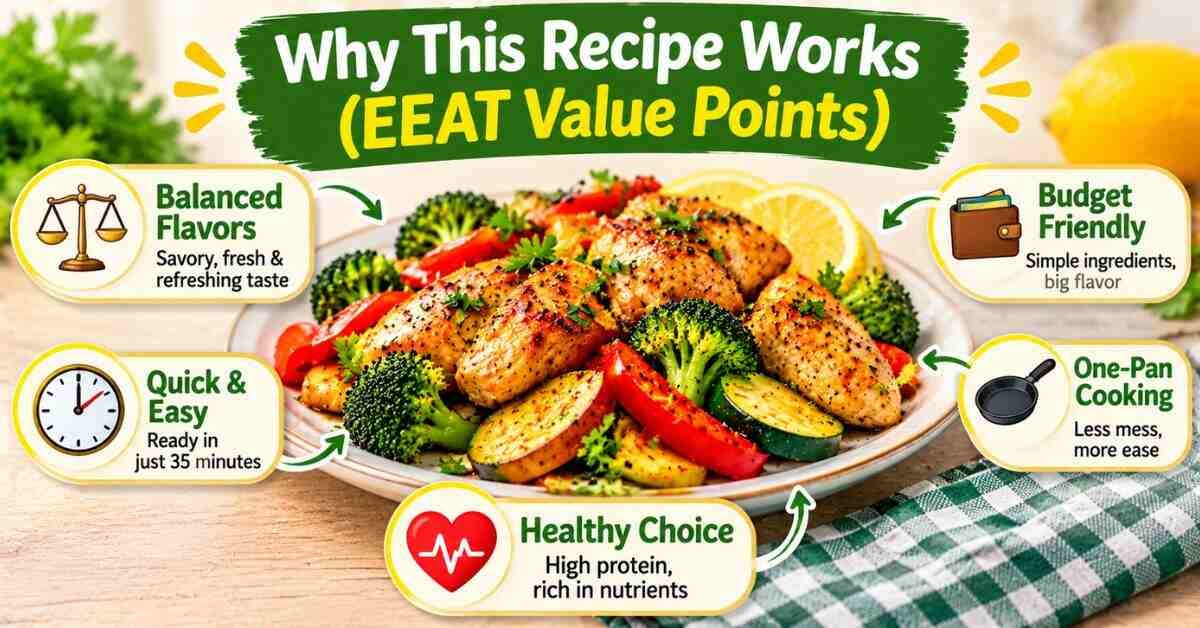
A successful healthy dinner needs more than nutritious ingredients. It should also deliver reliable results, satisfying flavor, manageable preparation, and practical serving sizes.
Here are five reasons this recipe works particularly well.
1. A Balanced Combination of Fresh Flavors
Chicken breast has a naturally mild flavor, making it an excellent foundation for garlic, lemon, paprika, and herbs.
Garlic contributes savory depth, while lemon juice introduces acidity that brightens the entire dish. Meanwhile, bell peppers provide gentle sweetness, zucchini adds tenderness, and broccoli contributes a pleasant earthy flavor.
This combination creates a satisfying meal without depending on heavy sauces.
2. Tender Chicken Without Complicated Techniques
Chicken breast can become dry when exposed to excessive heat or cooked longer than necessary.
The solution is to cut the chicken into evenly sized pieces and cook it in a properly preheated skillet. This encourages consistent browning and reduces the likelihood of uneven cooking.
An instant read thermometer provides an additional layer of accuracy by confirming that the thickest chicken pieces reach 165°F (74°C).
3. One Pan Cooking Saves Time
Preparing dinner for two does not require several pots and pans.
This recipe uses one large skillet for browning the chicken, sautéing the vegetables, and bringing the sauce together.
Consequently, there are fewer dishes to wash, less preparation to organize, and fewer opportunities for unnecessary kitchen mess.
4. Affordable Ingredients Make It Practical
Chicken breast, broccoli, zucchini, bell peppers, garlic, and lemon are versatile ingredients.
They can also be incorporated into other meals, helping reduce food waste. For example, leftover vegetables can be added to omelets, salads, or grain bowls.
5. Flexible Ingredients Support Different Dietary Needs
The recipe is naturally gluten free when prepared with uncontaminated ingredients.
Additionally, you can reduce the carbohydrates by adjusting the vegetable selection or increase the fiber by serving the chicken with extra broccoli.
Dairy free cooking is also straightforward because the recipe does not require milk, butter, or cheese.
Kitchen Tools & Equipment Guide
The right equipment makes cooking easier and helps produce consistent results.
Large skillet: A 10–12 inch cast iron, stainless steel, or nonstick skillet provides enough room to brown chicken and cook vegetables without overcrowding.
Sharp chef’s knife: A sharp knife makes it easier to cut chicken and vegetables into similarly sized pieces. Consistent sizing promotes even cooking.
Cutting boards: Ideally, use separate cutting boards for raw poultry and fresh produce. This reduces the risk of cross contamination.
Instant read thermometer: This is one of the most useful tools for chicken recipes. It confirms that the thickest pieces reach 165°F (74°C).
Measuring spoons and cups: Accurate measurements help maintain consistent seasoning and sauce proportions.
Wooden spoon or silicone spatula: These tools help stir vegetables and release flavorful browned bits from the bottom of the skillet without unnecessarily damaging the cooking surface.
A properly sized skillet is especially important. Overcrowding causes ingredients to release moisture and steam instead of developing a golden brown exterior.
Ingredient Selection, Quality & Substitutions
Fresh ingredients make a noticeable difference in the flavor and texture of this dinner. Choose firm vegetables, fresh citrus, and good quality chicken for the best results.
Complete Ingredient List
The following measurements make two servings.
| Ingredient | US Customary | Metric |
| Boneless, skinless chicken breast | 10 oz | 285 g |
| Broccoli florets | 1 cup | 90 g |
| Zucchini | 1 small | 150 g |
| Red bell pepper | ½ medium | 75 g |
| Olive oil | 1 tablespoon | 15 ml |
| Fresh garlic, minced | 3 cloves | 9 g |
| Fresh lemon juice | 2 tablespoons | 30 ml |
| Low sodium chicken broth | ¼ cup | 60 ml |
| Paprika | ½ teaspoon | 1 g |
| Dried oregano | ½ teaspoon | 0.5 g |
| Black pepper | ¼ teaspoon | 0.5 g |
| Salt | ¼ teaspoon | 1.5 g |
| Fresh parsley | 1 tablespoon | 4 g |
| Lemon zest | ½ teaspoon | 1 g |
Measurements are approximate because ingredient sizes and densities vary.
Choosing the Best Chicken
Select chicken breasts that are fresh, properly refrigerated, and similar in thickness.
Boneless, skinless chicken breast is particularly suitable because it provides substantial protein without requiring a long cooking time.
If the chicken breast is unusually thick, slice it horizontally or cut it into evenly sized pieces. This prevents smaller pieces from drying out while larger pieces finish cooking.
Chicken thighs can also work. They generally contain more fat and may require a slightly different cooking time depending on their size.
Selecting Fresh Vegetables
Broccoli: Look for firm, dark green florets without yellowing or soft spots. Fresh broccoli provides a pleasant bite and absorbs the garlic seasoning beautifully.
Zucchini: Choose small or medium zucchini with smooth skin. Smaller zucchini generally have a firmer texture and fewer large seeds.
Red bell pepper: A firm, glossy pepper contributes natural sweetness and attractive color.
You can also substitute yellow bell pepper, green beans, asparagus, or mushrooms.
Garlic, Lemon, and Seasonings
Fresh garlic offers a more pronounced aroma than garlic powder. However, garlic powder can be used when fresh garlic is unavailable.
Fresh lemon juice provides acidity that balances the olive oil and savory chicken flavors. Bottled lemon juice is a convenient alternative, although freshly squeezed juice generally provides a brighter taste.
Paprika and oregano create a simple seasoning foundation without overwhelming the vegetables.
Healthy Ingredient Substitutions
- Dairy free: No substitution is necessary because the original recipe contains no dairy.
- Lower sodium: Reduce the added salt and select unsalted chicken broth.
- Keto friendly: Use smaller portions of bell pepper and replace the zucchini with additional low carbohydrate vegetables.
- Gluten free: Choose certified gluten free broth and check seasoning labels.
- Extra protein: Increase the chicken portion slightly or serve with plain Greek yogurt as a separate side.
Remember that substitutions can change the nutritional profile, cooking time, and final texture.
Culinary Masterclass: Step by Step Instructions
The key to preparing excellent lemon garlic chicken is managing heat carefully and cooking the ingredients in the correct order.
Instead of adding everything to the skillet at once, build flavor gradually. First, season the chicken. Next, develop a golden exterior. Then cook the vegetables and create a light lemon garlic sauce.
Step 1: Prep Work & Seasoning
Begin by gathering all the ingredients and preparing your workspace.
Pat the chicken dry using disposable paper towels. Removing excess surface moisture is important because wet chicken tends to steam rather than brown.
Cut the chicken breast into bite sized pieces approximately 1 inch (2.5 cm) wide.
Place the chicken in a clean bowl and add:
- Paprika
- Dried oregano
- Black pepper
- Salt
- Half of the minced garlic
Toss until the seasoning coats the chicken evenly.
Allow the seasoned chicken to sit briefly while preparing the vegetables.
Wash the broccoli, zucchini, and bell pepper under clean running water.
Cut the broccoli into small, similarly sized florets. Slice the zucchini into half moons and cut the bell pepper into thin strips.
Keep the vegetables separate because they have different cooking requirements.
Chef’s sensory checkpoint: The chicken should look evenly seasoned, while the vegetables should have clean, fresh surfaces and relatively uniform pieces.
Prepare the lemon juice, zest, chicken broth, and parsley before turning on the stove. Having everything ready makes the cooking process smoother.
Step 2: Searing & Sautéing
Place a large skillet over medium high heat.
Add the olive oil and allow it to warm until it becomes fluid and lightly shimmering. Avoid heating it until it smokes.
Carefully arrange the seasoned chicken pieces in a single layer.
If your skillet is small, cook the chicken in two batches rather than overcrowding it.
Allow the chicken to develop a golden brown surface before turning the pieces. Depending on their size and skillet temperature, this generally takes approximately 3–4 minutes on the first side.
Turn the pieces and continue cooking for another 3–4 minutes.
The exterior should develop light golden patches, while the kitchen begins to smell pleasantly of garlic and toasted paprika.
At this stage, the chicken may not be fully cooked internally.
Use a clean utensil to transfer the browned chicken to a clean plate. Avoid placing cooked food on a plate that previously held raw chicken unless it has been thoroughly washed.
Add the broccoli to the same skillet.
Cook for approximately 2 minutes, stirring occasionally.
Next, add the zucchini and bell pepper. Continue sautéing for another 3–4 minutes.
The vegetables should become slightly tender while maintaining some structure.
Chef’s sensory checkpoint: Broccoli should remain bright green, zucchini should soften slightly, and bell peppers should retain a gentle bite.
Step 3: Sauce Building & Simmering
Reduce the heat to medium.
Add the remaining minced garlic to the vegetables.
Stir for approximately 20–30 seconds, just until fragrant. Garlic burns quickly, so avoid leaving it unattended.
Pour in the chicken broth and scrape the bottom of the skillet with a wooden spoon.
Those browned bits contain concentrated flavor developed during the searing process. Releasing them into the broth helps create a more flavorful sauce.
Add the lemon juice and lemon zest.
Stir gently to combine the ingredients.
Allow the mixture to simmer for approximately 2 minutes. The liquid should become slightly more concentrated while remaining light and pourable.
Return the browned chicken and any accumulated juices to the skillet.
Stir gently so the chicken pieces become coated with the lemon garlic mixture.
Continue cooking over medium heat until the thickest chicken pieces reach an internal temperature of 165°F (74°C).
Insert the thermometer into the center of the largest piece, avoiding contact with the pan.
Cooking time will depend on the size of the chicken pieces, the skillet, and the heat level.
If the sauce reduces too quickly, add 1–2 tablespoons of chicken broth or water.
If it seems too thin, allow it to simmer briefly without covering the skillet.
Chef’s sensory checkpoint: The sauce should smell fresh and citrusy, the garlic should be aromatic rather than bitter, and the chicken should be moist and fully cooked.
Step 4: Finishing, Resting, and Garnishing
Once the chicken reaches 165°F (74°C), remove the skillet from the heat.
Sprinkle freshly chopped parsley over the chicken and vegetables.
Taste the sauce carefully.
If it needs more brightness, add a small squeeze of lemon juice. If the flavor feels too sharp, a little additional broth can soften the acidity.
Allow the chicken to rest for approximately 3 minutes before serving.
This short resting period also gives the hot juices and sauce an opportunity to settle.
Divide the chicken and vegetables evenly between two plates.
Overtop, drizzle the remaining lemon garlic sauce.
For an attractive presentation, arrange the colorful vegetables around the chicken and finish with a little lemon zest and freshly ground black pepper.
Serve immediately while the chicken is warm and the vegetables retain their pleasant texture.
Final cooking result: Tender chicken, vibrant vegetables, a light garlic aroma, and a refreshing citrus finish all prepared in one skillet.
The Science of Flavor & Chef’s Insider Techniques
Understanding a few culinary principles can transform a basic chicken dinner into a restaurant quality meal.
The Maillard Reaction Creates Golden Brown Flavor
The Maillard reaction is a chemical process involving reducing sugars and amino acids that occurs when food surfaces become sufficiently hot and relatively dry.
It contributes to the complex aromas and flavors associated with browned chicken.
That is why patting chicken dry and avoiding overcrowding are important. Excess moisture prevents the surface from heating effectively.
Pan Temperature Controls Texture
A skillet that is too cool encourages moisture accumulation and prevents proper browning.
However, excessive heat can burn garlic and spices before the chicken cooks through.
Medium high heat is a practical starting point for searing, followed by medium heat for cooking the sauce and vegetables.
Adjust the temperature according to your equipment.
Resting Helps Maintain Juiciness
Chicken loses moisture during cooking as its muscle proteins change structure.
Removing it from excessive heat once it reaches the safe internal temperature helps prevent unnecessary moisture loss.
A short resting period allows the temperature and juices to redistribute more evenly.
Acidity Balances Richness
Olive oil provides richness, while lemon juice contributes acidity.
These elements complement each other. Acidity makes the overall flavor feel brighter and prevents the sauce from tasting excessively oily.
However, lemon should be added gradually. Too much can overpower the natural sweetness of the vegetables.
Fresh Garlic Requires Careful Timing
Garlic contains sulfur compounds responsible for its distinctive aroma.
When gently heated, it develops a sweeter, more rounded flavor. When burned, it becomes bitter.
Adding garlic after the vegetables have started cooking helps control its exposure to direct heat.
Insider tip: For a stronger fresh lemon aroma, add a small amount of lemon zest at the very end instead of cooking all of it in the sauce.
Common Cooking Mistakes & Troubleshooting Guide

Even straightforward chicken recipes can produce disappointing results when heat, timing, or ingredient preparation is overlooked.
Here are four common mistakes and practical ways to correct them.
Mistake 1: Overcooking the Chicken
Chicken breast contains relatively little fat, so excessive cooking can make it dry and tough.
Why it happens: Home cooks sometimes rely entirely on cooking time rather than checking the internal temperature.
How to prevent it: Cut the chicken into evenly sized pieces and use an instant read thermometer.
Cook until the thickest piece reaches 165°F (74°C).
If the chicken is already dry, spooning additional lemon garlic sauce over it can improve the eating experience, although it cannot restore lost moisture.
Mistake 2: Overcrowding the Skillet
Adding too much chicken at once lowers the pan temperature and encourages moisture buildup.
Why it happens: The chicken releases liquid, which collects in the pan instead of evaporating quickly.
How to prevent it: Leave space between the chicken pieces.
If necessary, cook in batches and return all the pieces to the skillet after browning.
Mistake 3: Burning the Garlic
Garlic cooks much faster than chicken and vegetables.
Why it happens: Adding garlic too early exposes it to prolonged heat.
How to prevent it: Add minced garlic after the vegetables have softened slightly.
Stir continuously for 20–30 seconds before adding the broth.
If garlic becomes severely burnt, remove the affected ingredients and clean the skillet before continuing. Bitter burnt garlic can spoil the flavor of the entire dish.
Mistake 4: Cooking Vegetables Until Mushy
Different vegetables require different cooking times.
Why it happens: Broccoli, zucchini, and bell peppers are added together and cooked for too long.
How to prevent it: Start with broccoli because it generally needs more cooking time. Add zucchini and bell pepper afterward.
If the vegetables have already softened too much, avoid further simmering and serve them promptly.
Food Safety, Storage, Meal Prep & Reheating
A healthy dinner should also be prepared, stored, and reheated safely.
Chicken requires particular attention because raw poultry can carry harmful bacteria.
Safe Chicken Cooking Temperature
According to established food safety guidance, poultry should reach an internal temperature of 165°F (74°C).
Always check the thickest part of the chicken using a food thermometer.
Do not rely on color alone to determine whether chicken is safely cooked.
Preventing Cross Contamination
Follow these precautions:
- Raw chicken should be handled with clean hands.
- Use separate cutting boards for raw poultry and vegetables.
- Never place cooked chicken on an unwashed plate that held raw chicken.
- Clean knives, utensils, and countertops after contact with raw poultry.
- Wash fresh vegetables under running water before preparation.
Avoid washing raw chicken because splashing water can spread bacteria around the kitchen.
Refrigerator Storage
Transfer leftover chicken and vegetables into shallow, airtight containers.
Refrigerate within 2 hours of cooking, or within 1 hour when the surrounding temperature exceeds 90°F (32°C).
Properly refrigerated cooked chicken leftovers should generally be consumed within 3–4 days.
Freezer Storage
For longer storage, freeze the cooled meal in airtight, freezer safe containers.
For best quality, aim to use frozen cooked chicken within approximately 2–3 months.
Thaw frozen portions in the refrigerator rather than leaving them on the kitchen counter.
Proper Reheating
Reheat leftovers until the internal temperature reaches 165°F (74°C).
For stovetop reheating, place the chicken and vegetables in a skillet with 1–2 tablespoons of water or broth.
Cover and heat over medium low heat, stirring occasionally.
For microwave reheating, use a microwave safe container and cover loosely. Stir or rotate the food during heating to distribute heat evenly.
Meal Prep Recommendations
You can prepare the vegetables, measure the seasonings, and mix the broth and lemon juice ahead of time.
Store prepared ingredients separately in the refrigerator.
For the freshest texture, cook the chicken and vegetables shortly before serving.
If preparing the complete meal in advance, refrigerate promptly and reheat only the portion you plan to eat.
Nutrition & Dietary Considerations
This lemon garlic chicken and vegetable skillet provides a useful combination of protein, vegetables, and unsaturated fat.
Chicken breast contributes high quality protein, which supports muscle maintenance and normal body functions.
Broccoli and bell peppers provide dietary fiber and micronutrients, while zucchini adds volume and variety.
Olive oil contributes predominantly monounsaturated fat.
Lemon, garlic, and herbs provide flavor without requiring large amounts of added salt or heavy sauces.
Estimated Nutrition Per Serving
Approximate values for one of two servings. Actual nutrition depends on ingredient brands, chicken size, and preparation.
| Nutrient | Estimated Amount |
| Calories | 390 kcal |
| Protein | 43 g |
| Carbohydrates | 16 g |
| Total Fat | 17 g |
| Saturated Fat | 3 g |
| Dietary Fiber | 4 g |
| Total Sugars | 6 g |
| Sodium | 520 mg |
How This Recipe Fits Into a Balanced Diet
High protein: Chicken breast provides substantial protein in each serving.
Gluten free: The basic ingredients are naturally gluten free, provided the broth and seasonings are suitable.
Low carb: The recipe contains relatively few carbohydrates compared with meals based on pasta or rice. However, it is not necessarily a strict ketogenic meal.
Dairy free: No milk, butter, cream, or cheese is required.
Vegetable rich: Broccoli, zucchini, and bell pepper contribute fiber and a variety of nutrients.
For additional energy, serve with brown rice or quinoa. For a lower carbohydrate plate, increase the vegetable portion.
Remember that individual nutritional requirements vary according to age, activity, health status, and personal dietary needs.
Pairings & Serving Suggestions
Although the lemon garlic chicken skillet is satisfying on its own, the right side dishes can make it feel like a complete dinner.
The best pairings complement the fresh citrus flavor without overwhelming the chicken and vegetables.
Healthy Grain Pairings
Brown rice: Its mild, nutty flavor works beautifully with the lemon garlic sauce.
Quinoa: This provides additional plant based protein and a pleasant texture.
Cauliflower rice: An excellent option for people looking for a lower carbohydrate alternative.
Fresh Salad Options
A cucumber and tomato salad with lemon dressing adds freshness and crunch.
Alternatively, prepare a simple spinach salad with sliced cucumber, red onion, and a light olive oil dressing.
Avoid overly heavy dressings because the skillet already contains a flavorful sauce.
Bread and Other Sides
A slice of whole grain bread can help soak up the remaining lemon garlic sauce.
Roasted sweet potatoes also make a delicious addition, especially if you prefer a slightly sweeter contrast to the citrus seasoning.
For a lighter dinner, serve the chicken with extra steamed vegetables.
Beverage Pairings
Try these refreshing options:
- Chilled lemon and mint water.
- Unsweetened iced green tea.
- Sparkling water with fresh cucumber.
- Homemade fruit infused water without added sugar.
Simple Presentation Tips
Serve the chicken in shallow plates or individual bowls.
Place the colorful vegetables around the chicken and drizzle the sauce over everything.
Finish with chopped parsley and a thin lemon wedge.
The combination of green vegetables, golden chicken, and bright citrus creates an attractive presentation without complicated restaurant style decoration.
Final Verdict & Reader Invitation
Preparing delicious, nutritious meals for two does not need to involve expensive ingredients, complicated techniques, or hours of preparation.
This lemon garlic chicken and vegetable skillet brings together tender chicken, fresh vegetables, aromatic garlic, and bright lemon flavor in one convenient pan. With balanced ingredients, straightforward instructions, and flexible substitutions, it is a practical addition to your weekly dinner routine.
At DaliyDelish.com, we would love to hear how your dinner turns out!
Final Thoughts: Enjoy Every Bite, Share Your Results & Inspire Other Home Cooks
Try this recipe, leave your honest star rating, and share your cooking experience in the comments. Have a favorite vegetable substitution or seasoning combination? Tell us about it so other home cooks can discover new ways to enjoy easy healthy dinners for two.
Some excellent options include lemon garlic chicken with vegetables, salmon with roasted broccoli, turkey vegetable skillets, chicken fajita bowls, and quinoa stuffed bell peppers.
Choose meals that combine protein, vegetables, and suitable portions of whole grains or other carbohydrates according to your preferences.
A quick shrimp and vegetable skillet, turkey lettuce wraps, or scrambled eggs with vegetables can be prepared in approximately 20–30 minutes.
For the lemon garlic chicken recipe, cutting the chicken into small, evenly sized pieces and preparing the vegetables beforehand can reduce the cooking time.
Start by purchasing ingredients that can be used in multiple meals.
For example, broccoli can be used in chicken skillets, omelets, and salads. Bell peppers can also be added to wraps, grain bowls, and vegetable stir fries.
Measure ingredients according to the number of servings you need and refrigerate or freeze suitable leftovers promptly.
Yes. You can cook the complete recipe ahead of time and refrigerate it in airtight containers.
Consume refrigerated leftovers within 3–4 days and reheat each portion to 165°F (74°C).
For the best vegetable texture, prepare and store the ingredients separately and cook them closer to serving time whenever possible.

Tosique Haider -Passionate writer sharing informative, engaging, and easy-to-read articles across different topics. Focused on delivering valuable content that helps readers learn, explore, and stay inspired every day.