


Introduction
Finding healthy meals that are satisfying, affordable, and easy to prepare can be challenging, especially when everyday schedules leave little time for cooking. That is exactly why healthy slow cooker dinners deserve a place in your weekly meal plan. They allow you to combine fresh ingredients, lean proteins, vegetables, and flavorful seasonings in one convenient appliance while giving the ingredients plenty of time to develop their natural flavors.
For this DaliyDelish kitchen recipe, we are preparing a hearty Slow Cooker Chicken & Vegetable Stew featuring tender chicken breast, carrots, potatoes, celery, onions, garlic, white beans, and a delicious herb infused broth.
The first thing you will notice is the inviting aroma. As the ingredients slowly cook, garlic, thyme, rosemary, and black pepper release their fragrances into the broth. Meanwhile, the chicken becomes tender, the vegetables soften, and the beans contribute a naturally creamy texture without requiring heavy cream.
The finished stew has a beautiful golden brown appearance, colorful vegetables, tender pieces of chicken, and a rich broth that feels comforting without being excessively heavy. A little fresh lemon juice and parsley added at the end brighten the entire dish.
The goal behind developing this recipe is simple: create a practical, nutritious dinner that busy home cooks can prepare with minimal hands on effort. Instead of relying on expensive ingredients or complicated techniques, this recipe uses familiar grocery store staples and straightforward cooking methods.
It is suitable for family dinners, weekly meal preparation, and evenings when you want something homemade waiting for you.
Most importantly, this recipe demonstrates how healthy slow cooker dinners can deliver satisfying flavors, balanced ingredients, and everyday convenience in one delicious meal.
Recipe Quick Facts Summary Card
Here is everything you need to know before preparing this slow cooker chicken and vegetable stew.
| Recipe Detail | Information |
| Recipe Name | Slow Cooker Chicken & Vegetable Stew |
| Prep Time | 20 minutes |
| Searing Time | 5–7 minutes |
| Cook Time | On LOW, set the timer for 6–7 hours, or on HIGH, set it for 3–4 hours |
| Total Time | Approximately 6 hours 30 minutes to 7 hours 30 minutes on LOW |
| Skill Level | Easy |
| Servings | 6 |
| Serving Size | Approximately 1 generous bowl |
| Estimated Calories | 340–370 per serving |
| Estimated Cost | 2.50–3.50 per serving |
| Primary Diet Type | High Protein, Balanced, Dairy Free |
| Cooking Method | Slow Cooker |
| Main Protein | Boneless, Skinless Chicken Breast |
| Cuisine Style | American Inspired Comfort Food |
Why choose this recipe?
This one pot dinner combines lean chicken, fiber containing beans, vegetables, and a savory broth. It provides protein and several important nutrients while keeping preparation straightforward.
The calorie count and estimated cost are approximate. Actual values depend on ingredient brands, portion sizes, and local grocery prices.
3. Why This Recipe Works (EEAT Value Points)
A successful slow cooker dinner should offer more than convenience. It should have balanced flavors, dependable cooking instructions, satisfying ingredients, and practical preparation methods.
Here are five reasons this chicken and vegetable stew works so well.
1. Balanced Flavors in Every Spoonful
The recipe combines naturally sweet carrots and onions with savory chicken, garlic, white beans, and aromatic herbs. Chicken broth provides a flavorful foundation, while lemon juice adds brightness at the end.
This balance prevents the stew from tasting flat or overly salty.
2. Tender Chicken Without Complicated Cooking
Slow cooking allows chicken breast to cook gently in a moist environment. When prepared with sufficient liquid and cooked until it reaches a safe internal temperature of 165°F (74°C), the chicken can become tender and easy to shred or slice.
Using evenly sized chicken pieces also encourages more consistent cooking.
3. Budget Friendly Everyday Ingredients
You do not need specialty ingredients to prepare a satisfying meal.
Chicken breast, carrots, potatoes, celery, canned white beans, onions, and broth are widely available ingredients. Additionally, frozen vegetables can replace fresh vegetables when necessary.
Buying pantry staples in larger packages can make this recipe even more economical.
4. Convenient Meal Preparation
Once the ingredients are prepared and placed in the slow cooker, the appliance handles most of the cooking.
You can prepare the vegetables in advance, measure the seasonings, and refrigerate the prepared ingredients separately until cooking time.
This makes the recipe especially useful for planned family dinners.
5. Flexible Ingredients for Different Dietary Preferences
The basic recipe is naturally dairy free and can be adapted to different eating preferences.
For example, you can use low sodium broth, substitute additional vegetables for potatoes, or replace chicken breast with boneless chicken thighs.
However, dietary substitutions can change the nutritional profile, cooking time, and final texture.
Kitchen Tools & Equipment Guide
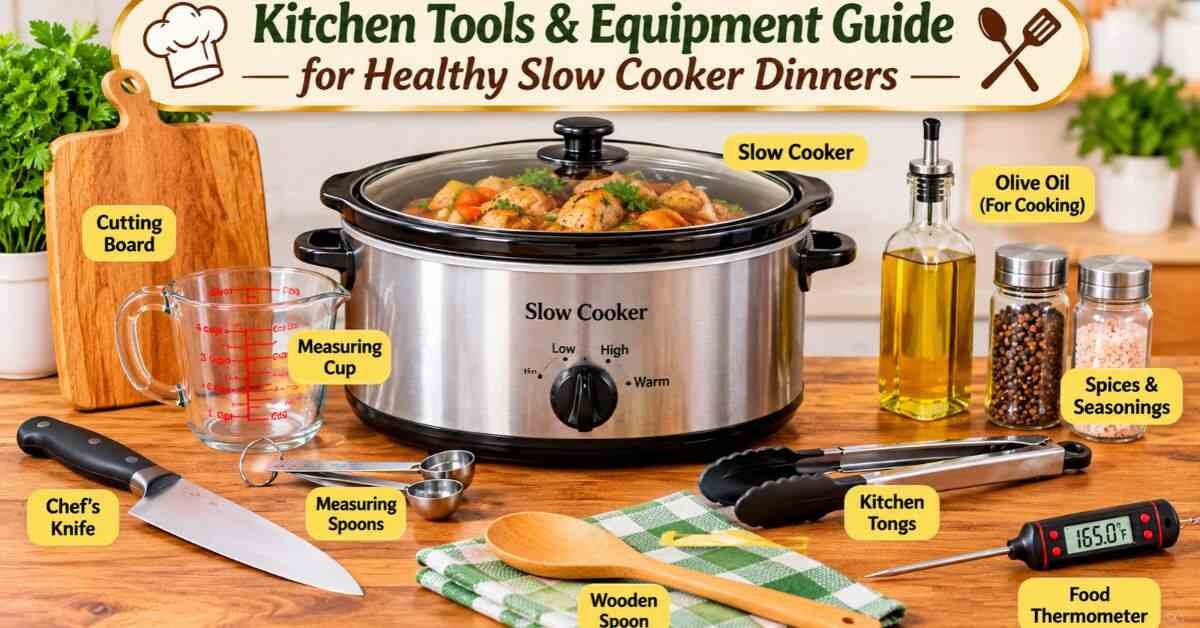
Having the right kitchen equipment makes slow cooking easier and helps produce consistent results.
Essential equipment:
- Slow cooker: A 5–6 quart (approximately 4.7–5.7 liter) slow cooker provides enough room for six servings without overcrowding.
- Sharp chef’s knife: Helps cut chicken and vegetables into consistent pieces.
- Cutting board: Use a separate board for raw chicken and produce whenever possible.
- Cast iron or stainless steel skillet: Useful for browning chicken and sautéing onions before slow cooking.
- Measuring cups and spoons: Help maintain accurate ingredient proportions.
- Wooden spoon: Useful for stirring vegetables and seasonings.
- Instant read food thermometer: Essential for checking chicken’s internal temperature.
- Kitchen tongs: Make handling and turning chicken easier.
Chef’s equipment tip: Avoid filling your slow cooker beyond its manufacturer’s recommended maximum capacity. Proper space allows heat to circulate and helps ingredients cook more evenly.
A reliable thermometer is particularly important because cooking time alone cannot confirm that chicken has reached a safe internal temperature.
Ingredient Selection, Quality & Substitutions
The success of this recipe starts with selecting fresh ingredients and understanding what each one contributes.
The following measurements make six generous servings.
Complete Ingredient List
| Ingredient | US Customary Measurement | Metric Measurement |
| Boneless, skinless chicken breast | 1½ lb | 680 g |
| Medium carrots, sliced | 3 | Approximately 180 g |
| Medium potatoes, diced | 2 | Approximately 300 g |
| Celery stalks, chopped | 2 | Approximately 100 g |
| Yellow onion, diced | 1 medium | Approximately 150 g |
| Garlic, minced | 4 cloves | Approximately 12 g |
| White beans, drained and rinsed | 1 can (15 oz) | 425 g can |
| Low sodium chicken broth | 3 cups | 710 ml |
| Olive oil | 1 tablespoon | 15 ml |
| Tomato paste | 1 tablespoon | 16 g |
| Dried thyme | 1 teaspoon | 1 g |
| Dried rosemary | ½ teaspoon | 0.5 g |
| Paprika | 1 teaspoon | 2 g |
| Black pepper | ½ teaspoon | 1 g |
| Salt | ½ teaspoon, or to taste | Approximately 3 g |
| Bay leaf | 1 | 1 leaf |
| Fresh lemon juice | 1 tablespoon | 15 ml |
| Fresh parsley, chopped | 2 tablespoons | Approximately 8 g |
Understanding the Main Ingredients
Chicken Breast
Chicken breast provides lean protein and a mild flavor that works beautifully with vegetables and herbs.
Choose fresh, properly refrigerated chicken with no unpleasant odor or damaged packaging. Cut it into large, relatively uniform pieces if you prefer smaller portions of chicken throughout the stew.
Boneless, skinless chicken thighs are another excellent option. They contain more fat and generally remain juicy during longer cooking.
Carrots
Carrots contribute natural sweetness, color, and a pleasant texture.
Choose firm carrots without soft spots. Slice them into approximately ½ inch (1.25 cm) pieces so they cook evenly.
Potatoes
Potatoes make the stew more filling and contribute a soft, comforting texture.
Yukon Gold potatoes are especially useful because they hold their shape reasonably well while becoming tender. Russet potatoes can also work, although they may break down more and thicken the broth.
White Beans
Cannellini beans or great northern beans add plant based protein, fiber, and a creamy texture.
Always drain and rinse canned beans before using them. This removes some of the packing liquid and helps control the overall sodium content.
Onion and Garlic
Onions provide sweetness and savory depth, while garlic creates an aromatic foundation.
Fresh garlic generally provides a more pronounced flavor than garlic powder. Nevertheless, ½ teaspoon of garlic powder can substitute for the four fresh cloves if needed.
Chicken Broth
Low sodium chicken broth allows you to control the salt level more effectively.
Choose a good quality broth with a flavor you enjoy. Vegetable broth is also suitable if you prefer a slightly different flavor profile.
Herbs and Seasonings
Thyme, rosemary, paprika, and black pepper provide warmth and complexity.
Dried herbs are convenient for slow cooking because their flavors gradually infuse the liquid. Fresh herbs can be added near the end for a brighter finish.
Practical Ingredient Substitutions
Dairy free: The original recipe contains no milk, butter, cream, or cheese. It is naturally dairy free when prepared with dairy free ingredients.
Choose low sodium canned beans and broths that do not contain salt. Reduce added salt and season gradually after cooking.
Lower carbohydrate: Replace potatoes with cauliflower florets, zucchini, or additional non starchy vegetables. Keep in mind that beans also contribute carbohydrates, so a stricter low carb version may require reducing or omitting them.
Gluten free: Use certified gluten free broth, seasonings, and canned ingredients when necessary. The recipe’s basic ingredients are naturally gluten free.
Vegetarian alternative: Replace chicken with additional beans, mushrooms, and firm vegetables. Use vegetable broth and adjust cooking time according to the vegetables selected.
Extra vegetables: Green beans, peas, spinach, and bell peppers can provide additional color and variety. Add delicate vegetables toward the end to prevent them from becoming excessively soft.
Culinary Masterclass: Step by Step Instructions
Preparing this slow cooker chicken and vegetable stew is straightforward. However, a few professional techniques can make a noticeable difference in the final flavor and texture.
Step 1: Prep Work & Seasoning
Start by preparing your ingredients before turning on the slow cooker.
Clean paper towels should be used to dry the surface of the chicken after it has been removed from its packaging. Keep raw chicken separate from vegetables and other ready to eat ingredients.
If necessary, cut the chicken into two or three large portions. Add salt, paprika, and black pepper.
Next, wash and prepare the vegetables.
- Peel and slice the carrots.
- Dice the potatoes into approximately 1 inch (2.5 cm) cubes.
- Chop the celery.
- Dice the onion.
- Mince the garlic.
- Drain and rinse the white beans.
Try to keep the potato and carrot pieces relatively consistent in size. This helps them soften at a similar rate.
In the slow cooker, place the carrots, potatoes, celery, and onions.
Add the rinsed beans, dried thyme, rosemary, and bay leaf.
Sensory milestone: At this stage, the vegetables should look fresh and colorful, while the dried herbs should release a pleasant aromatic smell when rubbed gently between your fingers.
Pour in approximately 3 cups (710 ml) of low sodium chicken broth.
Avoid adding too much additional liquid. Unlike conventional stovetop cooking, a slow cooker retains much of its moisture under the lid.
Step 2: Searing & Sautéing
Although searing is optional, it is one of the best ways to develop additional flavor.
Place a skillet over medium high heat and add one tablespoon of olive oil.
Allow the oil to become hot but not smoky.
Ensure that each piece of seasoned chicken is evenly distributed. If your skillet is small, brown the chicken in batches rather than overcrowding the pan.
Sear each side for approximately 2–3 minutes until a golden brown surface develops.
It’s not about cooking the chicken completely, but about building flavor.
The chicken should be placed on top of the vegetables in the slow cooker after being removed from the skillet.
Now reduce the heat to medium.
Add the minced garlic and tomato paste to the same skillet. Stir for approximately 30–45 seconds, scraping up any browned bits from the bottom.
These browned ingredients contain concentrated flavor that can improve the final broth.
If necessary, add a small splash of the measured chicken broth to loosen the mixture.
Transfer everything from the skillet into the slow cooker.
Chef’s observation: A properly browned chicken surface should have a golden color and a pleasant roasted aroma. Avoid burning the garlic because burnt garlic can introduce bitterness into the broth.
Step 3: Sauce Building & Simmering
Place the lid securely on the slow cooker.
Choose the LOW setting and cook for approximately 6–7 hours, or select HIGH and cook for approximately 3–4 hours.
Actual cooking times vary depending on the slow cooker’s size, temperature settings, ingredient quantities, and starting temperatures.
Avoid repeatedly opening the lid. Each time you lift it, heat escapes and the cooking process may be extended.
During cooking, the chicken releases some of its natural juices into the broth. Meanwhile, the herbs gradually infuse the liquid with savory aromas.
The carrots soften, potatoes become tender, and the beans contribute a slightly creamy consistency.
Near the end of cooking, carefully check the chicken with an instant read thermometer.
Ensure the thermometer is inserted into the thickest part of each piece without touching the bottom .
In order for the chicken to be cooked properly, its internal temperature must reach 165°F (74°C).
If it has not reached this temperature, continue cooking and check again.
Once cooked, remove the chicken and place it on a clean plate.
Use two forks to shred it into bite sized pieces, or slice it into smaller portions.
Return the chicken to the slow cooker and stir gently.
Check the potatoes with a fork. They should be tender without completely falling apart.
If the broth seems too thin, remove the lid and cook briefly on HIGH according to your appliance’s instructions. Alternatively, mash a few cooked potato pieces into the broth to create a naturally thicker consistency.
Step 4: Finishing, Resting, and Garnishing
Once the chicken and vegetables are fully cooked, turn off the slow cooker.
Remove and discard the bay leaf.
Add one tablespoon of fresh lemon juice and approximately two tablespoons of chopped parsley.
Stir gently and taste the broth.
If necessary, adjust the seasoning with a little more black pepper, salt, or lemon juice.
The lemon should brighten the flavor rather than make the broth taste sour.
Allow the stew to settle for approximately 5 minutes before serving.
Ladle the finished mixture into warm bowls, ensuring each serving contains a good balance of chicken, vegetables, beans, and broth.
For a beautiful presentation, sprinkle a little additional parsley over each bowl.
Final texture check: The chicken should be tender and fully cooked, the potatoes should yield easily to a fork, and the carrots should be soft while retaining enough structure to hold their shape.
Serve immediately while warm.
The Science of Flavor & Chef’s Insider Techniques
Understanding a few culinary principles can help you improve this recipe and create better healthy slow cooker dinners in the future.
1. The Maillard Reaction Creates Deeper Flavor
Food surfaces that are sufficiently hot and dry trigger the Maillard reaction between amino acids and reducing sugars.
It is responsible for many of the appealing browned flavors found in roasted vegetables, seared meats, and toasted foods.
A slow cooker generally operates in a moist environment, so it does not create the same browned surface as a hot skillet.
That is why briefly searing chicken before slow cooking can improve the depth of flavor.
Remember, browning is optional. Without it, the recipe can still be prepared.
2. Moist Heat Changes the Texture of Chicken
Slow cookers use relatively low, steady heat to cook food over an extended period.
The moist cooking environment helps prevent the surface from drying as quickly as it might during high temperature roasting.
However, chicken breast is relatively lean. Excessively long cooking can still produce dry, stringy meat.
For this reason, begin checking the chicken toward the shorter end of the suggested cooking window.
3. Vegetables Cook at Different Rates
Potatoes and carrots are dense vegetables that generally require more time to soften than delicate ingredients such as spinach or peas.
Placing denser vegetables near the bottom of the slow cooker can help them cook effectively.
Add quick cooking vegetables during the final 20–30 minutes when appropriate.
4. Acidity Balances Richness
The broth, chicken, and beans create a savory flavor foundation.
However, long cooking can sometimes make flavors seem muted.
Fresh lemon juice introduces acidity, which helps balance savory ingredients and makes the finished stew taste brighter.
Add it near the end rather than cooking it for the entire duration.
5. Resting Improves Serving Consistency
Allowing the finished stew to settle briefly gives the broth and ingredients time to redistribute after stirring.
For chicken, avoid aggressively shredding it while it is still extremely hot. Letting it rest briefly can also make handling easier.
Professional tip: Taste the broth twice: once before adding lemon and again after adding it. This helps you understand how acidity changes flavor balance.
Common Cooking Mistakes & Troubleshooting Guide
Even a simple slow cooker recipe can produce disappointing results if a few important details are overlooked.
Here are four common mistakes and how to prevent them.
Mistake 1: Using Too Much Liquid
Slow cookers retain moisture under their lids. Adding excessive broth can result in a watery stew.
Solution: Start with the recommended 3 cups of broth. If you prefer a thicker consistency, mash some cooked potatoes into the liquid or use a small cornstarch slurry near the end.
Mistake 2: Overcooking Chicken Breast
Chicken breast contains relatively little fat. Cooking it considerably longer than necessary can make the texture dry and stringy.
Solution: Use appropriately sized pieces, follow the suggested cooking range, and check the thickest part with a thermometer. Stop cooking once all chicken reaches 165°F (74°C).
Mistake 3: Cutting Vegetables Unevenly
Large potato pieces may remain firm while very small carrot pieces become overly soft.
Solution: Cut vegetables into reasonably uniform pieces. Keep dense vegetables such as potatoes and carrots toward the bottom of the cooker.
Mistake 4: Adding Delicate Ingredients Too Early
Spinach, peas, fresh herbs, and zucchini can lose their texture when cooked for several hours.
Solution: Add delicate vegetables near the end of cooking. Stir in fresh herbs and lemon juice after turning off the slow cooker.
Quick Troubleshooting Table
| Problem | Likely Cause | Practical Solution |
| Thin broth | Excess liquid | Mash potatoes or thicken carefully |
| Dry chicken | Overcooking | Check temperature earlier |
| Hard potatoes | Uneven pieces or insufficient cooking | Continue cooking and recheck |
| Flat flavor | Insufficient seasoning or acidity | Adjust salt, pepper, and lemon |
Food Safety, Storage, Meal Prep & Reheating
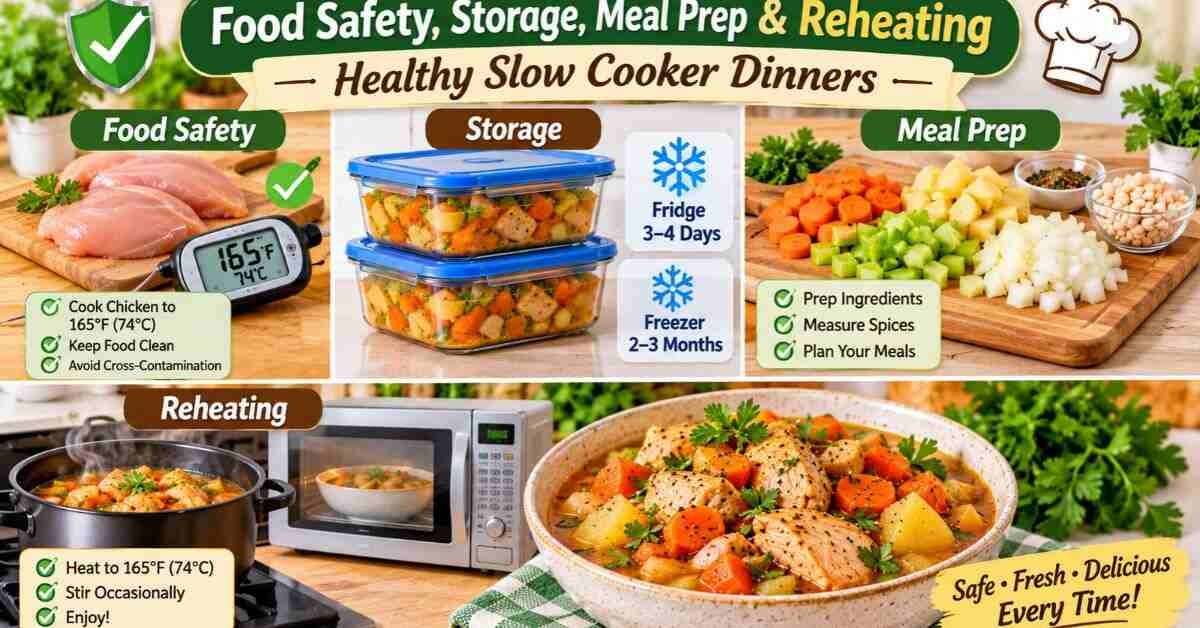
Food safety is essential whenever you prepare chicken based meals.
Following proper handling, cooking, cooling, and storage practices helps protect your family and maintain food quality.
Safe Chicken Preparation
Keep raw chicken refrigerated at 40°F (4°C) or below until preparation.
Wash your hands with soap and water after handling raw poultry. Use separate cutting boards and utensils for raw chicken and vegetables.
Never place cooked chicken on a plate that previously held raw chicken unless it has been properly washed.
When using a slow cooker, do not use frozen chicken breasts. Frozen poultry can remain too long at temperatures that encourage bacterial growth while the appliance heats.
Thaw chicken safely in the refrigerator before cooking.
Always verify that chicken reaches an internal temperature of 165°F (74°C) using a food thermometer.
Refrigerator Storage
Allow leftovers to cool promptly and transfer them into shallow, airtight containers.
Refrigerate within two hours of cooking, or within one hour if the surrounding temperature exceeds 90°F (32°C).
Store cooked chicken and vegetable stew in the refrigerator for approximately 3–4 days at 40°F (4°C) or below.
Freezer Storage
For longer storage, freeze the stew in individual portions using freezer safe containers.
Leave a little space for expansion and label each container with its preparation date.
For best quality, use frozen portions within approximately 2–3 months.
Thaw frozen leftovers in the refrigerator rather than leaving them on the kitchen counter.
Proper Reheating
Reheat individual portions in a saucepan over medium heat, stirring occasionally until thoroughly heated.
You can also use a microwave safe container, covering it loosely and stirring halfway through heating.
The leftovers should be reheated to 165°F (74°C).
The same batch should not be cooled and reheated repeatedly. Instead, reheat only the portion you intend to eat.
Meal Prep Recommendations
For easier weekday cooking:
- Wash and chop vegetables in advance.
- Measure dried herbs and spices into a small container.
- Separately store beans after draining and rinsing them.
- Divide finished stew into individual lunch or dinner portions.
- Keep fresh parsley and lemon juice separate until serving.
These small steps make healthy slow cooker dinners easier to include in a busy weekly routine.
Nutrition & Dietary Considerations
This slow cooker chicken and vegetable stew combines lean animal protein, vegetables, beans, and a moderate amount of healthy unsaturated fat from olive oil.
It can be part of a balanced eating pattern because it provides several nutrients through everyday whole food ingredients.
Estimated Nutrition Per Serving
| Nutrient | Approximate Amount |
| Calories | 350 kcal |
| Protein | 37 g |
| Total Carbohydrates | 32 g |
| Total Fat | 8 g |
| Saturated Fat | 1.5 g |
| Dietary Fiber | 7 g |
| Sodium | 550–700 mg |
Nutrition values are estimates, not laboratory measurements. Actual amounts depend on ingredient brands, chicken size, broth sodium levels, and serving portions.
Understanding the Nutritional Benefits
Protein: Chicken breast provides complete dietary protein, which supplies essential amino acids needed for normal body functions and tissue maintenance.
Fiber: White beans, carrots, potatoes, and other vegetables contribute dietary fiber, which supports digestive health.
Carbohydrates: Potatoes and beans provide carbohydrates that contribute energy. They also supply additional nutrients.
Unsaturated Fat: Olive oil contributes mostly monounsaturated fat.
Micronutrients: The ingredients provide nutrients such as potassium, vitamin C, folate, and vitamin A precursors, depending on the quantities used.
How to Adjust the Recipe
If you want fewer carbohydrates, reduce the potatoes and replace some of them with cauliflower.
For lower sodium, choose no salt added beans and reduced sodium broth.
If you want additional protein, increase the chicken portion while keeping the vegetables and broth balanced.
Remember that individual nutritional requirements vary. This recipe is a meal idea, not a treatment for a medical condition or a guaranteed weight management solution.
Pairings & Serving Suggestions
Although this chicken and vegetable stew is satisfying on its own, pairing it with complementary foods can create a more complete and enjoyable dinner.
The best sides should enhance the meal without overpowering the delicate herb infused broth.
1. Fresh Garden Salad
A crisp salad with lettuce, cucumber, cherry tomatoes, and shredded carrots provides freshness and contrasting textures.
For a simple dressing, combine olive oil, lemon juice, black pepper, and a small amount of Dijon mustard.
The acidity complements the savory stew.
2. Whole Grain Bread
Serve the stew with a slice of whole grain bread or a small whole grain roll.
The bread is useful for soaking up the flavorful broth and adds another texture to the meal.
Choose a suitable gluten free alternative if required.
3. Steamed Green Vegetables
Steamed broccoli, green beans, or asparagus can provide additional color and variety.
Season them lightly with black pepper and lemon juice.
Avoid adding too much butter or salt if you want to keep the overall meal lighter.
4. Brown Rice
A small serving of brown rice can make the meal more substantial.
Its slightly nutty flavor works particularly well with the garlic and rosemary in the stew.
5. Beverage Pairings
For a refreshing non alcoholic option, serve chilled lemon water, unsweetened iced tea, or sparkling water with fresh mint.
These beverages complement the meal without adding substantial sugar.
Serving Presentation Tips
Use wide, warm bowls to make the stew easier to serve.
Place chicken and vegetables evenly in each bowl, then spoon the broth over the top.
Add a little black pepper and fresh parsley to finish.
For a family style dinner, serve the slow cooker directly at the table using its appropriate serving setting and follow the appliance manufacturer’s instructions.
Final Verdict & Reader Invitation
This Slow Cooker Chicken & Vegetable Stew proves that healthy slow cooker dinners can be flavorful, satisfying, affordable, and convenient without requiring complicated cooking techniques.
With tender chicken, colorful vegetables, protein rich white beans, and a delicious herb infused broth, this recipe offers a practical option for family meals and weekly meal preparation.
Whether you are cooking for a busy weeknight or preparing homemade meals in advance, this comforting dish deserves a place in your kitchen.
Now it is your turn!
Make Every Dinner Easier, Healthier & More Delicious
Try this recipe in your own kitchen, rate it with five stars if you enjoy it, and share your cooking experience in the comments at DaliyDelish.com.
Did you use chicken thighs, add extra vegetables, or create your own seasoning combination? We would love to hear what worked best for you!
Happy Cooking from DaliyDelish!
Slow cooker dinners can be nutritious when prepared with balanced ingredients such as lean proteins, vegetables, beans, and moderate amounts of added salt and fat. Rather than the cooking appliance alone, nutritional quality is determined by the recipe and the ingredients.
Boneless chicken breast generally takes approximately 6–7 hours on LOW or 3–4 hours on HIGH in this recipe. Actual timing varies by appliance and ingredient size. Always verify that chicken reaches an internal temperature of 165°F (74°C).
Yes. Fresh or safely thawed raw chicken can be placed directly into a properly operating slow cooker with the other ingredients. Browning the chicken beforehand is optional and mainly improves flavor. Never use frozen chicken directly in a slow cooker.
Yes. You can prepare vegetables, measure seasonings, and organize ingredients ahead of cooking. Keep raw chicken refrigerated separately from ready to eat ingredients. Alternatively, cook the complete recipe, refrigerate the leftovers promptly, and reheat individual portions to 165°F (74°C) when needed.

Tosique Haider -Passionate writer sharing informative, engaging, and easy-to-read articles across different topics. Focused on delivering valuable content that helps readers learn, explore, and stay inspired every day.